Tankless Water Heater Cost in Texas (2026)
House Escort Team
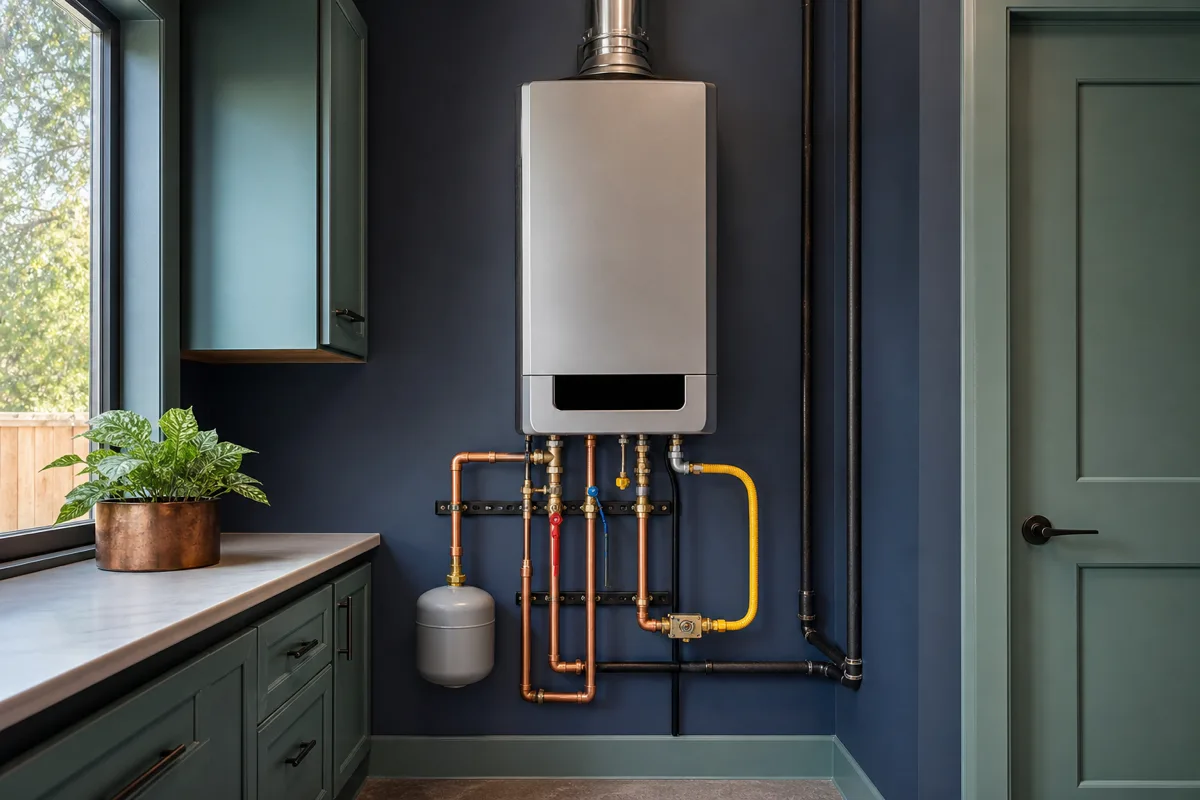
Tankless water heaters are one of the most practical home upgrades for Texas homeowners — endless hot water on demand, lower energy consumption compared to tank heaters, and a significantly longer lifespan. But the upfront installation cost is higher than swapping in a traditional tank, and the right choice depends on your home’s gas or electrical infrastructure, water demand, and how long you plan to stay in the home.
This guide breaks down tankless water heater costs in Texas for 2026, covering gas vs. electric options, installation factors, and the long-term economics.
Tankless Water Heater Cost in Texas: Overview
Natural gas tankless water heater (whole-home unit):
- Unit cost: $700–$1,500 (popular brands: Rinnai, Navien, Rheem, Noritz)
- Installation labor: $500–$1,500
- Gas line upgrade (if existing line is undersized): $200–$800
- Venting (for non-condensing units): $300–$700 if new venting required
- Total installed cost: $1,500–$4,000
Propane tankless water heater: Similar to natural gas units in pricing. Propane is common in rural Texas areas outside natural gas service. Propane units from the same manufacturers — $1,500–$4,000 installed.
Electric tankless water heater (whole-home):
- Unit cost: $500–$1,200
- Installation labor: $300–$800
- Electrical panel upgrade (typically required — large electric tankless units draw 150–200+ amps): $1,500–$3,500
- Total installed cost: $2,500–$5,500 when panel upgrade is included
Electric tankless units in Texas often require a panel upgrade because standard 200-amp services may not have sufficient spare capacity for a whole-home electric tankless unit drawing 150–200 amps. This is the most commonly overlooked cost in electric tankless installation.
Point-of-use electric tankless (single fixture):
- Unit cost: $150–$400
- Installation: $200–$500
- Minimal electrical upgrade typically required (single 40-amp circuit)
- Total: $350–$900 per unit
Point-of-use units are practical for isolated fixtures — a bathroom far from the water heater, a garage sink, or an outdoor shower.
Gas vs. Electric Tankless in Texas
Natural gas is the better choice in most Texas applications:
- Lower energy cost per BTU than electricity in Texas
- Higher flow rate capacity (handles multiple simultaneous demands)
- Texas’s gas infrastructure is mature and gas prices have historically been favorable
- Faster water heating response
Electric tankless makes sense when:
- No gas line is available (rural areas, some older homes)
- Adding a point-of-use unit for a specific fixture
- HOA or building restrictions prohibit gas
For whole-home applications in Texas where natural gas is available, gas tankless is the economically dominant choice.
Size Matters: Selecting the Right Flow Rate
Tankless water heaters are rated in gallons per minute (GPM) of hot water output. Selecting the wrong size results in cold showers when multiple fixtures run simultaneously.
Sizing guide for Texas homes:
- 1–2 bathroom home, low simultaneous demand: 6–8 GPM unit
- 2–3 bathroom home, moderate demand: 8–10 GPM unit
- 3–4 bathroom home, high simultaneous demand: 10–12+ GPM unit, or consider two units in parallel
Texas’s warm groundwater temperature (60–70°F incoming) is an advantage: the water doesn’t need to be heated as many degrees as in colder climates, so a Texas home can generally use a smaller GPM unit than the same-size home in Minnesota.
Installation Considerations Specific to Texas
Freeze protection: Texas freeze events (Uri in 2021, subsequent winter storms) have exposed the vulnerability of exterior-mounted tankless units to freezing. Most quality gas tankless units have built-in freeze protection that automatically fires the burner to protect the heat exchanger when temperatures drop. Ensure your installation includes proper freeze protection and that the unit’s built-in protection is set correctly.
Hard water and descaling: Texas groundwater, particularly in Austin, San Antonio, and Hill Country, is extremely hard (high calcium and magnesium mineral content). Hard water deposits scale on tankless heat exchanger coils over time, reducing efficiency and eventually causing failure. Annual flushing (descaling with a citric acid or vinegar solution) is required maintenance. Many Texas homeowners pair tankless units with a water softener to extend unit life.
Venting (gas units): Non-condensing gas tankless units require dedicated stainless steel venting. Condensing units (higher efficiency) may be able to use PVC venting, which is less expensive. Discuss venting options with your plumber — this affects installation cost and complexity.
Is Tankless Worth It in Texas?
Energy savings: A tankless water heater uses 24–34% less energy than a traditional tank heater for homes using under 41 gallons daily, according to the U.S. Department of Energy. For heavier use, savings are 8–14%. Energy savings over 15–20 years typically recover the upfront premium.
Lifespan: Quality gas tankless units last 20+ years with proper maintenance; traditional tanks last 8–12 years. The longer lifespan alone often justifies the price difference over a 20-year homeownership period.
Endless hot water: For large Texas families, the never-run-out-of-hot-water benefit has real quality-of-life value that energy math alone doesn’t capture.
Ready to install a tankless water heater in your Texas home? House Escort connects you with vetted local plumbers who specialize in tankless water heater installation.
More home improvement guides:
Frequently Asked Questions
How much does a tankless water heater cost to install in Texas?
A gas tankless water heater installed in Texas typically costs $1,500–$4,000 total, including the unit and labor. Electric whole-home tankless units often require panel upgrades, pushing total costs to $2,500–$5,500. Point-of-use electric units for a single fixture run $350–$900.
Is gas or electric tankless better for Texas homes?
Natural gas tankless is the better choice for most Texas homes where gas service is available. Gas units have lower operating costs, higher flow capacity, and faster heat delivery than electric. Electric units are practical when gas isn’t available or for point-of-use applications at a single fixture.
Does a tankless water heater freeze in a Texas winter?
Modern quality tankless units have built-in freeze protection that fires the burner to prevent freezing during cold events. However, Texas’s 2021 Winter Storm Uri exposed that power outages during freezing events can disable freeze protection. For exterior installations, adding additional pipe insulation and having a freeze protection backup plan is wise. Interior installations are far less vulnerable.
How long do tankless water heaters last in Texas?
Quality gas tankless water heaters (Rinnai, Navien, Noritz, Rheem) last 20+ years with annual descaling maintenance, particularly important in Texas’s hard water areas. Traditional tank heaters typically last 8–12 years. The longer lifespan is a key economic justification for the higher upfront cost of tankless.
Do I need a water softener with a tankless water heater in Texas?
Highly recommended in areas with very hard water — Austin, San Antonio, Hill Country, and many North Texas areas. Hard water deposits scale on the heat exchanger coils, reducing efficiency and causing premature failure. Annual descaling (acid flush) is the minimum requirement; pairing with a water softener significantly extends unit life and maintains efficiency in hard water Texas markets.