Plumbing Whole House Repipe Cost in Texas (2026)
House Escort Team
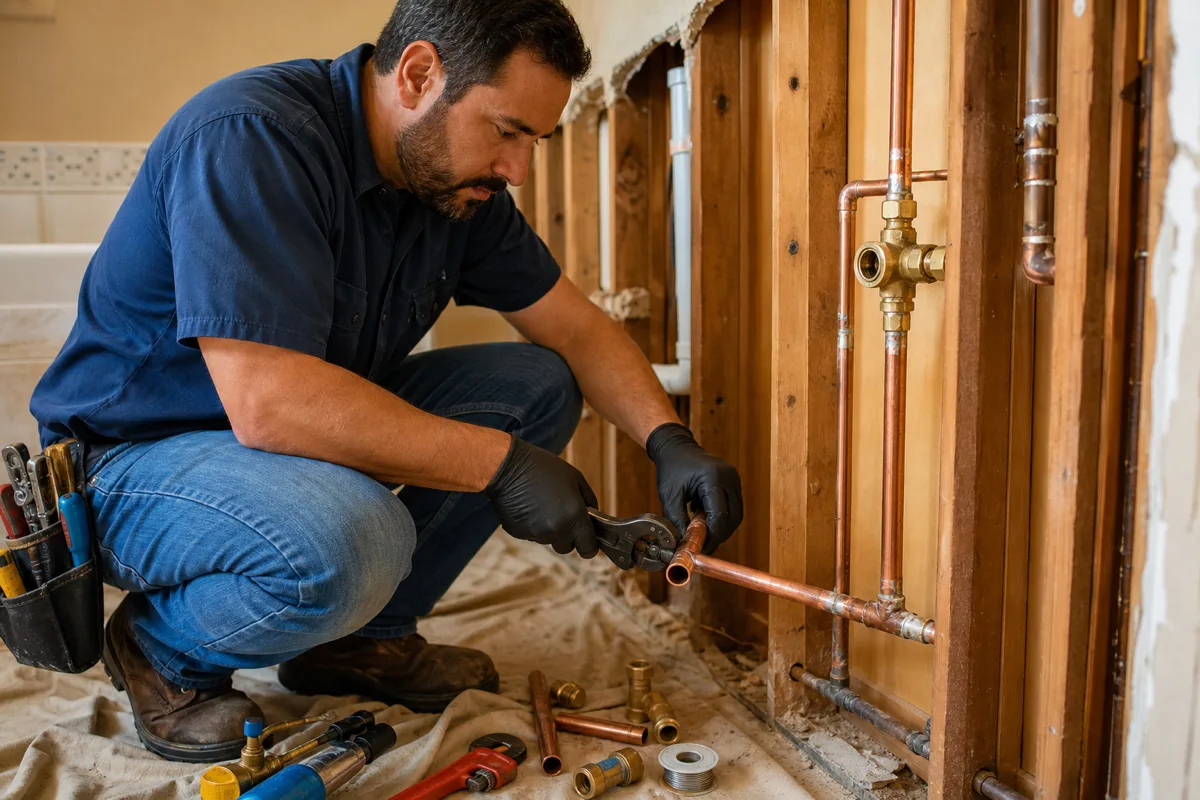
A whole house repipe — replacing all the supply lines in your home — is a significant but sometimes unavoidable investment. Texas homes built with galvanized steel pipes (typically before 1970) face corrosion and mineral buildup that restricts flow and eventually leads to leaks. Polybutylene pipe (installed in many Texas homes from 1978–1995) is known for catastrophic failure. Even copper pipes can develop pinhole leaks in Texas’s mineral-heavy groundwater over time.
This guide explains what a whole house repipe involves, when it’s necessary, what it costs in Texas, and how to choose the right plumber for the job.
What Is a Whole House Repipe?
A whole house repipe involves replacing all the water supply lines throughout your home — from where water enters your home from the main to every fixture (sinks, toilets, showers, tubs, ice makers, washing machine connections, outdoor spigots). Drain lines (wastewater pipes) are a separate system and are not part of a standard whole house repipe unless specifically included.
The most common materials used in Texas repipes today:
- PEX (cross-linked polyethylene): The dominant choice for residential repiping in Texas. Flexible, corrosion-resistant, freeze-resistant, and typically less expensive to install than copper due to fewer fittings needed.
- Copper: Traditional material, proven longevity, more expensive, may be required in some jurisdictions or for specific applications.
- CPVC: Used in some Texas markets as a more affordable alternative to copper; not as widely used in new repipes as PEX.
When Does a Texas Home Need Repiping?
Galvanized steel pipes: Common in Texas homes built before 1970. Galvanized steel corrodes from the inside, reducing water pressure and flow over time, eventually leading to leaks. If you have galvanized pipe, low water pressure throughout the home and rusty water when a faucet is first turned on are key symptoms. Repiping is typically necessary, not optional, at this point.
Polybutylene pipe: Installed extensively in Texas from 1978–1995, polybutylene (identifiable by its gray color) is prone to catastrophic failure — particularly at fittings — due to reactions with chlorine in municipal water. Most Texas homeowner’s insurance companies no longer cover homes with active polybutylene and require remediation before issuing policies. If your Texas home has polybutylene, repiping is not optional.
Repeated pinhole leaks: Texas’s mineral-heavy water (high calcium, magnesium, and in some areas chloramines) causes pitting corrosion in copper pipes. If you’re experiencing recurring pinhole leaks — especially in a home built in the 1970s–1990s with copper — a full repipe may be more economical than repeated spot repairs.
Home purchase: Sellers often disclose aging pipes or buyers discover them during inspection. Repiping before listing or negotiating a credit for repiping is common in the Texas real estate market.
Whole House Repipe Cost in Texas
Small home (under 1,500 sq ft): $4,000–$8,000
Medium home (1,500–2,500 sq ft): $6,000–$12,000
Large home (2,500–4,000 sq ft): $10,000–$18,000
Very large or complex homes: $15,000–$30,000+
Cost factors:
- Material choice: PEX is typically 20–30% less expensive than copper for labor due to fewer joints. Material cost per linear foot is also lower for PEX.
- Access: Slab-on-grade homes (very common in Texas) require either tunneling under the slab, cutting through the slab, or routing pipes through the attic and walls. Tunneling is expensive ($3,000–$8,000 extra) but avoids wall damage.
- Drywall repair and repainting: If pipes are routed through walls, restoration adds cost. Slab tunneling or attic routing often avoids significant wall disruption.
- Number of fixtures: More bathrooms and utility connections = longer pipe runs and higher material cost.
The Texas Slab Foundation Challenge
Most Texas homes are built on concrete slab foundations with supply lines originally routed under or through the slab. When these pipes fail or need replacement, plumbers have three options:
- Reroute through walls and attic (PEX): PEX’s flexibility allows rerouting through walls and attic space rather than penetrating the slab — the most common modern approach in Texas.
- Slab tunneling: Excavate under the slab to access and replace pipes — preserves finished floors but adds significant cost.
- Jackhammering the slab: Breaking through the slab to access pipes — lowest labor cost but requires significant floor restoration.
Most Texas plumbing contractors prefer PEX rerouting through walls and attic when structurally feasible — it avoids slab disruption, uses superior modern materials, and is typically the most cost-effective overall approach.
Permits and Texas Licensing
Whole house repiping requires permits in Texas. Your licensed plumber should pull all required permits and schedule the required inspections. Verify your plumber holds a current Texas Master Plumber license through TDLR before proceeding with any major plumbing work.
Need a reliable Texas plumber for a whole house repipe? House Escort connects you with vetted, licensed plumbing contractors in your area.
Related guides:
Frequently Asked Questions
How much does it cost to repipe a house in Texas?
A whole house repipe in Texas typically costs $4,000–$12,000 for a medium-sized home using PEX pipe. Larger homes, homes with slab access challenges, or projects using copper pipe can reach $15,000–$30,000. Get at least two or three bids from licensed Texas plumbers with experience in whole-house repiping.
How long does a whole house repipe take in Texas?
A whole house repipe for a typical Texas home takes 2–5 days for the plumbing work. If walls need to be opened and patched, add time for drywall repair and paint (another 3–7 days). The entire process including permits and inspection typically completes within 1–2 weeks.
What is the best pipe material for a Texas repipe?
PEX pipe is the most popular choice for whole house repiping in Texas — it’s flexible, corrosion-resistant, freeze-resistant, and costs less to install than copper due to fewer fittings. PEX is compatible with Texas’s mineral-heavy groundwater and can be routed through attic and wall spaces without the rigid fitting requirements of copper or CPVC.
Does homeowner’s insurance cover a whole house repipe in Texas?
Homeowner’s insurance does not typically cover repiping as a preventive measure or due to age. Insurance may cover sudden and accidental water damage from a pipe failure, but not the pipe replacement itself. However, having polybutylene pipe often means your Texas insurer requires repiping as a condition of maintaining coverage — in this case, the repiping is a cost of keeping the policy.
Can I stay in my home during a whole house repipe in Texas?
Usually yes, though water will be off for portions of each work day. Most Texas plumbers restore water service at the end of each work day so the family can use the home. If the project requires significant wall demolition, some families choose to stay elsewhere during the most disruptive phases — discuss logistics with your contractor.