Roofing Crew Management: Build a Reliable Team
House Escort Team
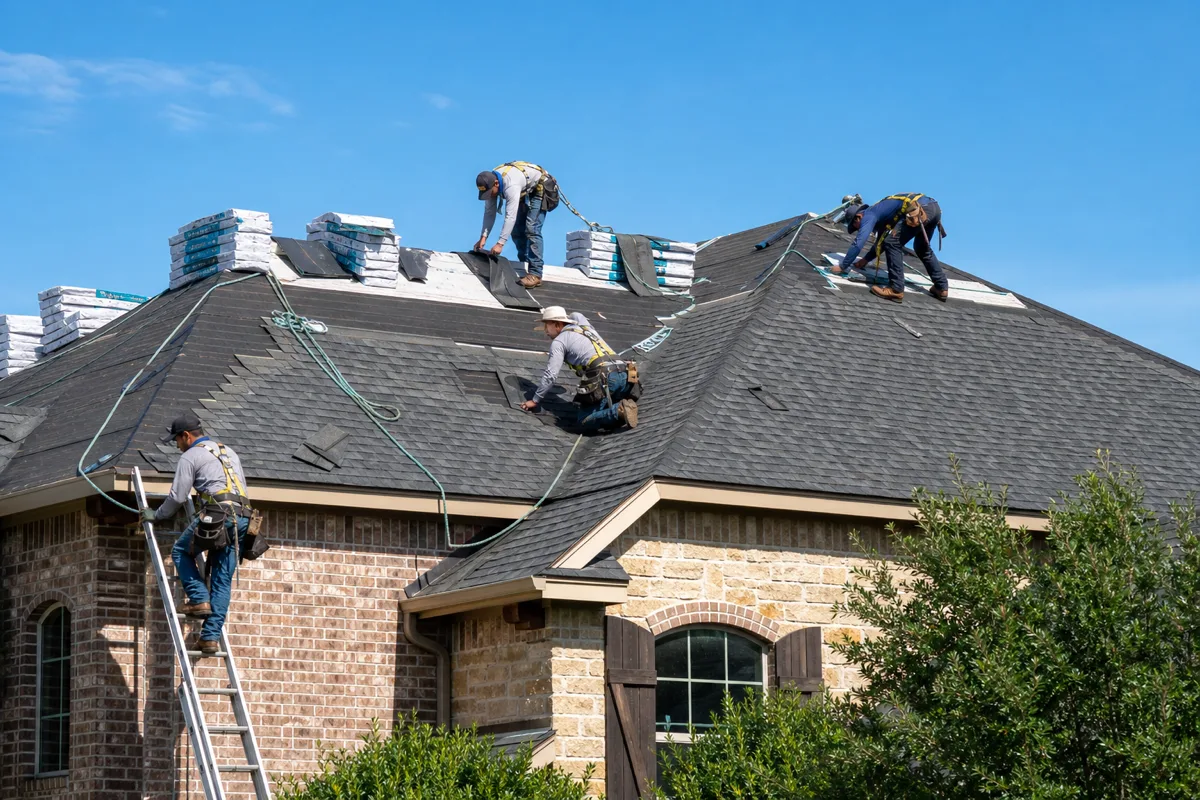
Building and managing a reliable roofing crew is the single most important factor in scaling a Texas roofing business beyond a one-man operation. Texas’s hail season, year-round demand, and large residential market create enormous opportunity — but only for roofing contractors who can field capable crews that work safely, efficiently, and with pride in quality.
This guide covers everything a Texas roofing business owner needs to know about crew management: hiring, training, safety, scheduling, pay structures, and retention.
Why Crew Management Is the Key Variable
Every roofing business hits the same ceiling: the owner can only be on one roof at a time. Breaking through that ceiling requires crews that can operate competently without the owner present on every job. The contractors who manage crews well grow; those who can’t stay stuck at 5–10 jobs per month forever.
A well-managed crew of 4–5 people can complete 2–3 residential roofing jobs per day. A poorly managed crew of the same size might complete 1 job — and with callbacks, rework, and safety incidents that wipe out the margin.
Crew Size and Composition for Texas Roofing
Solo re-roof (1 person): Not viable for full residential roofing — too slow and physically impossible for safety and productivity.
Minimal crew (3 people): Can handle smaller residential jobs (1,500 sq ft or less). One person on the ground hauling and managing materials; two on the roof. Productivity is moderate; limited capacity for steep or complex roofs.
Standard residential crew (4–6 people): The sweet spot for most Texas residential roofing operations. One lead (foreman) running the job; one or two tearoff laborers; one or two shingle nailers; one ground person. This crew can complete a standard 2,000–2,500 sq ft residential roof in one day.
Large crew (7–10 people): For commercial, multi-family, or storm surge periods when volume demands faster throughput.
Hiring Roofing Crew Members in Texas
Finding reliable roofing labor in Texas is challenging — physically demanding work and seasonal swings create high turnover in the industry. Effective hiring strategies:
Hire for attitude, train for skill: Experienced roofers with poor attitudes create more problems than they solve. A willing, physically capable person with no roofing experience can be trained to strip and nail within a few days. Hire character first.
Trade schools and vocational programs: Some Texas community colleges and trade programs produce work-ready candidates. Build relationships with instructors.
Employee referrals: Your best crew members know other reliable people. Offer a referral bonus for new hires who stay 90+ days.
Online job listings: Indeed and Facebook Jobs generate roofing applicants in Texas. Be specific in your listing about physical requirements and pay structure.
Consistent work and pay: The most powerful retention tool is reliability — steady work and paychecks that arrive on time, every time.
Pay Structures for Roofing Crews
The two primary pay structures for roofing labor in Texas:
Hourly pay: Simpler to manage, required for W-2 employees. Most crew members prefer hourly because income is predictable regardless of job duration. Roofing labor in Texas runs $18–$35/hour depending on skill level and role.
Per-square pay (piece rate): Pay crew members a set amount per square (100 sq ft) of roofing completed. This incentivizes speed but can compromise quality. Per-square rates vary significantly by local market and scope.
Foreman/lead pay: Crew leads earn a premium above base crew pay — either a higher hourly rate, a percentage of job revenue, or a management bonus structure.
Benefits: In a tight Texas labor market, health insurance, paid time off, and retirement contributions are increasingly important for retaining skilled crew members who have options.
Safety Protocols — Non-Negotiable in Texas Roofing
OSHA standards for roofing (29 CFR 1926.502) require fall protection for workers on roofs 6 feet or more above a lower level. In Texas’s legal environment, roofing injuries create significant liability exposure. Non-negotiable safety requirements:
- Personal fall arrest systems (harnesses and anchors) on all steep-slope work
- Roof jacks and toe boards for material staging
- Ladder safety training and protocol
- OSHA 10 certification for crew foremen (30-hour for owners/supervisors)
- Regular tailgate safety meetings before each job
- Heat illness prevention plan for Texas summer work (water, shade, rest breaks at OSHA-required intervals)
Scheduling and Productivity Systems
Crew scheduling requires attention to:
- Weather forecasting (don’t deploy crews if rain is likely during work hours)
- Material delivery coordination (decking, shingles, and accessories must arrive before crew)
- Job site access (make sure homeowners know crew arrival time and parking needs)
- Dumpster placement (roll-off should arrive the morning of tearoff, not the day before)
Field service management software (ServiceTitan, Jobber, AccuLynx) tracks crew schedules, job status, material orders, and customer communication in one place. As you add crews, software coordination becomes essential.
Building your roofing business in Texas? Join House Escort and keep 100% of your earnings while accessing Texas homeowners who need roof work done right.
More contractor business guides:
Frequently Asked Questions
How many people does a roofing crew need for a standard Texas residential job?
A standard residential roofing crew in Texas consists of 4–6 people: one foreman, one to two tearoff laborers, one to two shingle nailers, and one ground person. This crew size can complete a standard 2,000–2,500 sq ft residential roof in a single day with proper organization and material prep.
What should I pay roofing crew members in Texas?
Roofing labor in Texas runs $18–$35/hour depending on skill level and role. Entry-level tearoff laborers earn $18–$24/hour; experienced nailers earn $22–$30/hour; crew foremen earn $28–$38/hour. Some operations use piece-rate pay (per square completed), which incentivizes productivity but requires quality monitoring.
How do I retain good roofing crew members in Texas?
Steady, consistent work with reliable paychecks is the most powerful retention tool. Competitive pay, respectful management, clear safety practices, and opportunities for advancement (laborer to lead nailer to foreman) also drive retention. In the Texas market, contractors who add health insurance and paid time off have a meaningful advantage in recruiting and keeping skilled workers.
What OSHA regulations apply to my Texas roofing crew?
OSHA 29 CFR 1926.502 requires fall protection for roofing workers at heights of 6 feet or more above the lower level. This includes personal fall arrest systems (harnesses with lanyards anchored to the roof structure), warning line systems for low-slope roofs, or safety net systems. Texas has an OSHA state plan through the Texas Department of Insurance. Non-compliance exposes your business to fines and significant liability in injury cases.
How do I train new roofing crew members who have no experience?
Start new crew members on ground duties (material handling, staging, cleanup) while they observe experienced roofers. Move them to tearoff tasks (stripping old shingles), then to underlayment installation, then to shingle nailing as they demonstrate competence. Safety training, including proper harness use and fall protection protocols, must come first — before any time on the roof.