Building a Swimming Pool Service Route in Texas
House Escort Team
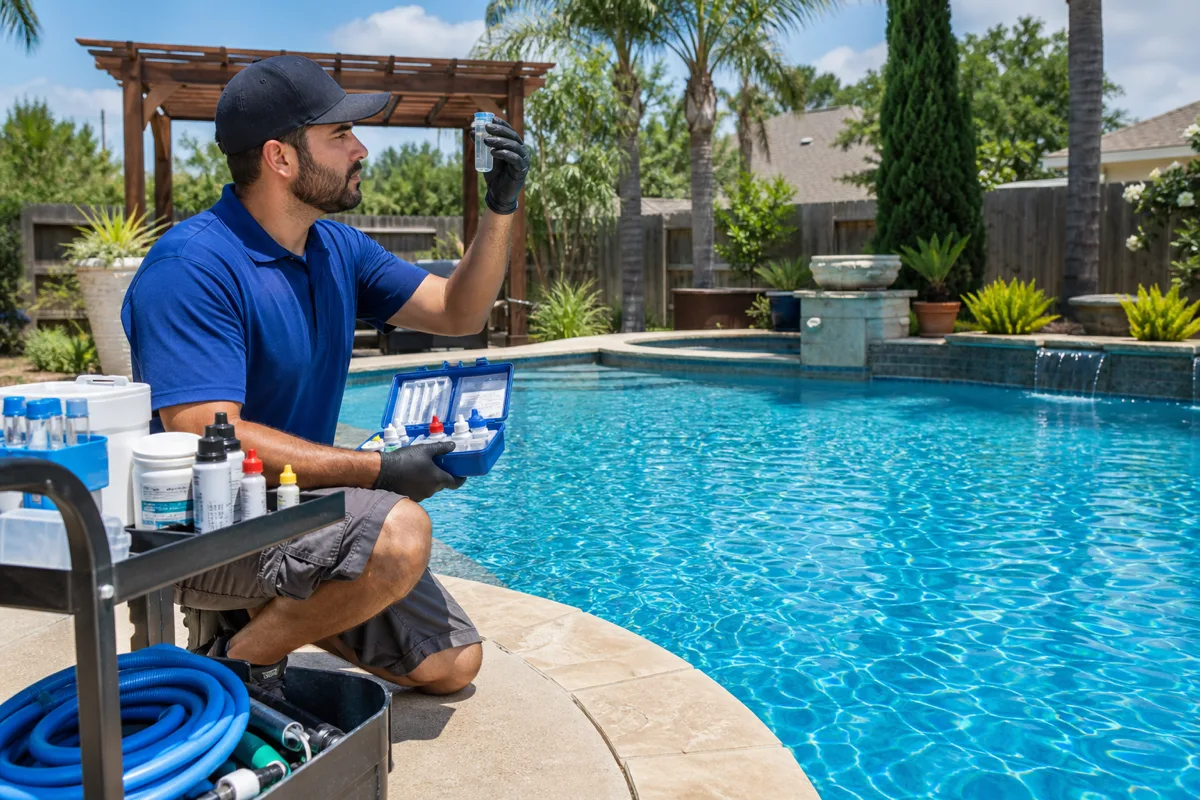
Texas has one of the highest densities of residential swimming pools in the United States — Sunbelt weather makes pools a near-necessity for many homeowners, and that means steady, year-round demand for pool maintenance professionals. Building a swimming pool service route is one of the most scalable and recurring-revenue-rich businesses in the Texas home services market.
This guide covers how to build a pool service route from scratch — pricing, client acquisition, route density optimization, and the systems you need to grow from a one-truck solo operation to a team.
Why Pool Service Routes Work
Pool maintenance is an ideal route business because:
Recurring demand: Pools need weekly or bi-weekly service 52 weeks a year in Texas. Unlike one-time services, you’re billing the same clients every month.
Sticky clients: Pool owners rarely switch service providers unless something goes wrong. A client you acquire today may stay for 5–10 years.
Predictable scheduling: A tight geographic route can be serviced efficiently — 15–25 pools per day per technician is achievable, and each stop is 30–60 minutes.
Chemical upsell: Beyond labor, clients need chemicals, equipment repairs, and periodic services (openings/closings, filter cleaning, salt cell replacement) that add significant revenue per client per year.
How to Price Pool Service in Texas
Pool service pricing in Texas depends on pool size, service frequency, equipment complexity, and what’s included in the monthly fee.
Monthly maintenance contracts are the standard pricing structure:
- Small pools (under 10,000 gallons): $100–$160/month
- Standard pools (10,000–20,000 gallons): $150–$200/month
- Large pools (20,000–40,000 gallons): $200–$280/month
- Pools with spas, water features, or automation systems: $250–$400/month
These ranges assume weekly service including chemical testing, chemical addition, skimming, brushing, and emptying baskets. Filter cleaning and equipment repairs are typically billed separately.
What to include vs. bill separately:
- Include: testing, chemical balancing, skimming, brushing, vacuum (monthly), basket emptying
- Bill separately: chemicals used (or include at a premium price), filter cleaning ($75–$150 quarterly), equipment repairs, acid wash, algae treatments
Some operators price all-inclusive (chemicals bundled in the monthly fee at a premium) — this simplifies client billing and avoids disputes but requires careful cost management as chemical prices fluctuate.
Route Density: The Math of Profitable Pool Service
The financial engine of pool service is route density — packing clients geographically so your drive time is minimized. A route with 20 pools spread across 40 miles of driving earns far less per hour than 20 pools in a 5-mile radius.
Target metrics for a profitable Texas pool route:
- 15–25 pools serviced per day
- Drive time: no more than 5–10 minutes between stops
- Revenue per day: $600–$1,200 (at $150–$200 avg monthly / 4 weeks)
To achieve route density, focus your marketing in a defined geographic area — one or two ZIP codes or neighborhoods — before expanding. It’s better to have 20 pools in a 3-mile radius than 40 spread across a city.
Building Your First Pool Clients in Texas
Neighborhood marketing: Door hangers and direct mail targeting neighborhoods with above-ground and in-ground pools are highly effective. Look for newer subdivisions where pools were recently installed — those homeowners are actively looking for reliable service.
Online presence: Claim your Google Business Profile and get reviews from every client. “Pool service [city name]” searches drive significant local traffic.
Pool store partnerships: Build relationships with local pool supply stores. When homeowners ask about service, store staff often make referrals.
New home builder partnerships: Builders who install pools may refer buyers to maintenance services. Offer builders a referral fee per client.
Social media: Facebook neighborhood groups in Texas are extremely active for local service recommendations. Join and participate — don’t just post ads, provide value (maintenance tips, chemical advice).
Chemical Management and Profit Margins
Chemicals are a significant cost driver in pool service. Effective chemical management separates profitable operators from those who barely break even:
Test and treat accurately: Don’t dump chemicals by guesswork. Use a reliable digital tester or test strips and treat based on actual readings. Over-treating burns profit; under-treating risks client complaints and algae liability.
Buy in bulk: Commercial accounts at pool supply distributors reduce per-unit chemical costs significantly compared to retail.
Track chemical cost per pool: Know your average monthly chemical cost per pool. If it exceeds $30–$50/pool, investigate whether your testing accuracy, client pool issues, or chemical sourcing needs adjustment.
Scaling from Solo to Team
When you reach 50–60 pools as a solo operator, you’ve hit the natural limit of a one-person route. Growing beyond this requires:
- Hiring a technician (start part-time, train carefully)
- Adding a second truck
- Implementing route management software (PoolBrain, Skimmer, or ServiceTitan)
- Systematizing chemical purchasing and inventory management
Ready to build your pool service business on a platform that works for you? Join House Escort and keep 100% of your earnings while connecting with Texas homeowners looking for reliable pool service.
Related resources:
- Window Cleaning Business Pricing Guide
- Pest Control Route Building Guide
- Handyman Business Social Media Tips
Frequently Asked Questions
How many pools can a solo pool service tech handle per day in Texas?
An experienced solo pool service technician can typically handle 15–25 pools per day when routing is efficient and pools are geographically dense. Larger or more complex pools with spas and automation take longer; small basic pools can be completed in 20–30 minutes each.
What equipment do I need to start a pool service route in Texas?
Core starting equipment includes: a truck or trailer, telescoping pole with brush and skimmer net, vacuum head and hose, chemical test kit or digital tester, and basic chemicals (chlorine, pH adjusters, algaecide). A good quality equipment package to start runs $2,000–$5,000 not counting the vehicle. Add service software once you have 10+ clients.
Should I include chemicals in my monthly pool service fee?
Either model works — all-inclusive or labor-plus-chemicals. All-inclusive simplifies billing and clients appreciate price predictability. Labor-only with chemical pass-through protects you from chemical price spikes but can create billing friction. Most established Texas pool operators use all-inclusive pricing at a premium that builds in a reasonable chemical allowance.
How do I get my first pool service clients in Texas?
Start with direct outreach in target neighborhoods — door hangers and postcards work well. Ask every new client for a review on Google. Partner with local pool supply stores for referrals. Facebook neighborhood groups and Nextdoor are high-conversion platforms for local service businesses. Offer a free first cleaning for neighbors who commit to a 3-month agreement.
Is pool service profitable in Texas year-round?
Yes. Texas’s climate means pools require maintenance all 12 months — winter pool care (maintaining chemistry and preventing algae during cooler months) keeps routes running through what other states consider the off-season. Spring opening prep and summertime algae response are the highest-demand months, but December and January still have full routes for established operators.