Septic System Cost in Texas: 2026 Guide
House Escort Team
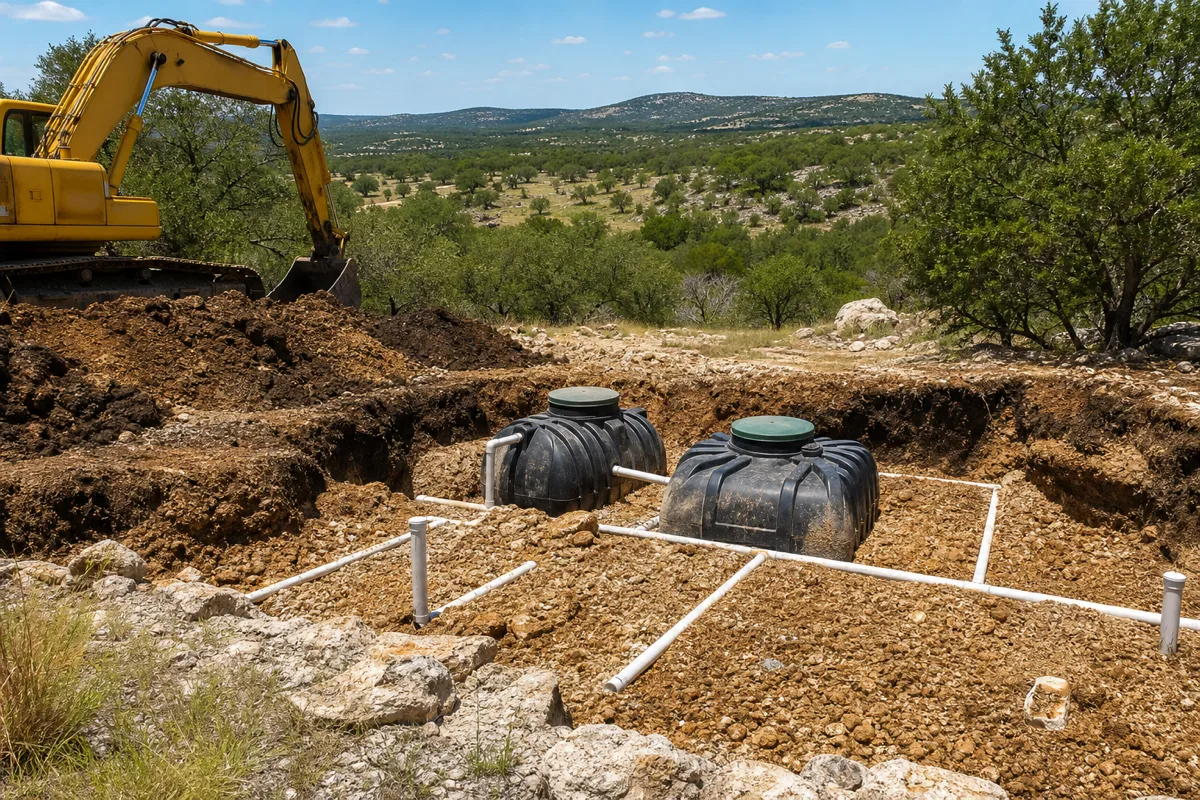
More than 3 million Texans rely on on-site septic systems instead of municipal sewer connections — and if you’re building a rural home, buying acreage, or replacing a failing system, understanding septic costs and the Texas permitting process can save you significant money and months of delays.
Septic system costs in Texas are more variable than most homeowners expect. Your soil type, lot size, distance from water features, county regulations, and whether you need a conventional or aerobic system all affect the final number. Here’s what you need to know.
Conventional vs. Aerobic Septic Systems in Texas
The biggest cost decision is which type of system you need. Texas has two main categories:
Conventional Septic Systems
A conventional system consists of a septic tank (where solids settle and liquids separate) connected to a drain field (leach field) where treated effluent is dispersed through the soil.
Best for: Properties with suitable soil percolation, adequate setback distances from water features, and low-density development.
Cost range: $6,000–$18,000 for a standard residential installation. Site-specific factors (rock, slope, tree clearing) can push costs higher.
Aerobic Treatment Units (ATUs)
Aerobic systems use oxygen to promote bacterial treatment of wastewater, producing higher-quality effluent than conventional systems. They’re required in Texas when soil conditions don’t support a conventional drain field, or when setback requirements to wells, streams, or property lines can’t be met with a conventional system.
Texas rule: TCEQ regulations require aerobic system owners to have a maintenance contract with a licensed service provider. The system must be inspected four times per year.
Cost range: $12,000–$25,000 installed for a standard aerobic system. Ongoing maintenance contracts typically run $150–$250 per quarter.
Prevalence: Aerobic systems are very common in the Texas Hill Country (thin rocky soils, shallow bedrock), suburban fringe development, and areas near Edwards Aquifer recharge zones.
The Texas Septic Permitting Process
Septic system installation in Texas is regulated by the Texas Commission on Environmental Quality (TCEQ) OSSF program. OSSF stands for On-Site Sewage Facility.
The process generally follows these steps:
Step 1: Soil Evaluation / Perc Test
Before any permit is issued, a licensed site evaluator must assess your soil’s permeability. This involves digging soil profile pits (typically 4–6 feet deep), describing soil horizons, and in some cases conducting percolation (perc) tests.
Cost: $300–$700 for a basic soil evaluation. More complex evaluations on problematic soils can run $500–$1,200.
Timeline: 1–3 weeks to schedule and complete.
Step 2: System Design
Based on the soil evaluation, a licensed designer or installer designs the system to meet TCEQ sizing and setback requirements. Conventional systems require proper drain field sizing based on daily usage (number of bedrooms) and soil absorption rates.
Step 3: County Permit Application
TCEQ has delegated OSSF permitting to most Texas counties. You’ll submit your soil evaluation, system design, and site plan to the county. Fees vary:
- Small counties (rural): $150–$350 permit fee
- Larger counties (Travis, Williamson, Bexar, Harris): $300–$600+
Timeline: 2–6 weeks for approval in most counties. Some Hill Country counties (Blanco, Gillespie, Kendall) can take 4–8 weeks during busy construction periods.
Step 4: Installation and Inspection
Installation is performed by a licensed OSSF installer. A county inspector visits the site during installation (typically to inspect the drain field before it’s covered) and after completion.
What Affects Cost the Most
Soil type: Sandy loam soils in Central Texas drain well and support conventional systems. Black clay soils (North Texas, Coastal Prairie) and rocky thin soils (Hill Country) often require alternative or aerobic systems that cost significantly more.
Lot size and setbacks: TCEQ requires setbacks from water wells, property lines, surface water, and structures. Tight lots with limited room for a drain field may require an alternative drain field design (drip irrigation system, mound system) that adds $2,000–$8,000.
Distance from utilities: If electric service needs to be extended to an aerobic system’s pump panel, electrical run costs add $500–$2,000+.
Bedrock: In the Texas Hill Country, hard limestone bedrock close to the surface may require blasting or rock excavation for tank placement — adding $1,000–$5,000 to the project.
Tank size: Residential systems are sized by bedroom count. A standard 3-bedroom home requires a 1,000–1,500 gallon tank. Larger homes (5+ bedrooms) or high-use properties need larger tanks.
Texas Regional Context
Hill Country (Kerr, Kendall, Blanco, Gillespie Counties)
Thin caliche and limestone soils are the norm. Conventional drain fields are often not feasible — aerobic systems dominate. Expect $15,000–$25,000 for most installations. TCEQ permitting through county is stricter due to Edwards Aquifer protection zones.
East Texas (Tyler, Lufkin, Nacogdoches area)
Sandy loam and loamy soils generally support conventional systems. More affordable installation ($7,000–$14,000). Higher rainfall means drain field sizing must account for seasonal saturation.
North Texas / DFW Fringe (Parker, Johnson, Wise Counties)
Heavy clay soils are common and limit conventional drain field performance. Many properties require aerobic systems or mound systems. Costs run $12,000–$22,000.
Coastal Texas (Brazoria, Galveston, Chambers Counties)
High water tables and poorly draining soils typically require alternative systems. Flood zone and setback requirements near coastal water add complexity. Costs are typically $15,000–$28,000.
Aerobic System Maintenance Requirements
Texas law (30 TAC Chapter 285) requires aerobic system owners to maintain a contract with a licensed service provider. This is not optional — it’s enforced at the county level and can affect your ability to sell the property if the maintenance record lapses.
Maintenance contracts cover:
- Quarterly inspections of spray heads, pumps, control panel, and effluent quality
- Chlorine tablet replenishment (chlorinator check)
- Pump and component repairs as needed
Annual cost: $600–$1,000 per year for a standard maintenance contract.
When buying a property with an aerobic system, verify the maintenance contract is active and ask for the past 2 years of service records.
Hiring a Licensed Septic Contractor in Texas
All OSSF installers must hold a license issued by TCEQ. Always verify your contractor’s license before signing anything. You can search licensed OSSF installers at the TCEQ OSSF program page.
Key questions to ask:
- Are you licensed by TCEQ as an OSSF installer?
- Will you handle permit applications and inspections?
- Do you subcontract the soil evaluation or do it in-house?
- What happens if the county inspector requires rework before approval?
Avoid any contractor who offers to install without pulling a permit. Unpermitted septic systems are a serious liability — they can be ordered removed at your expense and will surface in any property title search.
For general guidance on vetting plumbers and utility contractors, see our guide on how to hire a reliable plumber.
For context on Texas home infrastructure costs more broadly, our foundation repair cost guide for Texas covers another major system affecting rural properties.
Finding Septic Contractors on House Escort
House Escort connects Texas homeowners with licensed septic and OSSF contractors who carry verified credentials and real customer reviews. Post your project and get competitive quotes from pros who know your county’s permit process.
Find a licensed septic contractor →
Frequently Asked Questions
How much does a septic system cost in Texas? A conventional septic system in Texas costs $6,000–$18,000 installed. An aerobic treatment system costs $12,000–$25,000 installed. Costs vary significantly based on soil conditions, lot size, rock content, and county permit requirements. Ongoing aerobic system maintenance costs $600–$1,000 per year.
What is an aerobic septic system and why is it common in Texas? An aerobic system uses oxygen to treat wastewater to a higher quality than a conventional system. It’s required in Texas when soil conditions don’t support a conventional drain field — common in Hill Country rocky soils, heavy clay areas, and sites near protected water sources like the Edwards Aquifer.
How long does it take to get a septic permit in Texas? Most Texas counties take 2–6 weeks to approve an OSSF permit. Some rural Hill Country counties can take 4–8 weeks. Total project timeline from soil evaluation to installation completion is typically 6–12 weeks.
Does an aerobic septic system require ongoing maintenance in Texas? Yes. Texas law requires aerobic system owners to maintain an active maintenance contract with a licensed service provider. The system must be inspected four times per year. This is a legal requirement, not optional.
Can I install a septic system myself in Texas? No. TCEQ requires all OSSF systems to be installed by a licensed OSSF installer. DIY installation is illegal and creates serious liability — unpermitted systems can be ordered removed and may prevent property sale or transfer.