Roof Replacement Cost in Texas: 2026 Guide
House Escort Team
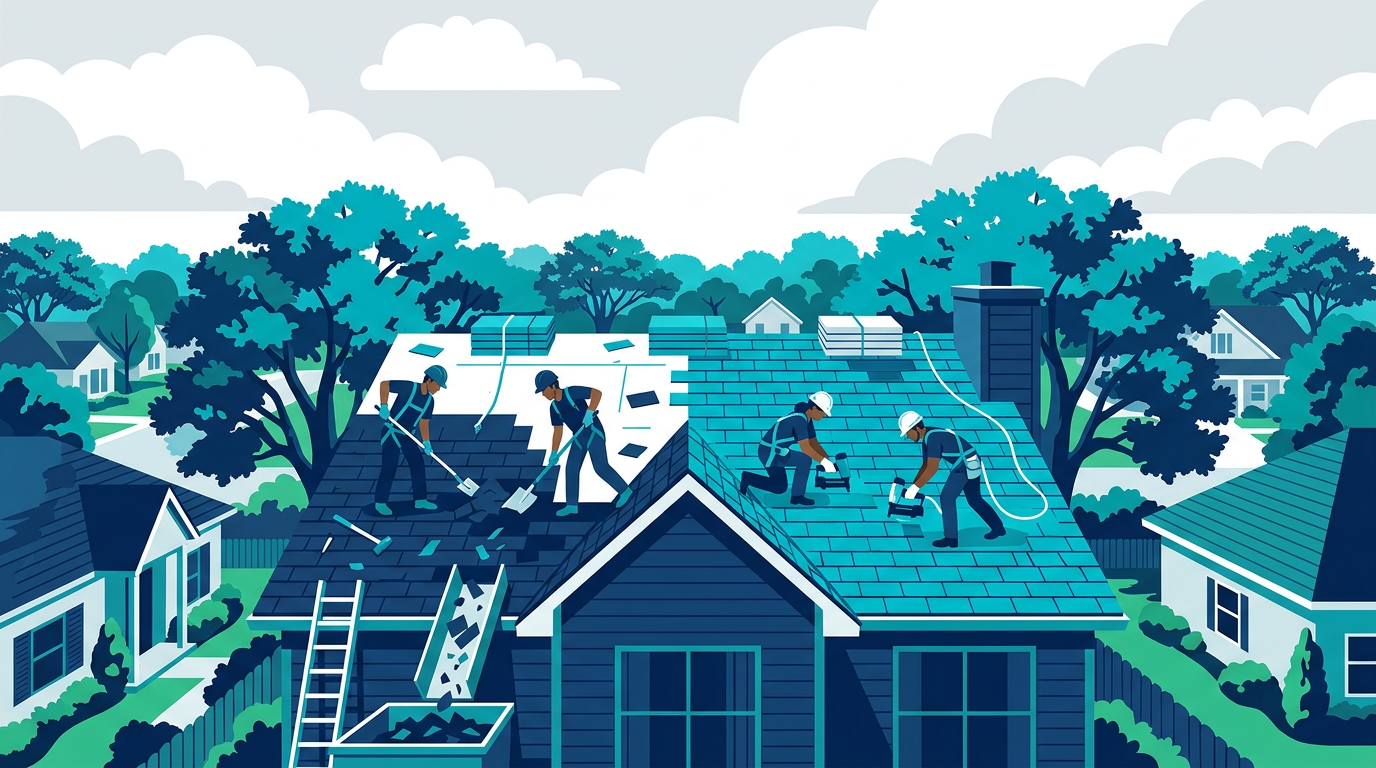
Texas weather is one of the most demanding environments for roofing in North America. Hailstorms across the DFW Metroplex, severe wind events along the Gulf Coast, intense UV exposure statewide, and the occasional ice storm combine to give Texas homeowners some of the shortest roof lifespans in the country.
Understanding what a roof replacement costs — and what drives those costs — is essential for Texas homeowners facing a replacement decision in 2026.
Average Roof Replacement Cost in Texas
The average roof replacement cost in Texas in 2026 runs between $8,000 and $20,000 for a standard single-family home with 3-tab asphalt shingles. The wide range reflects differences in home size, roof complexity (pitch, valleys, dormers), material choice, and labor costs by market.
Cost per square (roofing industry measures in 100 sq ft “squares”):
- 3-tab asphalt shingles:
$350–$500per square installed - Architectural (dimensional) shingles:
$450–$650per square installed - Impact-resistant shingles (Class 4):
$500–$800per square installed - Metal roofing (standing seam):
$900–$1,600per square installed - Tile (clay or concrete):
$800–$1,400per square installed
A typical 1,500 sq ft single-story home has roughly 17–20 squares of roof (accounting for pitch and overhang). A 2,500 sq ft two-story home may have 25–35 squares depending on roof complexity.
Roof Replacement Costs by Texas City
Labor rates and material availability vary significantly across Texas markets:
| City | Asphalt (Architectural) | Metal (Standing Seam) |
|---|---|---|
| Dallas/Fort Worth | $12,000–$18,000 | $22,000–$38,000 |
| Houston | $11,000–$17,000 | $20,000–$35,000 |
| Austin | $13,000–$20,000 | $24,000–$40,000 |
| San Antonio | $10,000–$16,000 | $19,000–$33,000 |
| El Paso | $9,000–$14,000 | $17,000–$30,000 |
Estimates for a typical 2,000 sq ft home, 2026. Prices vary by contractor, current material costs, and roof complexity.
Austin and DFW tend to run higher due to strong demand and labor costs. El Paso and less competitive smaller markets tend to run lower.
What Drives the Cost Difference
1. Material choice — the single biggest cost variable. Class 4 impact-resistant shingles (highly recommended for hail-prone areas like DFW) cost 20–30% more than standard architectural shingles but often qualify for insurance discounts and last longer.
2. Roof pitch and complexity — steep roofs (8/12 pitch and above) require more labor time, safety equipment, and slower material placement. A complex roof with multiple valleys, dormers, skylights, and penetrations costs 20–40% more to replace than a simple hip or gable roof of the same square footage.
3. Tear-off layers — if your existing roof has two or more layers of shingles, building code in most Texas municipalities requires full tear-off before new material is installed. Tear-off adds $1–$2 per square foot to the project cost.
4. Decking condition — if the plywood decking (sheathing) beneath the shingles is rotted or damaged, it must be replaced. This is discovered during tear-off and adds $2–$4 per square foot for affected areas.
5. Ventilation and flashing — ridge vents, soffit vents, and metal flashing around penetrations (chimney, pipes, skylights) are often upgraded during a replacement. Proper ventilation extends shingle life — skipping it to save money is a false economy.
Filing a Homeowners Insurance Claim for Roof Damage
Texas homeowners insurance covers roof replacement for storm damage (hail, wind) — but the claims process has friction points.
Before filing:
- Get an independent inspection from a licensed roofing contractor (not the insurance company’s adjuster) to document damage thoroughly. Your contractor is your advocate; the insurance adjuster works for the insurance company.
- Photograph all damage from ground level and, if safe, from the roof.
- Check your policy for ACV (Actual Cash Value) vs. RCV (Replacement Cost Value) coverage. ACV policies depreciate the payout based on roof age. RCV policies pay the full replacement cost minus your deductible.
Common claim pitfalls:
- Insurance companies in Texas may try to classify damage as “cosmetic” (hail bruising without granule loss) to reduce or deny claims. Document functional damage (granule loss, cracked shingles, bent metal components).
- Texas has a 2-year statute of limitations on most insurance claims. Do not wait.
- Beware of storm-chasing contractors who offer to “file the claim for you” and waive your deductible. Insurance fraud laws in Texas prohibit waiving deductibles — this practice can void your policy.
The Texas Department of Insurance provides free resources on filing property claims and understanding your coverage at tdi.texas.gov.
Getting a Roofing Quote in Texas
Get at least two quotes from licensed, insured roofing contractors. Ask each contractor for:
- License number (verify at TDLR.texas.gov)
- Certificate of Insurance (general liability + workers’ comp)
- Manufacturer’s warranty and workmanship warranty
- Permit confirmation (most Texas municipalities require a permit for full replacement)
- Itemized breakdown (tear-off, materials, labor, disposal)
Be cautious of door-to-door contractors immediately after a storm. While many are legitimate, some are unlicensed storm chasers who do substandard work and leave the area before warranty issues surface.
Finding a Vetted Roofing Contractor
House Escort connects Texas homeowners with licensed, vetted roofing professionals. No commission fees — which means competitive pricing and more take-home pay for the contractor.
Find a Roofing Pro on House Escort →
For more on home repair costs and hiring, see our guide to how to hire an electrician for residential work.
Frequently Asked Questions
How much does it cost to replace a roof in Texas?
The average cost to replace a roof in Texas in 2026 is $8,000–$20,000 for a standard home with architectural asphalt shingles. Cost depends on home size, roof complexity (pitch, dormers, valleys), number of tear-off layers, and material choice. Metal and tile roofs cost significantly more ($20,000–$40,000+) but last 40–70 years compared to 20–30 years for quality asphalt shingles.
Does insurance cover roof replacement in Texas?
Homeowners insurance covers roof replacement when damage is caused by a covered peril — typically hail, wind, or a falling object. Insurance does not cover normal wear and tear, age-related granule loss, or damage from poor maintenance. RCV (Replacement Cost Value) policies are preferable — they pay the full replacement cost minus your deductible. ACV policies depreciate the payout based on roof age, which can leave homeowners significantly short-funded.
How long does a roof last in Texas?
Standard 3-tab asphalt shingles last 15–20 years in Texas’s harsh UV environment. Architectural (dimensional) shingles last 20–30 years. Class 4 impact-resistant shingles last 25–35 years and are particularly well-suited for hail-prone areas like North Texas and DFW. Metal roofs last 40–70 years. Proper attic ventilation is the biggest factor in extending Texas roof life — heat buildup from inadequate ventilation accelerates shingle degradation.
What is a Class 4 impact-resistant roof and is it worth it in Texas?
Class 4 is the highest UL 2218 impact resistance rating for roofing materials. Class 4 shingles withstand 2-inch steel ball drops (simulating large hail) without cracking. In Texas, where hailstorms cost homeowners billions annually, Class 4 shingles are strongly recommended for DFW, Austin, and other hail-prone regions. Most Texas insurance companies offer a premium discount of 20–30% for Class 4 roofing — which can pay for the upgrade cost within 5–7 years.
How do I verify a roofing contractor’s license in Texas?
In Texas, roofing contractors are licensed by TDLR (Texas Department of Licensing and Regulation). Verify any contractor’s license at tdlr.texas.gov/LicenseSearch. An active Roofing Contractor license is required for any job over $10,000 (effective as of recent Texas legislation changes). Always verify before signing a contract — unlicensed work may not be covered by your homeowners insurance and leaves you without formal recourse if work quality issues arise.