How to Hire an Electrician for Residential Work
House Escort Team
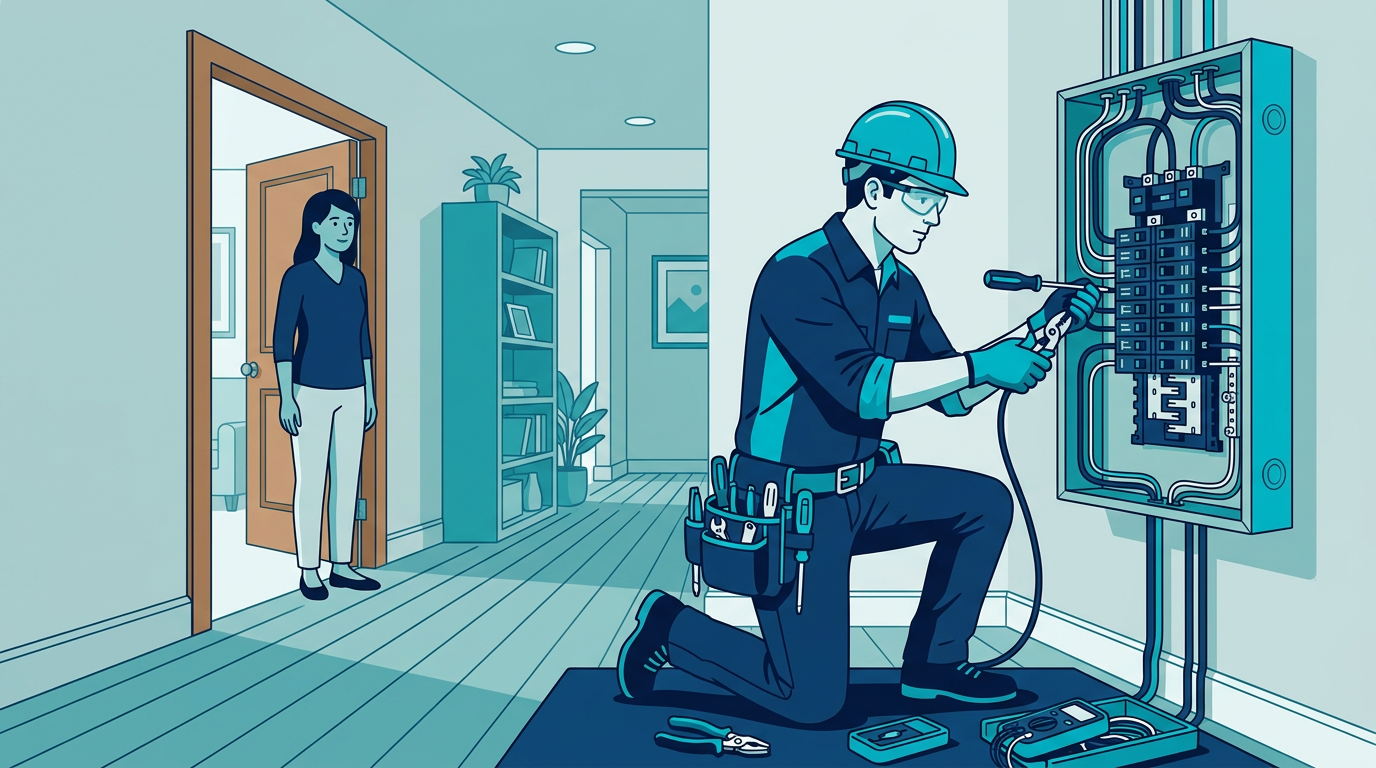
Electrical work is one of the few home repair categories where hiring the wrong person can cost you far more than money. Faulty electrical work is a leading cause of residential fires — the U.S. Fire Administration reports approximately 46,700 home electrical fires per year, many attributable to improper wiring, incorrect breaker sizing, or code violations from unlicensed work.
Knowing how to hire the right residential electrician is not complicated, but it requires asking a few specific questions most homeowners skip.
Know What License to Look For in Texas
Texas requires electricians to be licensed by the Texas Department of Licensing and Regulation (TDLR). There are several license levels — knowing the difference matters for your project:
- Apprentice Electrician — works under supervision; not authorized to work independently.
- Journeyman Electrician — licensed to perform electrical work independently on most residential projects.
- Master Electrician — licensed to plan, design, and oversee electrical work. Required to pull permits for larger jobs.
- Residential Wireman — licensed specifically for single-family and duplex residential wiring (a Texas-specific license category).
- Electrical Contractor — a business license that allows the company to bid and contract electrical work. The company must have a Master Electrician on staff.
For most residential jobs, you want to hire a licensed Electrical Contractor who employs licensed Journeyman or Master electricians. Verify the license at the TDLR license verification portal before any work begins.
Verify These Three Things Before Hiring
1. License — search the TDLR database using the electrician’s name or license number. An active, valid license is non-negotiable. If someone cannot provide a license number, walk away.
2. Insurance — ask for a Certificate of Insurance showing:
- General Liability coverage (minimum
$300,000—$1,000,000for larger jobs) - Workers’ Compensation if they have employees
If a worker without workers’ comp coverage is injured in your home, you could be liable for medical expenses. This is not a theoretical risk — it has happened to homeowners across Texas.
3. Permits — any electrical work involving your panel, new circuits, or wiring behind walls typically requires a permit pulled from your city or county building department. The permit ensures an inspector verifies the work meets code. Unlicensed, unpermitted electrical work:
- Voids your homeowners insurance coverage for damage related to that work
- Creates problems when selling (home inspector will flag it; buyer can walk or demand discount)
- Is a genuine safety hazard
Reputable electricians pull permits as standard practice. If an electrician suggests skipping the permit “to save money” — that is a red flag.
What to Ask Before Getting a Quote
Before inviting any electrician into your home, ask:
- “Are you licensed as an Electrical Contractor in Texas?” (get the license number)
- “Do you carry general liability and workers’ comp insurance?” (request the certificate)
- “Will you pull the permit for this work?”
- “Who specifically will be doing the work — you or employees?”
- “What is your warranty on labor and parts?”
These questions weed out unlicensed operators and set a clear expectation of professional conduct before any money changes hands.
Getting Accurate Electrical Quotes
Get at least two quotes for any job over $500. Electrical pricing varies more than most homeowners expect — a panel upgrade in Texas might run $1,500 from one company and $3,000 from another for essentially the same scope. The price difference is usually driven by labor rates, overhead, and whether the low quote is missing components (permit fees, inspection costs, materials for code compliance).
What a good electrical quote includes:
- Itemized breakdown of labor and materials
- Permit fees (if applicable)
- Timeline (start date, estimated completion)
- Payment terms (deposit amount, when final payment is due)
- Warranty on workmanship (typically 1 year)
What to be suspicious of: quotes that are significantly below market rate (may indicate unlicensed work or missing scope), quotes with no itemization, or quotes given over the phone without seeing the work.
Common Residential Electrical Jobs and What They Cost in Texas
- Panel upgrade (100A → 200A):
$1,500–$3,500depending on local utility requirements - Outlet addition (single circuit):
$150–$350including labor and permit - GFCI outlet installation (bathroom/kitchen):
$100–$250per outlet - Ceiling fan installation (existing junction box):
$100–$200 - EV charger installation (Level 2, 240V):
$400–$1,200depending on panel capacity and run distance - Recessed lighting (new circuit):
$1,500–$3,000for a typical room installation
When to Skip DIY and Always Hire
Texas allows homeowners to do some electrical work on their own primary residence without a license. However, code still applies and most work still requires a permit and inspection. For the following work, always hire a licensed electrician:
- Any work on or near the main panel
- Running new circuits
- Anything involving conduit in a finished wall
- Aluminum wiring remediation
- Any work that requires a permit
Simple replacements (swapping an outlet, replacing a light fixture with no wiring changes) are generally within DIY range for a competent homeowner — but when in doubt, the cost of a licensed electrician is low relative to the cost of a house fire.
Finding a Licensed Electrician Near You
House Escort connects homeowners with licensed, vetted local electricians — no commission fee, which means lower prices passed to you and more take-home pay for the pro. Browse available electricians and request quotes directly.
Find an Electrician on House Escort →
Also see our guide to finding a reliable contractor near you and how to write a service contract for home repairs.
Frequently Asked Questions
Do electricians need to be licensed in Texas?
Yes. Texas requires all electricians performing work for others to hold a valid license issued by the Texas Department of Licensing and Regulation (TDLR). The minimum license to work independently on residential projects is a Journeyman Electrician or Residential Wireman. Electrical contractors (companies) must hold an Electrical Contractor license and employ a licensed Master Electrician. You can verify any license at tdlr.texas.gov.
What does a 200-amp panel upgrade cost in Texas?
A 200-amp panel upgrade in Texas typically costs $1,500–$3,500 including parts, labor, and permit. The range depends on your city’s permit fees, the distance from the utility meter to the panel, whether the utility company needs to pull the meter (coordinated through your electric provider), and whether any code upgrades are required at the same time. Always get two quotes and confirm permit fees are included.
What questions should I ask an electrician before hiring?
Ask for their Texas TDLR license number, a certificate of insurance showing general liability and workers’ comp, confirmation that they will pull the required permit, who specifically will perform the work, and their warranty on labor. These five questions reliably separate licensed professional contractors from unlicensed operators.
Can a homeowner do their own electrical work in Texas?
Texas allows homeowners to perform electrical work on their own primary residence without a license, but state and local electrical codes still apply and most work still requires a permit and inspection. Homeowners may not perform electrical work on rental properties without a license. If you are unsure whether your project requires a permit, call your city’s building department before starting.
How long does it take to hire an electrician?
For routine residential work, most licensed electricians can schedule within 1–2 weeks. During peak seasons (summer when homeowners are completing renovations before school year) or after storm events, wait times extend to 3–4 weeks. For urgent safety issues (sparking outlet, burning smell from panel), many electrical contractors offer same-day or next-day emergency service at a premium rate.