HVAC Contractor Business Growth: What Actually Works
House Escort Team
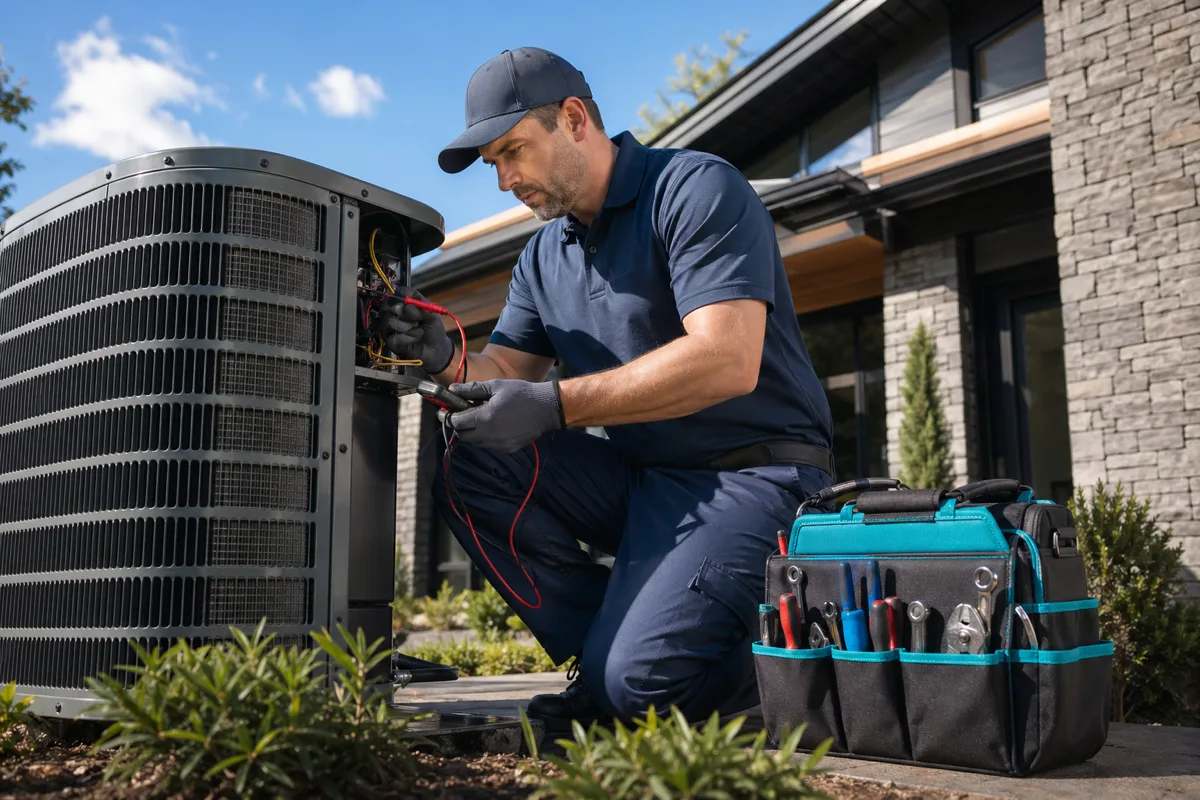
HVAC is one of the most recession-resistant trades in existence. People don’t stop needing AC in Texas in July regardless of the economy — they just make harder decisions about who to call and whether to repair or replace. The HVAC contractors who grow through market cycles are the ones who’ve built relationships, not just run ads.
Here’s what consistently works for growing an HVAC business in 2026.
The Foundation: Maintenance Contracts as a Revenue Engine
The single highest-leverage move for any HVAC contractor is building a base of maintenance contract customers. A well-structured maintenance plan provides:
- Predictable recurring revenue — you know in advance what your Q1 and Q2 book looks like
- Reduced marketing cost — maintenance customers call you first when something breaks
- Higher average ticket — maintenance visits uncover repair opportunities and accelerate replacement conversations
- Smoother shoulder season workloads — spring/fall tune-ups fill the calendar when new installs slow down
Pricing Maintenance Contracts
A residential HVAC maintenance contract typically covers:
- Spring AC tune-up (inspect, clean coils, check refrigerant, test capacitors, measure amperage)
- Fall heat tune-up (heat exchanger inspection, burner cleaning, ignitor check, thermostat calibration)
- Priority scheduling + 10-15% parts discount as customer benefits
Pricing varies by market and what’s included:
| Plan Type | Annual Cost | Notes |
|---|---|---|
| Single system, 2 visits | $150–$250/yr | Standard residential plan |
| Dual system (up to 3 tons each), 2 visits | $250–$400/yr | Common in larger TX homes |
| Commercial light (small office/retail) | $400–$900/yr | Per system, quarterly visits typical |
The business math: 200 residential maintenance contracts at $200/yr = $40,000 guaranteed annual revenue before you answer a single repair call. Each contract customer generates $400–$800 in additional repair/replacement revenue on average over a 3-year relationship.
Selling Maintenance Plans
The best time to sell a maintenance plan is immediately after completing a repair:
- “Your AC just had a capacitor go. Want to make sure this is the last time you’re dealing with an unexpected breakdown? Our maintenance plan covers two tune-ups a year and gives you priority scheduling if anything else comes up. It’s
$189for the year.” - Close rate on this conversation is 25-45% — far higher than cold marketing
Train your technicians to make this offer on every repair call. The tech who closes 3 maintenance contracts per week adds $2,500+ in annual recurring revenue to your book. Make it part of their performance metrics.
Google Business Profile: The Organic Lead Machine
For HVAC contractors, Google search is the primary channel for inbound emergency calls — and emergency calls are your highest-margin work. The homeowner with a broken AC in August isn’t price-shopping; they’re calling the first credible result they find.
Optimizing your Google Business Profile (GBP):
- Complete every field — services (list each: AC repair, furnace repair, installation, maintenance, mini-split, etc.), hours including emergency hours, service area
- Upload photos weekly — technician on a job, before/after of a coil cleaning, new system installs. GBP with 50+ photos significantly outperforms sparse profiles
- Respond to every review — including negative ones. A professional response to a 1-star review demonstrates character to prospects reading your profile
- Post weekly GBP updates — seasonal tips (“With summer approaching, here’s what your AC needs before the heat hits”), offers, or recent project highlights. These are free and keep your profile active in Google’s ranking signals
A well-managed GBP in a mid-sized Texas market (100,000-400,000 population) can generate 10-30 inbound calls per month at zero per-lead cost.
Beyond Google: Building a Multi-Channel Lead System
Relying entirely on one channel is a fragile business. Build these channels over time:
Referral Network (Builder and Property Manager Relationships)
New home builders need preferred HVAC contractors. Property managers with rental portfolios need reliable service relationships. These accounts are worth far more than single residential jobs:
- A property manager with 50 units who uses you as their preferred HVAC contractor is
$15,000–$40,000+in annual work - A builder doing 20 homes/year at
$4,000–$8,000HVAC install per home is$80,000–$160,000in revenue
Getting these relationships: attend local BOMA/NARPM meetings (property management associations), reach out directly to builders doing subdivisions in your market, offer a preferred vendor rate in exchange for exclusivity or volume commitment.
Targeted Direct Mail
Direct mail for HVAC works well when targeted by:
- Home age: Homes built 12-18 years ago have systems approaching end-of-life. Target these for replacement conversations
- Season: Pre-summer postcards (March/April in Texas) for AC tune-ups; pre-winter (October) for heat checks
- Post-purchase: New homeowners are high-value HVAC prospects — many don’t know the system history
A 1,000-piece postcard campaign targeting 12-15-year-old homes typically costs $400-$600 and generates 2-5 calls if the offer is clear and the timing is right.
Fleet Branding
Your trucks are moving billboards in the neighborhoods you serve. Clean, clearly branded vehicles with:
- Company name + phone number (large, readable at 35 mph)
- Core services listed
- License number (builds trust)
Professionally wrapped vans in residential neighborhoods generate 15-30 inbound calls per truck per year — a high ROI on a $3,000–$5,000 one-time investment.
Pricing for Profit
HVAC contractors frequently undercharge for diagnostic calls and repair work. Benchmarks:
| Service | Market Range | Notes |
|---|---|---|
| Diagnostic/service call | $89–$189 | Should not include repair |
| Capacitor replacement | $200–$400 | Parts $15–$40, rest is labor/overhead |
| Refrigerant charge (per lb R-410A) | $80–$150 | Regulatory cost pressure increasing |
| Blower motor replacement | $400–$700 | |
| New residential system (2-3 ton) | $4,000–$8,000 installed | Varies significantly by efficiency tier |
The biggest margin leak: HVAC contractors not charging adequately for their diagnostic time. A thorough diagnostic on a complex system issue takes 45-90 minutes of skilled technician time. Price it accordingly — cheap or “free” diagnostic calls attract price shoppers and undervalue your expertise.
Find Clients Who Pay What You’re Worth
House Escort connects HVAC contractors with homeowners looking for quality service — and keeps 100% of your earnings on every job without taking a lead fee or commission.
See our guide on how to grow your flooring contractor business for parallel strategies that work across trades.
Frequently Asked Questions
How many maintenance contracts does an HVAC business need to be stable?
The stability threshold varies by market, but a common goal is covering 30-40% of your annual revenue target with maintenance contract recurring revenue. For a solo operator targeting $300,000 in annual revenue, that’s $90,000–$120,000 in maintenance contract revenue — roughly 450-600 residential plans at $200/yr. For a crew-based business, the math scales up accordingly.
What’s the best way to retain HVAC maintenance contract customers?
Auto-renewal with a credit card on file dramatically improves retention. Customers who have to actively decide to renew often don’t — not because they’re dissatisfied, but because it’s friction. Send a renewal notice 60 days out, auto-charge on the anniversary date, and offer a loyalty discount for 3+ consecutive years. Contractors with this system see 70-85% retention vs. 40-55% for invoice-based renewal.
How do HVAC contractors compete with large franchise operations?
Local contractors win on responsiveness, relationship quality, and price. A franchise operation often has higher overhead and is slower to schedule. The local contractor who answers the phone at 7 PM, shows up the next morning, and remembers the customer’s previous service history will win repeat business. Compete on service quality and relationships, not just price.
What seasons are best for marketing HVAC services in Texas?
Texas has two primary HVAC seasons: AC (March-October for marketing, peak May-September for emergency calls) and heat (October-February for marketing, November-January for emergency calls). The highest-ROI marketing windows are February-March (pre-summer tune-up push) and September-October (pre-winter heat prep). Maintenance plan selling happens year-round but peaks in these shoulder windows.
Should HVAC contractors invest in Google Ads?
Yes, for emergency and installation searches. HVAC is one of the highest-converting verticals for Google Local Services Ads (LSAs) — the “Google Guaranteed” badge listings that appear above standard results. LSA leads for HVAC run $25-$80 per lead in Texas markets but have high intent (the customer is ready to book). Start with LSAs before investing in standard Search campaigns.