Solar Panel Installation Cost in Texas 2026
House Escort Team
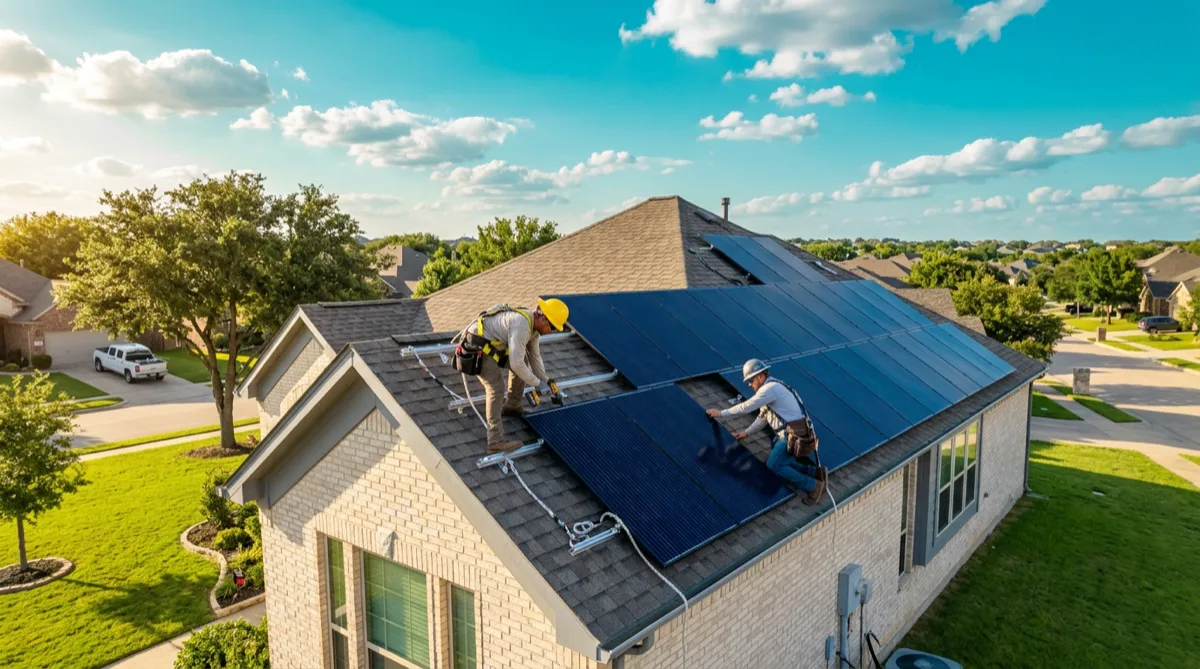
Texas is one of the best states in the country for solar energy — abundant sunshine, high electricity costs, and a competitive installer market combine to make rooftop solar a financially compelling upgrade for many homeowners. The federal solar investment tax credit makes 2026 one of the strongest years to act before ITC rates step down.
Here’s what Texas homeowners need to know about solar panel installation costs, incentives, and what to expect from the process.
Average Solar Panel Cost in Texas 2026
The average cost to install a residential solar system in Texas in 2026 runs $2.50–$3.50 per watt before incentives, depending on system size, equipment quality, and installer.
For a typical Texas home using 1,100–1,300 kWh per month, a 10 kW system is common. That puts total gross costs at:
| System Size | Gross Cost (Before ITC) | After 30% ITC |
|---|---|---|
| 6 kW | $15,000–$21,000 | $10,500–$14,700 |
| 8 kW | $20,000–$28,000 | $14,000–$19,600 |
| 10 kW | $25,000–$35,000 | $17,500–$24,500 |
| 12 kW | $30,000–$42,000 | $21,000–$29,400 |
Prices vary by city — DFW, Austin, San Antonio, and Houston all have competitive installer markets that keep prices near the lower end of these ranges. Rural Texas may run 10–15% higher due to fewer competing installers.
Federal Solar Investment Tax Credit (ITC)
The federal Residential Clean Energy Credit (Solar ITC) allows you to deduct 30% of your solar installation cost directly from your federal income taxes in 2026. This is a dollar-for-dollar tax reduction, not a deduction — it reduces what you owe, not just your taxable income.
On a $28,000 system, the 30% ITC saves $8,400 in federal taxes. You can apply any unused credit to future tax years if the credit exceeds your tax liability in the installation year.
The 30% ITC rate is scheduled through 2032, then steps down to 26% in 2033 and 22% in 2034. Filing year 2026 remains at the full 30%.
For current ITC guidance, see IRS Form 5695.
Texas-Specific Solar Incentives
Beyond the federal ITC, Texas homeowners have access to several additional savings:
Property tax exemption: Texas exempts the added home value from rooftop solar from your property taxes. If your solar system adds $20,000 in appraised value, you pay zero additional property tax on that increase under the Texas Property Code Section 11.27.
Sales tax exemption: Texas exempts solar energy equipment from state sales tax. On a $30,000 system, that’s approximately $2,475 in savings (at 8.25% combined rate) — worth confirming with your installer.
Utility rebates: Some Texas utilities offer additional incentives. Austin Energy and CPS Energy (San Antonio) have historically offered solar rebates, though availability and amounts change frequently. Oncor and other deregulated utility customers should check with their retail electric provider.
Net metering / ERCOT compensation: Texas has a deregulated energy market. Most retail electric providers offer some form of excess generation credit when your panels produce more than you use, but the terms vary significantly. Review your provider’s buyback rate — higher buyback rates improve your payback period.
Solar Payback Period in Texas
With Texas electricity costs averaging $0.12–$0.16 per kWh across major cities (higher during peak summer months), rooftop solar typically delivers payback periods of 7–11 years after the federal ITC.
Example calculation for a 10 kW system in DFW:
- System cost: $29,000
- Federal ITC (30%): -$8,700
- Net cost: $20,300
- Annual savings (1,200 kWh/mo × $0.14/kWh × 12): ~$2,016
- Simple payback: ~10 years
- System lifespan: 25–30 years
After payback, you’re generating electricity at near-zero cost for the remaining 15–20 years of system life. Most quality systems come with 25-year panel warranties.
What’s Included in Solar Installation Cost
A complete residential solar installation includes:
- Solar panels — most residential installs in Texas use monocrystalline panels (higher efficiency, longer lifespan). Common brands: Q CELLS, REC, Silfab, Panasonic, SunPower
- Inverter — converts DC panel output to AC household current. String inverters are most common; microinverters (Enphase) cost more but provide panel-level monitoring
- Mounting hardware — roof penetrations, racking rails, and weatherproofing
- Wiring and electrical — DC wiring from panels, AC disconnect, grid interconnect
- Permitting — required in all Texas cities; included by most installers
- Utility interconnection application — required to connect to the grid; installer typically handles
Battery storage (Tesla Powerwall, Enphase IQ, etc.) is separate and typically adds $10,000–$15,000 per battery unit. Batteries provide backup power during ERCOT grid outages — a relevant consideration after the 2021 Texas winter storm event.
Finding a Qualified Solar Installer in Texas
Questions to ask before signing a solar contract:
- Are you NABCEP-certified (North American Board of Certified Energy Practitioners)?
- Do you handle permitting and utility interconnection, or is that on me?
- What panel and inverter brands do you install?
- What warranties cover the panels, inverter, and workmanship?
- What is the estimated production in kWh per year for my specific system and roof?
- What is my realistic payback period after all incentives?
Avoid installers who won’t provide a written production estimate or won’t explain the ITC calculation in clear terms.
Find a solar installer through House Escort and connect with vetted local pros who keep 100% of their earnings rather than paying Angi or Thumbtack’s 10–30% commission.
Also worth reading: Permit Requirements for Home Renovations in Texas and How to Hire a Reliable Electrician for Residential Work.
Frequently Asked Questions
How much do solar panels cost in Texas in 2026?
The average solar installation in Texas costs $2.50–$3.50 per watt before incentives. A typical 10 kW system runs $25,000–$35,000 gross, or $17,500–$24,500 after the 30% federal Investment Tax Credit. Prices vary by system size, equipment brand, and installer.
What is the federal solar tax credit for Texas homeowners?
The Residential Clean Energy Credit (Solar ITC) lets you claim 30% of your solar installation cost as a direct tax credit on your federal return. On a $28,000 system, that’s $8,400 off your tax bill in the installation year, with any unused portion carried forward to future years.
Is solar worth it in Texas?
For most Texas homeowners, yes — especially in high-sun areas like DFW, San Antonio, and Houston. High electricity rates, the 30% federal ITC, Texas property tax exemption, and a 25-year panel lifespan make the math compelling. Most systems pay back in 7–11 years, with 15–20 years of near-free electricity following.
Does Texas have net metering for solar?
Texas doesn’t mandate statewide net metering, but most retail electric providers in the deregulated ERCOT market offer some form of excess generation credit. Buyback rates vary by provider and plan. Some providers offer retail-rate credits; others offer wholesale-rate buyback, which is significantly lower. Compare your provider’s solar compensation terms before committing.
How long does solar installation take in Texas?
Most residential solar installations in Texas take 1–3 days for physical installation. Permitting and utility interconnection add 2–8 weeks depending on city permitting office backlog and your utility’s interconnection queue. In total, most Texas homeowners go from contract signing to system activation in 4–12 weeks.