EV Charger Installation Cost at Home: 2026
House Escort Team
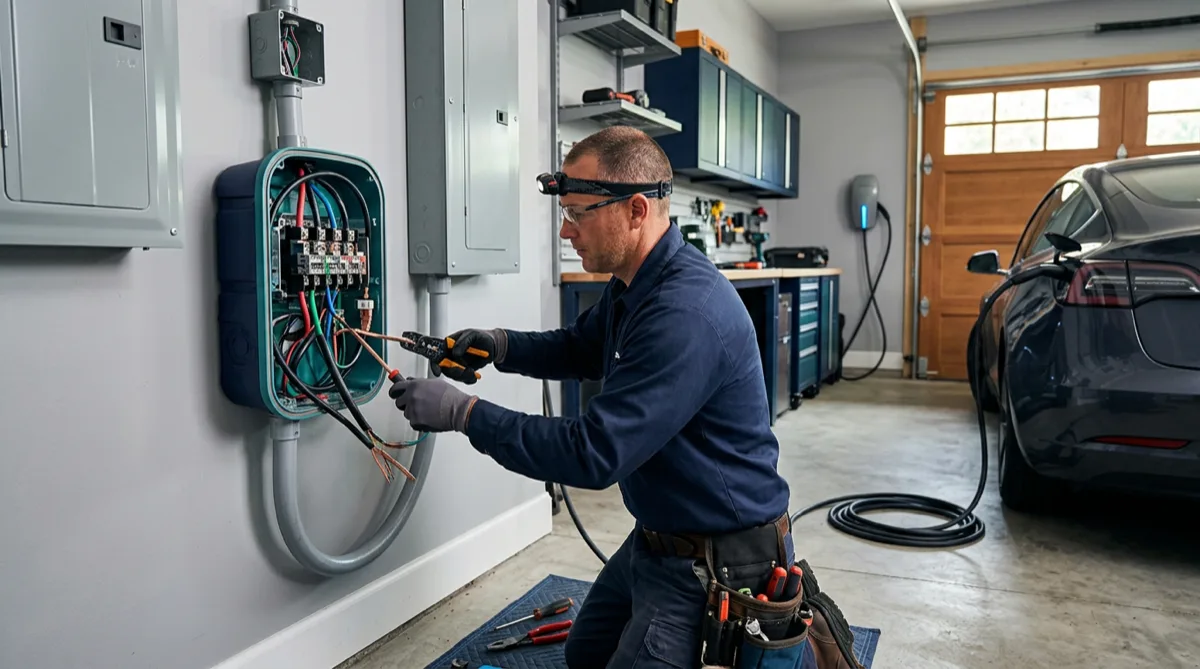
Home EV charger installations have surged as electric vehicle adoption accelerates. Whether you just bought your first EV or you’re planning ahead, understanding the real cost of home charging installation — and what affects it — helps you make a smart decision and avoid surprises.
This guide covers Level 1 vs Level 2 charging, realistic installation costs in 2026, Texas utility incentives, and how to hire a qualified electrician for the job.
Level 1 vs Level 2 Charging: What’s the Difference?
Level 1 charging uses your standard 120V household outlet. You plug the included charger cable directly into any standard 3-prong outlet — no installation needed. Level 1 delivers approximately 4–5 miles of range per hour of charging.
For someone driving 30–40 miles per day, Level 1 overnight charging works. For higher-mileage drivers, Level 1 is too slow to keep up with daily usage.
Level 2 charging requires a dedicated 240V circuit — the same type that runs electric dryers and ovens. A Level 2 charger (EVSE) delivers 20–30 miles of range per hour, making it practical for most driving patterns. Most EV owners who charge at home upgrade to Level 2.
Level 2 chargers require professional electrical installation — this is what generates the cost.
Cost to Install a Level 2 EV Charger
Total cost ranges:
| Scenario | Typical Cost |
|---|---|
| Charger hardware only (EVSE) | $200–$800 |
| Electrician labor (panel near garage, adequate capacity) | $200–$500 |
| Electrician labor (longer wire run, minor panel work) | $500–$1,200 |
| Electrician labor + panel upgrade | $1,500–$4,000+ |
| Permitting (required by most cities) | $50–$200 |
| Total typical range | $500–$2,500 |
The biggest variable: your electrical panel’s current capacity and proximity to where you want the charger. If your panel already has an open 50-amp circuit breaker slot and your garage is adjacent to the panel, installation costs stay low. If the panel needs upgrading or the wire run is long, costs increase accordingly.
What Determines Your Installation Cost
Panel capacity: A Level 2 charger typically needs a 50-amp circuit (40-amp continuous draw). If your main panel is already near capacity — common in older homes — you may need to add circuits, install a subpanel in the garage, or upgrade the main panel. Panel upgrades cost $1,500–$4,000+ but may be needed regardless of EV ownership.
Distance from panel to charger location: Each foot of conduit and wire adds cost. A garage adjacent to the panel is cheapest. A detached garage 50+ feet from the panel requires more labor and materials.
Permitting: Most Texas municipalities require permits for EV charger installations. Permit fees are modest ($50–$200), but pulling a permit means an inspection — which confirms the work is safe and protects you when you sell the home.
Charger brand: Popular Level 2 EVSE options include:
- ChargePoint Home Flex — $700, works with most EVs, WiFi-enabled
- Enel X JuiceBox — $600–$800, smart charging, energy management
- Tesla Wall Connector — $475 (works with Tesla and other EVs with adapter)
- Grizzl-E — $300–$400, basic, reliable, weatherproof
Hardware cost difference between budget and premium is typically $400–$500. The more important spending decision is hiring a licensed electrician who pulls the permit and inspects the work correctly.
Texas Utility Incentives for EV Charging
Oncor (DFW / North Texas): Oncor periodically offers rebates for residential EV charger installation through its SmartCharge Texas program. Check oncor.com for current program availability.
Austin Energy: Offers rebates and off-peak charging rate discounts for EV owners who enroll in their Value of Solar or Smart Hours programs. Charger installation may also qualify for rebates.
CPS Energy (San Antonio): Has offered EV-related incentives periodically. Visit cpsenergy.com for current programs.
Federal tax credit: The Alternative Fuel Vehicle Refueling Property Credit (Form 8911) provides a 30% credit on EV charger hardware and installation costs for primary residences, up to $1,000 per item. This covers both hardware and labor. Verify current eligibility with your tax preparer.
Hiring a Licensed Electrician for EV Charger Installation
EV charger installation in Texas requires a licensed electrician. In Texas, master electricians are licensed by TDLR (Texas Department of Licensing and Regulation). Journeyman electricians can also perform the work under a master electrician’s supervision and license.
What to look for:
- TDLR license number (verify at tdlr.texas.gov)
- Experience specifically with EV charger installations
- Will pull a permit and schedule inspection
- Provides a written estimate with scope of work
What to avoid:
- Handymen or unlicensed electricians offering to “save you the permit fee” — this creates liability issues and may void manufacturer warranties
- Verbal estimates without written scope
Find a licensed electrician through House Escort — connect with pros who keep 100% of their earnings and are rated by homeowners in your area.
Also worth reading: How to Hire an Electrician for Residential Work and Permit Requirements for Home Renovations in Texas.
Frequently Asked Questions
How much does it cost to install a Level 2 EV charger at home?
Total costs in 2026 typically run $500–$2,500 including hardware, labor, and permitting when your panel has available capacity. Homes requiring a panel upgrade can see costs reach $4,000–$6,000 for the combined panel upgrade plus charger installation. The single biggest cost variable is your electrical panel’s current capacity.
Do I need a permit to install an EV charger in Texas?
Yes, most Texas municipalities require a permit for EV charger installation since it involves a new dedicated electrical circuit. Permits typically cost $50–$200. Pulling a permit ensures an inspection, which confirms the work is safe and protects you if you sell the home later.
What is a Level 2 EV charger?
A Level 2 EV charger uses a dedicated 240V circuit (similar to an electric dryer outlet) to charge an electric vehicle at 20–30 miles of range per hour, compared to 4–5 miles per hour for standard Level 1 (120V) charging. Most EV owners upgrade to Level 2 for practical daily charging.
Are there federal tax incentives for home EV charger installation?
Yes. The Alternative Fuel Vehicle Refueling Property Credit (IRS Form 8911) provides a 30% tax credit on home EV charger hardware and installation costs, up to $1,000. This applies to primary residences. Consult your tax preparer for current eligibility and filing instructions.
How long does EV charger installation take?
The physical installation takes 2–4 hours in most cases. If a panel upgrade is needed, the installation may take a full day. Add permit and inspection time (1–3 weeks depending on the city) before the charger is cleared for use. Most homeowners have a fully operational Level 2 charger within 2–4 weeks of scheduling the work.