Contractor Safety Training Requirements Texas
House Escort Team
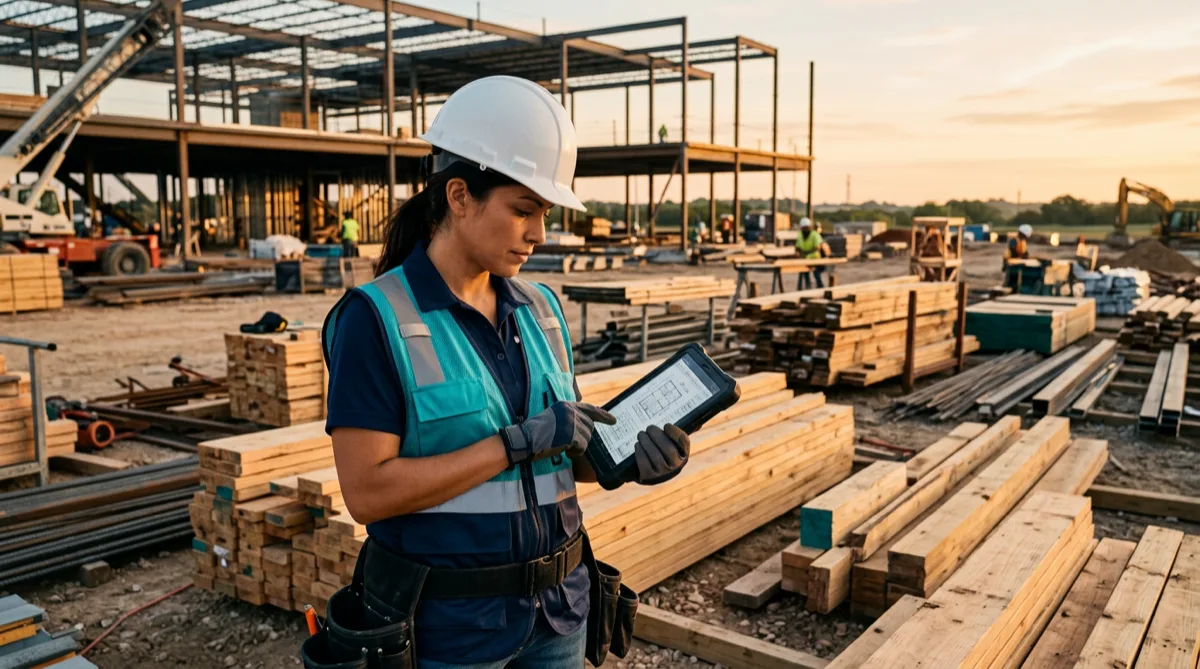
Contractor Safety Training Requirements Texas
Texas has no state OSHA plan — it operates under federal OSHA jurisdiction. That means federal OSHA standards apply to most Texas contractors, along with specific state-level licensing requirements that vary by trade.
Understanding contractor safety training requirements in Texas matters for two reasons: compliance (avoiding citations and liability), and competitive advantage (clients, GCs, and larger commercial accounts increasingly require documented safety credentials before hiring).
Federal OSHA Requirements for Texas Contractors
Since Texas operates under federal OSHA (not a state plan), the Occupational Safety and Health Administration sets the baseline standards. Key requirements for residential and commercial contractors:
OSHA 10 and OSHA 30
OSHA 10 and OSHA 30 are the most widely recognized safety training cards in the trades. They’re not federally mandated for all workers but are required by:
- Many commercial general contractors as a condition of working on their sites
- Public construction projects in some Texas municipalities
- Federal government construction projects (GSA, USACE, etc.)
OSHA 10 (Construction):
- 10-hour training course
- Covers fall protection, electrical safety, struck-by hazards, and caught-in/between hazards
- Required for workers on many commercial job sites
- Cost: $150–$250 for in-person courses; online options available through OSHA-authorized providers
- Card is valid indefinitely (no renewal required by OSHA, though some contractors require refresh every 5 years)
OSHA 30 (Construction):
- 30-hour expanded course
- Required for supervisors and foremen on many commercial and public projects
- Covers everything in OSHA 10 plus expanded topics: scaffolding, confined spaces, cranes, materials handling
- Cost: $200–$400
- Strongly recommended for any contractor looking to work on commercial or government projects
Fall Protection (29 CFR 1926.502)
Falls are the leading cause of death in construction — over 35% of all construction fatalities, according to OSHA data. Specific fall protection standards apply to:
- Working at 6 feet or more above a lower level on residential construction
- Roof work, scaffold work, leading edge work, and excavations
Compliant fall protection requires either guardrail systems, personal fall arrest systems, or safety nets. Proper training on fall protection equipment is required before use — an undocumented training gap is a citation waiting to happen.
Hazard Communication (HazCom / 29 CFR 1910.1200)
Any contractor working with chemicals — solvents, adhesives, coatings, cleaning agents — must maintain Safety Data Sheets (SDS) and train workers on chemical hazards. This applies to painters, waterproofers, flooring installers, and many others beyond obvious chemical-handling trades.
Trade-Specific Licensing in Texas
Texas requires licenses for several trades — and those licenses have ongoing education requirements:
Electrical
Electricians are licensed by the Texas Department of Licensing and Regulation (TDLR). License levels: Apprentice, Journeyman, Master, and Residential Wireman. Continuing education is required for license renewal — 4 hours every two years for most license classes.
HVAC
HVAC contractors must hold a TDLR license. License types include Technician (residential), Commercial HVAC, and Contractor. Continuing education requirements apply at renewal.
Plumbing
Licensed by the Texas State Board of Plumbing Examiners (TSBPE). Journeyman and Master Plumber licenses require passing exams and accumulating supervised work hours. Renewal requires continuing education.
Electrical Sign and Irrigator
Also regulated under TDLR with specific training and exam requirements.
General Contractors (No State License Required)
Texas has no state GC license — general contractors are not licensed at the state level. However:
- Individual subcontractors on your jobs must hold their trade licenses
- Some Texas cities require GC registration or certification for certain project types
- Commercial bonding and insurance requirements apply even without a formal license
Certifications That Help You Win More Work
Beyond minimum compliance, certain certifications differentiate contractors in competitive bids:
NCCER (National Center for Construction Education and Research)
NCCER provides standardized craft training and certification across dozens of trades. NCCER credentials are widely recognized on commercial construction projects and demonstrate standardized training that reduces client risk. Many large GCs in Houston, Dallas, and Austin prefer or require NCCER-credentialed subcontractors.
EPA 608 Certification (HVAC)
Required by federal law for anyone who purchases, handles, or reclaims refrigerants in HVAC service work. There’s no exemption for small contractors — this certification is legally required for refrigerant work.
Lead Renovator Certification (EPA RRP)
The EPA’s Renovation, Repair, and Painting (RRP) Rule requires contractors working in pre-1978 homes to be certified as lead renovators — or hire a certified renovator for the job. Texas has a high percentage of pre-1978 housing stock, particularly in established Houston, San Antonio, and Austin neighborhoods. Penalties for non-compliance are steep: up to $37,500 per day per violation.
Training is available through EPA-accredited providers and typically takes one day.
OSHA 500/510 (Safety Trainer)
For contractors who want to deliver OSHA training to their own crew rather than send workers to third-party courses, OSHA 500 (construction) and 510 (general industry) authorize you to teach OSHA 10 and 30 courses in-house.
Practical Safety Investment for Texas Contractors
The business case for documented safety training is straightforward:
Insurance: Documented safety training and OSHA compliance typically reduces workers’ compensation premiums. Insurers price risk — a demonstrably safe contractor is a better risk.
Commercial and government work: Most commercial GCs and government contracts require proof of OSHA 10/30 and documented safety programs. Without these, you’re locked out of the most profitable tier of Texas construction work.
Liability protection: In a job-site injury lawsuit, documented safety training is evidence that you took reasonable precautions. Its absence is evidence of negligence.
For more on building your contractor business for larger commercial work, see our guides on scaling from solo to crew and contractor insurance requirements.
Find clients who value quality, certified contractors on houseescort.com/provider — keep 100% of your earnings with 0% commission.
Frequently Asked Questions
Is OSHA 10 required for contractors in Texas?
OSHA 10 is not mandated by Texas state law for all contractors, but it is required by many commercial general contractors as a condition of working on their job sites, and by many public and federal construction projects. For any contractor pursuing commercial or government work, OSHA 10 (and OSHA 30 for supervisors) is a practical requirement.
How do I get OSHA 10 certified in Texas?
Enroll through an OSHA-authorized training provider. In-person courses are available through community colleges, trade associations, and private safety training companies throughout Texas. Online OSHA 10 courses are also available through authorized providers like 360training. Course costs range from $150–$250.
Do handymen need a license in Texas?
Texas does not have a specific handyman license. However, work that crosses into licensed trades — electrical, plumbing, HVAC — requires the appropriate trade license regardless of who performs it. A handyman performing unlicensed electrical work in Texas is operating illegally.
What happens if I work without required safety training on a commercial site?
If caught, you and your workers may be removed from the job site immediately. The general contractor may be cited for allowing uncertified workers on site. For your business, it damages your relationship with that GC and potentially disqualifies you from future bids.
How long does it take to complete OSHA 30?
OSHA 30 for Construction requires 30 classroom hours. In-person courses are typically delivered over 3.5–4 days. Online courses allow the same hours to be spread across multiple sessions at your own pace, though OSHA limits how quickly the online coursework can be completed.