Winter Home Maintenance Checklist
House Escort Team
Winter Home Maintenance Checklist
Winter is unforgiving to homes. Frozen pipes can burst and cause thousands in water damage. Ice dams destroy roofs. Drafty windows send heating bills through the ceiling. And the worst part? Most winter damage is entirely preventable with basic maintenance.
Whether you’re in the thick of winter or preparing for the next one, this checklist covers every system in your home that needs attention during the cold months. Work through it systematically and you’ll avoid the emergency repair calls that ruin weekends and empty bank accounts.
Heating System
Your heating system works hardest in winter. A failure during a cold snap isn’t just uncomfortable — it can be dangerous.
HVAC maintenance checklist:
- Replace or clean furnace filters — do this monthly during heavy-use months. A dirty filter forces your system to work harder, increasing energy costs by 5–15% according to the Department of Energy
- Schedule a professional furnace inspection — an annual tune-up catches issues before they become mid-January emergencies
- Test your thermostat — make sure it’s reading accurately and programmed for your schedule. Consider upgrading to a programmable or smart thermostat if you haven’t already
- Check all vents and registers — ensure they’re open, unblocked by furniture, and directing airflow properly
- Inspect the flue and chimney — if you have a gas furnace or fireplace, make sure the flue is clear and the chimney is clean to prevent carbon monoxide buildup
- Test carbon monoxide detectors — replace batteries and confirm they’re working. CO poisoning risk increases in winter when homes are sealed tight
For a complete HVAC maintenance walkthrough, see our HVAC maintenance checklist.
Plumbing and Pipes
Frozen pipes are one of the most common — and most expensive — winter emergencies. A single burst pipe can cause $5,000–$70,000 in damage.
Pipe protection checklist:
- Insulate exposed pipes in the attic, garage, crawl space, and along exterior walls. Pipe insulation sleeves cost a few dollars and take minutes to install
- Disconnect and drain outdoor hoses — water left in hoses can freeze back into the spigot and crack the pipe
- Shut off exterior faucets — locate the interior shut-off valve for each outdoor spigot and close it
- Know your main water shut-off location — if a pipe bursts, you need to stop the flow in seconds, not minutes
- Let faucets drip during extreme cold — running water (even a trickle) through exposed pipes prevents freezing
- Open cabinet doors under sinks on exterior walls to let warm air circulate around the pipes
If you live in Alaska: Our guide on preparing your Anchorage home for winter covers extreme-cold plumbing protection in detail.
Roof and Gutters
Your roof takes the brunt of winter weather. Problems that develop now can lead to leaks, ice dams, and structural damage.
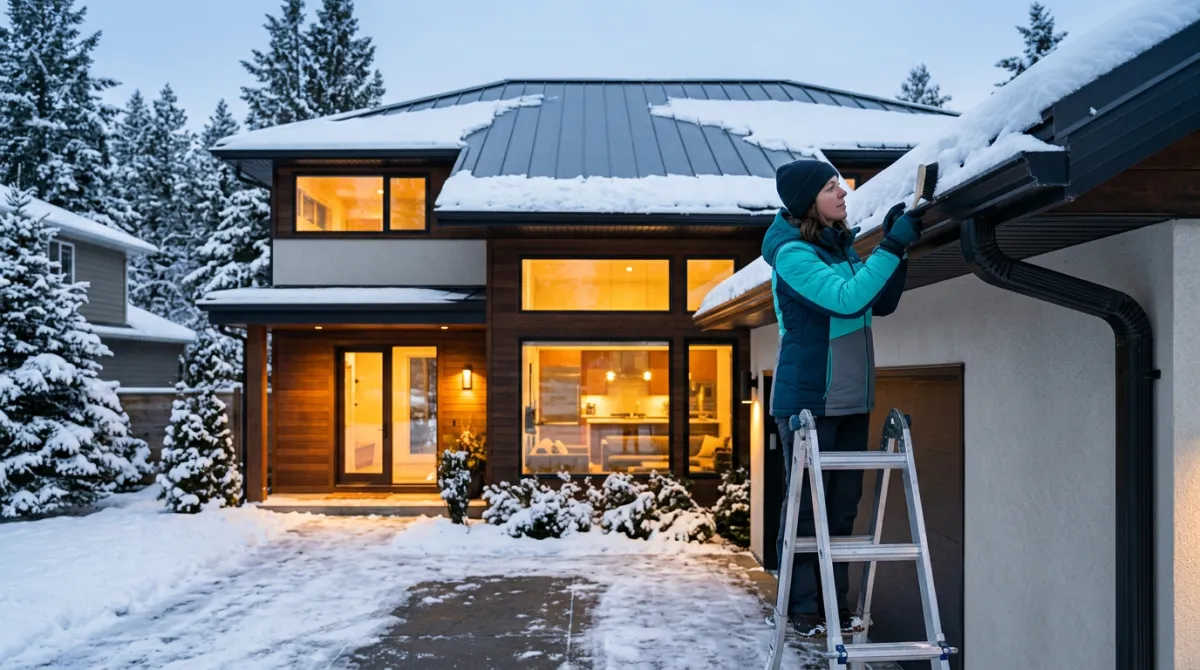
- Clean gutters and downspouts — clogged gutters cause ice dams, which force water under your shingles and into your home. Clean them before the first freeze and once more in mid-winter if needed
- Inspect the roof visually — look for missing, cracked, or curling shingles from the ground or with binoculars. Interior signs of roof problems include water stains on ceilings and damp attic insulation
- Check flashing around chimneys, vents, and skylights — damaged flashing is the most common source of roof leaks
- Clear ice dams carefully — use a roof rake to remove snow from the first 3–4 feet of your roof edge. Never chip ice with a hammer or sharp tool
- Ensure attic ventilation is adequate — proper ventilation keeps the roof deck cold, preventing snowmelt and ice dam formation
Hiring a professional for roof inspection is worth the cost. For guidance on finding a reliable roofer, check our guide on how to hire a reliable roofer.
Windows and Doors
Air leaks around windows and doors are responsible for 25–30% of heating energy loss in the average home, according to the Department of Energy.
- Check weatherstripping on all exterior doors — replace any that’s cracked, compressed, or missing
- Inspect caulking around window frames, both interior and exterior — re-caulk where gaps have formed
- Install window insulation film on single-pane or drafty windows — this inexpensive fix can noticeably reduce heat loss
- Use draft stoppers at the base of exterior doors
- Check storm windows and storm doors — install them if you have them; repair any damaged glass or frames
- Lock all windows — the locking mechanism pulls the sash tighter against the frame, improving the seal
Quick test: Hold a lit candle or incense stick near window and door edges on a windy day. If the flame or smoke flickers, you have an air leak.
Exterior and Foundation
- Inspect the foundation for new cracks — water seeps into cracks, freezes, and expands, making small cracks larger each winter. Seal any cracks with appropriate filler
- Clear debris from window wells — snow and ice buildup can cause basement leaks
- Check siding and trim for damage or gaps — seal any openings where cold air or moisture can penetrate
- Trim tree branches that hang over the roof or near power lines — ice-heavy branches break and cause serious damage
- Protect outdoor furniture and equipment — store or cover grills, patio furniture, and lawn equipment
- Ensure proper drainage — make sure the ground slopes away from your foundation so snowmelt flows away from the house
Fireplace and Wood Stove
If you heat with a fireplace or wood stove, maintenance is both a comfort and safety issue.
- Have the chimney professionally cleaned — the National Fire Protection Association recommends annual chimney inspections and cleaning
- Check the damper — it should open and close fully. A stuck-open damper sends heated air straight up the chimney
- Inspect the firebox for cracks or damage
- Stock seasoned firewood — properly seasoned wood (dried 6–12 months) burns cleaner and produces less creosote buildup
- Install a chimney cap if you don’t have one — it keeps out rain, snow, debris, and animals
- Keep a fire extinguisher accessible near the fireplace
Safety Systems
Winter increases risks from fire, carbon monoxide, and falls.
- Test all smoke detectors and replace batteries
- Test carbon monoxide detectors on every level of your home
- Check fire extinguishers — ensure they’re charged and accessible
- Prepare a winter emergency kit — flashlights, batteries, blankets, water, non-perishable food, and a battery-powered radio in case of power outages
- Stock ice melt and sand for walkways and driveways — apply before storms when possible
- Inspect handrails on exterior stairs and porches — make sure they’re secure for icy conditions
- Know how to safely use a space heater — keep at least 3 feet from anything flammable, never leave unattended, and plug directly into wall outlets (not extension cords)
Insulation and Energy Efficiency
Winter is when insulation shortcomings become obvious — and expensive.
- Check attic insulation levels — the DOE recommends R-49 to R-60 for most attic spaces. If you can see the floor joists, you need more insulation
- Insulate the attic hatch — this commonly overlooked spot is a major heat loss point
- Seal gaps around pipes, wires, and ducts that penetrate exterior walls or ceilings with expanding foam or caulk
- Insulate the water heater — a water heater blanket can reduce standby heat loss by 25–45%
- Reverse ceiling fan direction — set fans to clockwise (low speed) to push warm air from the ceiling down into the room
When to Call a Pro
Some winter maintenance tasks are DIY-friendly, but others require professional help:
Call a pro for:
- Furnace inspection and repair
- Chimney cleaning
- Roof repair or ice dam removal
- Plumbing issues (especially if you suspect a frozen or burst pipe)
- Electrical concerns (space heater circuits tripping, flickering lights)
- Adding attic insulation to meet recommended R-values
For help identifying whether a task is DIY-appropriate, check our DIY vs. hire a pro guide.
Find a trusted pro near you → houseescort.com
Monthly Winter Maintenance Routine
Once you’ve completed the full checklist, maintain your home throughout winter with this monthly routine:
- Replace furnace filter
- Check for ice dams after heavy snowfall
- Inspect pipes in vulnerable areas for frost or slow flow
- Test smoke and CO detectors
- Clear snow from vents, meters, and the area around your furnace exhaust pipe
- Check weatherstripping on the most-used exterior doors
Spending 30 minutes on these monthly tasks prevents the vast majority of winter emergencies. For a seasonal planning approach to home maintenance, see our spring, summer, and fall checklists.
Frequently Asked Questions
At what temperature do pipes freeze?
Pipes can begin freezing when outside temperatures drop below 20°F (-6°C), though the actual risk depends on insulation, wind exposure, and pipe material. Pipes in exterior walls, unheated garages, and crawl spaces are most vulnerable. Take preventive action anytime temperatures are forecast below 28°F.
How much can proper winterization save on heating bills?
The Department of Energy estimates that air sealing and insulation improvements can save 10–20% on heating costs. Combined with furnace maintenance, thermostat programming, and weatherstripping, homeowners typically save $200–$500+ per winter depending on home size and climate zone.
Should I leave my heat on when I go on vacation in winter?
Yes — never turn your heat completely off in winter. Set the thermostat to at least 55°F (13°C) to prevent pipes from freezing. If you’ll be gone for more than a few days, ask a neighbor to check on your home periodically or use a smart thermostat you can monitor remotely.
How do I prevent ice dams on my roof?
Ice dams form when heat escapes through the roof, melting snow that refreezes at the eaves. Prevention starts with proper attic insulation and ventilation — keeping the roof deck cold prevents the melt-freeze cycle. Cleaning gutters before winter and using a roof rake after heavy snowfall also helps.
When should I schedule a furnace inspection?
Ideally, schedule your annual furnace inspection in early fall before the heating season begins. If you missed that window, it’s still worth scheduling one now — technicians can catch issues like cracked heat exchangers, failing ignitors, and gas leaks before they cause a mid-winter breakdown.