Window Tinting Cost in Texas: Home Tinting Guide
House Escort Team
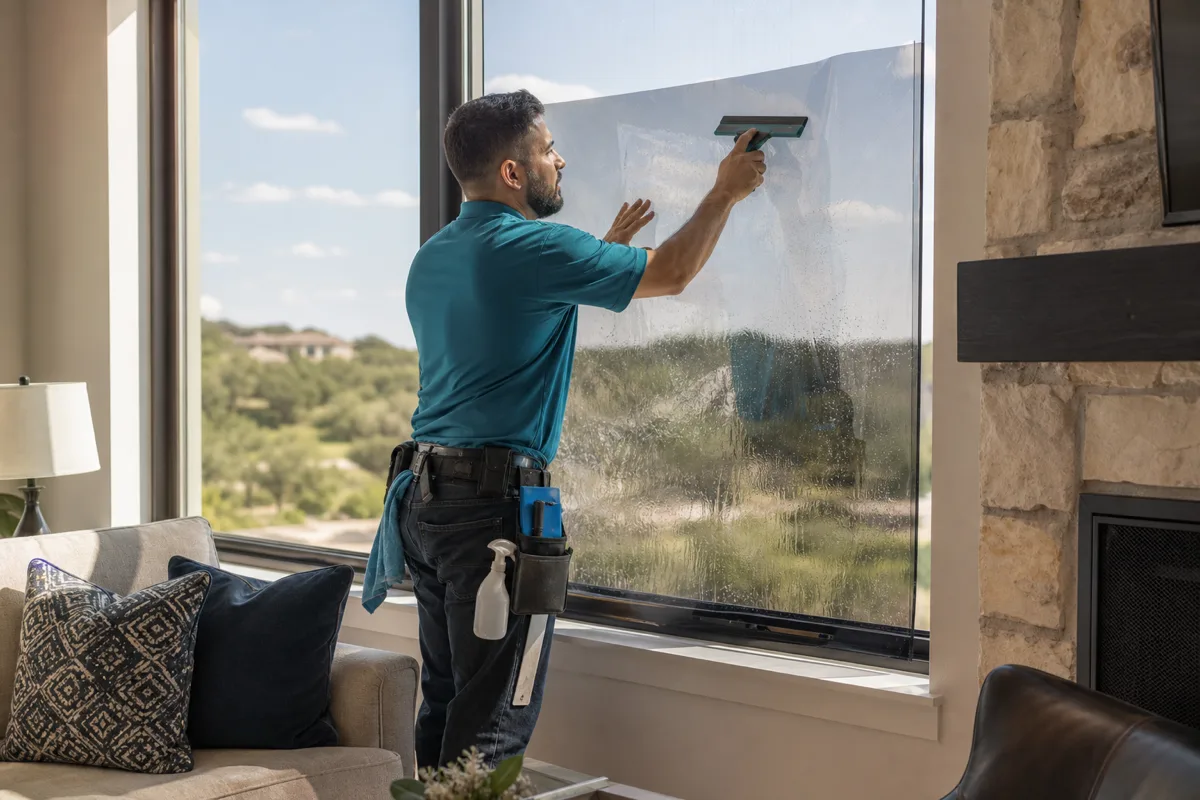
Texas homes lose more energy through windows than almost anywhere else in the country — summer solar heat gain through unprotected glass is a primary driver of skyrocketing AC bills in Houston, Dallas, and San Antonio. Residential window tinting (solar control film) is an increasingly popular solution, blocking up to 79% of solar heat gain without darkening your home. Here’s what it costs in Texas.
Average Residential Window Tinting Cost in Texas
Professional residential window film installation in Texas typically runs $5-$14 per square foot depending on film type, quality, and installation complexity.
| Home Size | Windows (estimate) | Total Window Area | Low Estimate | Mid Range | High End |
|---|---|---|---|---|---|
| 1,500 sq ft | 12-15 windows | 300-400 sq ft | $1,500 | $2,500 | $4,500 |
| 2,000 sq ft | 15-20 windows | 400-600 sq ft | $2,000 | $3,500 | $6,500 |
| 2,500 sq ft | 18-25 windows | 500-800 sq ft | $2,500 | $4,500 | $8,500 |
| 3,000+ sq ft | 22-30+ windows | 650-1,000+ sq ft | $3,000 | $5,500 | $11,000+ |
Note: These estimates are for the main living areas. Many homeowners choose to only tint south and west-facing windows where solar gain is highest, which reduces total cost significantly.
Types of Window Film and Cost
Solar control (heat rejection) films: The primary purpose is blocking solar heat gain. Rejects 40-79% of solar energy.
- Basic solar film: $5-7/sq ft
- Premium solar film (higher heat rejection): $8-12/sq ft
- Spectrally selective (high clarity, high rejection): $10-14/sq ft
Privacy films:
- Frosted/decorative film: $6-10/sq ft
- One-way daytime privacy film: $7-12/sq ft
Safety and security films:
- Safety film (holds glass together on impact): $8-14/sq ft
- Anti-shatter/security film: $10-18/sq ft
Low-E films (energy efficiency + comfort):
- Low-emissivity retrofit films: $9-15/sq ft
- These are closest to the performance of factory low-E glass
Most popular for Texas homes: Spectrally selective solar control films — they achieve high heat rejection (60-79% solar energy blocked) while maintaining clarity (not tinted dark). Brands like 3M, LLumar, Solar Gard, and Eastman have strong product lines in this category.
The Texas Energy Savings Case
Window film manufacturers and independent studies indicate solar control films can reduce cooling energy use by 10-25% in hot climates. For a Texas home spending $300/month on electricity in summer with significant west/south glass exposure, a 15% reduction saves $45/month during the 5-6 month cooling season = $225-270/year.
On a $3,000 window film job, that’s roughly 11-13 year payback from energy savings alone. The real ROI includes comfort improvement (reduced hot spots near windows), UV protection (film blocks 99% of UV rays — protecting furniture, flooring, and artwork from fading), and added resale value.
Texas rebate programs: Some Texas utilities offer rebates for qualified window film installations. Check with your utility company (CenterPoint Energy, Oncor, Austin Energy, San Antonio CPS Energy) for current rebate programs. Some rebates offset 10-25% of installation cost.
What to Look For in a Window Film Installer
Film brand and warranty: Professional installers use commercial-grade films (3M, LLumar/Eastman, Solar Gard, SunTek) with manufacturer warranties of 10-15 years on residential applications. Consumer-grade films from hardware stores fail significantly faster, especially in Texas heat.
Experience with specific glass types: Different glass types (single-pane, dual-pane, tempered, Low-E already present) require different film selections. Incorrectly specified film on certain glass types can cause thermal stress cracking. An experienced installer knows which films are certified for which glass types.
Certification and association membership: IWFA (International Window Film Association) membership indicates a professional-grade installer committed to industry standards.
What to ask:
- What film brands do you use, and can I see the product spec sheet?
- What’s the warranty on both the film and the installation?
- Is this film certified for my glass type (especially if dual-pane)?
- What’s included if the film fails (bubbles, peeling) before warranty expires?
Find local window film installers through House Escort — free for homeowners.
Frequently Asked Questions
Will window tinting make my home too dark?
Not necessarily. Spectrally selective solar films are designed to reject solar heat without significant visible light reduction — they can reject 60-70% of solar heat while only reducing visible light transmission by 20-30%. The result is a comfortable, naturally lit room without the dark tinted appearance of older films. Ask installers to show you sample films on-site before committing.
Can window tinting be applied to double-pane windows?
Yes, but film selection is critical. Some film types cause thermal stress on insulating glass (IG) units, particularly on windows that already have Low-E coatings. Professional installers use film products certified for specific glass types by the Insulating Glass Certification Council (IGCC). Verify your installer uses films rated for your glass type.
Does window film affect my ability to sell my home in Texas?
Generally positively — especially on newer installs with warranty. Buyers are increasingly aware of energy efficiency benefits and Texas’s brutal summer utility bills. Film on west and south windows is often seen as a desirable feature. Disclose it at sale; provide the film warranty documentation for transfer to the new buyer (most commercial film warranties are transferable).
How long does residential window film last in Texas?
High-quality professional window films (3M, LLumar) on residential glass in Texas typically last 15-25 years. Consumer-grade films may begin failing (bubbling, purple discoloration) in 3-7 years in Texas’s UV intensity. Film failure is primarily due to adhesive degradation and UV breakdown — which is why film quality matters significantly more in Texas than in lower-UV markets.
Is window tinting worth it for a Texas rental property?
Yes — for a long-term hold rental, energy savings benefit the tenant (making your property more attractive) and UV protection extends the life of flooring, countertops, and window treatments. The durability of professional film (15+ years) means one installation lasts through multiple tenants. If you pay utilities, the energy savings directly benefit you. The payback timeline is favorable for rental properties held 5+ years.