Window Cleaning Pricing Guide for Contractors
House Escort Team
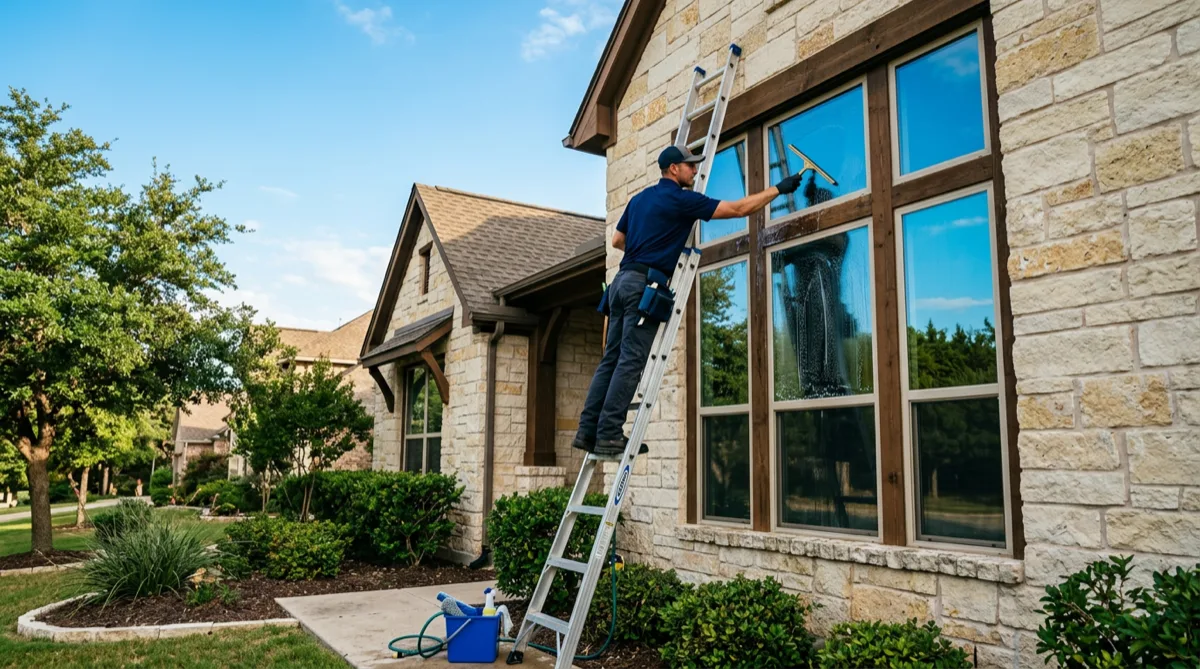
Window cleaning is a high-margin, low-equipment business with strong recurring demand — especially in Texas, where pollen, dust storms, and hard water from sprinkler systems create consistent need for exterior cleaning. The challenge is pricing it correctly.
Price too low and you’re grinding for minimal profit. Price too high in a competitive market and phones go quiet. This guide gives you the pricing frameworks to hit the sweet spot.
Window Cleaning Pricing Models
There are three main pricing models for window cleaning. Most successful businesses use a hybrid of all three.
Per-Pane Pricing
The most common model for residential window cleaning. You charge a flat rate per window pane (a double-hung window with two sashes = 2 panes by some definitions, or 1 unit by others — be clear in your quotes).
Texas 2026 per-pane benchmarks:
- Standard residential exterior only: $5–$10 per pane
- Interior + exterior: $10–$18 per pane
- High windows (second story, requires ladder): +$3–$7 per pane premium
- French panes (multi-lite divided): $3–$6 per lite
Example residential quote: 30-pane single story home, exterior only: 30 × $7 = $210 25-pane two-story home (10 high windows), exterior only: 20 × $7 + 10 × $12 = $260
Per-pane pricing works well because it’s easy for customers to understand and easy for you to quote on a walk-around estimate.
Per-Hour Pricing
Used primarily for commercial accounts, post-construction cleaning, and unusual projects (skylights, conservatories).
Texas commercial window cleaning rates:
- Residential-scale work: $60–$100/hour per technician
- Low-rise commercial (1–3 story): $75–$120/hour
- High-rise or rope-access: $150–$250/hour (requires specialized equipment and safety training)
The disadvantage of hourly pricing for customers is unpredictability — they don’t know the final cost until you’re done. For recurring commercial accounts, a flat monthly rate is often preferred.
Flat Rate / Subscription Pricing
Works well for recurring residential and commercial accounts. Quote a flat monthly or quarterly rate for the full service.
Residential subscription example:
- Exterior-only wash quarterly: $180/year (4 × $45)
- Interior + exterior biannual: $350/year (2 × $175)
Commercial recurring example:
- 40-window restaurant, monthly exterior: $175/month
- Office building, quarterly interior + exterior: $650/visit
Recurring flat-rate accounts are your most valuable customers — predictable revenue, no re-quoting, and high retention. Build your business around these.
Contractor Bidding and Estimating Guide
What to Include (and Exclude) in Your Window Cleaning Quote
Typically included in a standard residential window quote:
- Washing glass surfaces
- Wiping window frames and sills (interior)
- Detailing tracks on sliding windows (optional — can add-on)
- Removing interior screens, washing, and reinstalling
Typically excluded — quote separately or decline:
- Window screen repair
- Removing paint overspray or hard water staining (requires chemical treatment — significantly more time)
- Removing hard water deposits from glass (can take 5–10x longer than standard cleaning — price accordingly or decline if severe)
- Construction cleanup windows (plaster, silicone, adhesive — this is specialty work)
Hard water deposits in Texas: Hard water from municipal supply or irrigation systems leaves calcium and mineral deposits on glass that don’t come off with standard squeegee work. Texas (especially DFW and San Antonio) has notoriously hard water. If you see milky or white deposits baked into the glass, quote a separate hard water removal treatment using CLR, whiting paste, or diamond pad polishing — or walk away from the job.
Residential vs Commercial: Which to Prioritize
Residential Window Cleaning
Pros:
- Easy to quote on-site
- Immediate cash payment
- Strong repeat demand (spring, fall, post-storm)
- Referrals propagate well in neighborhoods
Cons:
- Scheduling fragmentation (each customer is 1–3 hours at different locations)
- Weather cancellations affect revenue
- High customer acquisition cost per account
Best strategy: Build a dense neighborhood route — clean 4–6 homes per day in the same zip code to maximize daily revenue and minimize windshield time.
Commercial Window Cleaning
Pros:
- Larger per-job revenue
- Recurring monthly/quarterly billing is predictable
- Work done outside business hours (early morning) keeps your schedule flexible for residential during the day
- One account management conversation = multiple months of work
Cons:
- Longer sales cycle to land accounts
- Requires professional insurance and sometimes scaffolding/rope access certification for tall buildings
- Payment terms (net-30) can create cash flow delay
Best strategy: Target small commercial (restaurants, retail strips, office buildings under 4 stories) where you can work from extension poles or small ladders. These accounts provide recurring revenue without requiring expensive high-rise equipment.
Efficiency Improvements That Directly Impact Profit
Window cleaning profitability is driven by productivity — how many windows you clean per hour.
Equipment investments with direct ROI:
- Water-fed pole system (pure water): Allows exterior-only cleaning from ground level using purified water that dries spot-free. Eliminates ladder time, dramatically increases speed on single-story homes. System cost: $800–$3,000. ROI: significantly faster exterior service.
- Tucker pole + DI tank: Entry-level pure water system for contractors starting out
- Quality squeegee technique: The Ettore/Unger professional squeegee approach (single-stroke technique) is 3–4x faster than beginner back-and-forth. Invest in training if you haven’t.
Build a Route With House Escort
House Escort connects window cleaning pros with homeowners looking for reliable, vetted cleaning contractors. Sign up once and respond to inquiries in your service area — no per-lead fees cutting into your margin.
Join House Escort — Keep 100% of Your Earnings →
Frequently Asked Questions
How much should I charge for window cleaning in Texas?
For residential exterior-only service, $5–$10 per pane is the Texas market range in 2026. Interior + exterior runs $10–$18 per pane. Two-story premium adds $3–$7 per high pane. A typical Texas home (25–35 windows) generates $150–$350 per visit for exterior only, or $275–$600 for interior + exterior. Adjust for your specific market — DFW and Austin rates run 10–15% higher than smaller Texas markets.
How do I price window cleaning for a restaurant or retail store?
Walk the exterior and count panes or linear feet of glass. Estimate time (include setup, cleaning, and breakdown). Apply your commercial hourly rate ($75–$120/hour) to the estimated time, then present a flat monthly quote. Most commercial customers prefer to know exactly what they’ll pay monthly rather than seeing hourly rates.
Should I offer screen cleaning as an add-on service?
Yes — screen cleaning is a high-margin add-on with low incremental time cost. Charge $3–$6 per screen (you’re already there). Some pros offer exterior window + screen cleaning as a bundled service for a flat premium. Screen repair (not just cleaning) is a separate specialty that can be profitable but requires a mesh and spline inventory.
How do I handle cancellations in a window cleaning business?
For recurring accounts, require 24–48 hours notice and charge 50% for same-day cancellations. Build a standby list of accounts that can be slotted in when cancellations occur — never let a half-day of drive time happen from a single cancellation. Weather cancellations are different — build rescheduling flexibility into your service agreement so weather days don’t cost you relationship points.
What insurance does a window cleaning contractor need in Texas?
Minimum: $1 million general liability insurance. If you employ workers, workers’ compensation is required. If doing commercial high-rise or rope-access work, some commercial clients require $2–5 million liability plus a certificate of insurance naming them as additional insured. General liability for a small window cleaning operation in Texas typically runs $800–$1,500/year.