Why Contractors Are Leaving Lead Gen Platforms
House Escort Team
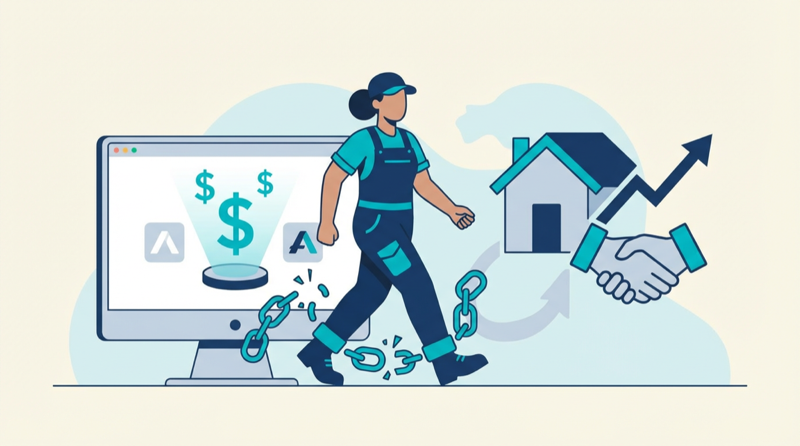
If you are a plumber, electrician, HVAC technician, roofer, or general contractor, you have probably tried at least one lead generation platform. Maybe you signed up expecting a steady flow of quality leads. Instead, you got shared leads that three other companies also received, vague job descriptions from tire-kickers, and a monthly bill that kept climbing regardless of how many jobs you actually closed.
You are not alone. Across the home services industry, contractors are reevaluating their relationship with traditional lead generation platforms — and many are walking away entirely. Here is what is driving the shift, what the alternatives look like, and how to build a client pipeline that you actually control.
The Problem With Traditional Lead Gen Platforms
The major platforms — HomeAdvisor (now Angi Leads), Thumbtack, and similar services — operate on models that increasingly favor the platform over the professional.
Shared Leads and Low Close Rates
Most platforms sell the same lead to three to five contractors simultaneously. You are paying for the privilege of competing against other professionals who received the exact same customer information at the exact same time. The result is a race to respond fastest and often a race to the bottom on price.
Industry data suggests that shared-lead close rates typically fall between 10% and 20%, meaning you pay for four to nine leads before landing a single job. Compare that to referral close rates of 50% to 80%.
Rising Costs With Declining Quality
Lead prices have climbed steadily. A plumbing lead that cost $15 five years ago may now cost $30 to $60 or more, depending on your market. HVAC and roofing leads can run $50 to $150 each. These costs eat directly into your profit margin, and you pay whether the lead converts or not.
Meanwhile, lead quality has not improved proportionally. Many contractors report an increase in leads from homeowners who are “just getting prices” with no intention of hiring, or leads with incorrect contact information.
You Do Not Own the Customer Relationship
When a customer finds you through a lead gen platform, the platform owns that relationship. If the customer needs service again in six months, they go back to the platform — not to you. You paid to acquire that customer, but you do not get the long-term value of the relationship.
Pressure on Your Pricing
Platforms that sell shared leads create an environment where contractors compete on price rather than quality. Homeowners receiving three to five quotes often default to the cheapest option, pushing contractors to undercut each other rather than compete on experience, quality, and reputation.
What Successful Contractors Are Doing Instead
The contractors who are growing sustainably are diversifying away from pay-per-lead platforms and investing in channels they control.
1. Building a Strong Online Presence
Your Google Business Profile is the single most important digital asset you own as a contractor. It is free, and it puts you in front of homeowners who are actively searching for your services in your area.
Key actions:
- Complete every field in your Google Business Profile — business hours, service areas by city and zip code, services offered, photos of your work.
- Add 15 to 20 high-quality photos (before-and-afters, team photos, branded vehicles, completed projects).
- Respond to every review — positive and negative. Engaged profiles rank higher in local search results.
- Post updates regularly. Google Business Profile posts show up in search results and signal that your business is active.
2. Generating Reviews Systematically
Reviews are the currency of local search. A contractor with 150 four-star reviews will consistently outrank a contractor with 10 five-star reviews. Volume and recency both matter.
Key actions:
- Ask for a review after every completed job. The best time is immediately after the customer expresses satisfaction.
- Make it easy — send a direct link to your Google review page via text message.
- Aim for five to ten new reviews per month.
- Respond to every review. Thank customers for positive feedback and address negative reviews professionally and constructively.
3. Getting Referrals Intentionally
Referrals remain the highest-converting lead source in home services, with close rates of 50% to 80%. But most contractors treat referrals as passive — they hope for them rather than actively generating them.
Key actions:
- Ask satisfied customers directly: “Do you know anyone else who could use this kind of work?”
- Build relationships with complementary contractors (a plumber referring an electrician, an HVAC tech referring a roofer).
- Consider a small referral incentive — a $25 gift card or a discount on future service.
4. Using Platforms That Respect the Professional
Not all platforms are built the same way. Some newer platforms have recognized that the traditional model is broken and have built alternatives that align the platform’s interests with the professional’s interests.
What to look for in a contractor-friendly platform:
- No per-lead fees. You should not pay $30 to $100 every time someone sends you a message.
- No commissions on jobs. If you do the work, you should keep the money.
- Direct communication with homeowners. No intermediary filtering or controlling the conversation.
- Your profile, your reputation. Reviews, portfolios, and ratings that you build and own.
- Transparency. You should know exactly what you are paying for and what you are getting.
House Escort was built on this exact philosophy. Professionals keep 100% of their earnings — no commissions, no lead fees. You build your own profile with a portfolio and reviews, communicate directly with homeowners, and grow your reputation on a platform that does not charge you to access the clients you have already earned.
5. Investing in Your Own Website and SEO
A professional website that ranks in local search results is a lead generation machine that costs nothing per lead once it is built. Most contractors either do not have a website or have one that was built years ago and never updated.
Key actions:
- Build a simple, fast-loading website with your services, service areas, reviews, and clear contact information.
- Create a page for each service you offer (e.g., “drain cleaning in Houston” rather than a single generic “services” page).
- Add your real phone number and make it click-to-call on mobile.
- Publish helpful content that answers questions homeowners are searching for. This builds organic traffic over time.
6. Local Networking and Community Involvement
The contractors who dominate their local market are often the ones who show up beyond the job site. Real estate agents, property managers, HOA boards, and other contractors are all potential referral sources.
Key actions:
- Join your local chamber of commerce or trade association.
- Attend real estate investor meetups — investors need reliable contractors on speed dial.
- Sponsor a local Little League team, charity run, or community event. The visibility and goodwill translate into top-of-mind awareness when someone needs a contractor.
- Build relationships with property managers. A single property management company can provide a steady stream of recurring maintenance work.
The Math: Pay-Per-Lead vs. Owned Channels
Consider a plumber spending $1,500 per month on leads from a traditional platform:
| Metric | Pay-Per-Lead Platform | Owned Channels |
|---|---|---|
| Monthly cost | $1,500 | $200 – $500 |
| Leads per month | 30 – 50 | 10 – 25 (growing over time) |
| Close rate | 10% – 20% | 30% – 60% |
| Jobs closed | 3 – 10 | 3 – 15 |
| Cost per job | $150 – $500 | $15 – $150 |
| Customer retained? | Unlikely | Yes |
The owned-channel numbers start lower but compound over time. Every review you earn, every referral you generate, and every piece of content you publish builds momentum. After 12 months of consistent effort, most contractors find their owned channels outperform paid lead gen in both volume and quality — at a fraction of the cost.
How to Make the Transition
You do not have to quit paid leads cold turkey. The smart move is to gradually shift your budget:
- Month 1–3: Optimize your Google Business Profile, claim all directory listings, and start asking for reviews systematically. Sign up for a no-fee platform like House Escort to start building a presence.
- Month 4–6: Reduce your paid lead spend by 25% to 50% and redirect that budget toward a basic website and local SEO.
- Month 7–12: Evaluate your lead sources by actual closed jobs and revenue, not just lead volume. Most contractors find that their owned channels are producing higher-quality leads at lower cost by this point.
- Month 12+: Continue building your online reputation, content, and referral network. These assets compound over time and become increasingly difficult for competitors to replicate.
The Bottom Line
Traditional lead gen platforms served a purpose when contractors had no other way to get in front of homeowners online. That era is over. The tools and platforms available today make it possible for any contractor — regardless of size — to build a client pipeline they own and control.
The contractors who thrive in 2026 and beyond will be the ones who invest in their own reputation, build direct relationships with customers, and use platforms that respect the professional’s time and earnings.
Join House Escort today — build your profile, connect with homeowners directly, and keep 100% of what you earn. No commissions. No lead fees. Just a better way to grow your business.
Frequently Asked Questions
Why are contractors leaving lead generation platforms?
The core issue is cost and control. Lead gen platforms charge per lead regardless of whether the lead converts, and contractors often compete against multiple pros for the same job. Over time, the cost per acquired customer becomes unsustainable — especially for small operators. Contractors are shifting to platforms that let them build direct customer relationships without per-lead fees.
How much do lead generation platforms cost contractors per year?
Costs vary by trade and market, but many contractors report spending $3,000 to $15,000+ per year on leads, with conversion rates often below 20%. That means a significant portion of marketing budget goes to leads that never become paying customers. Platforms that charge flat fees or no fees at all deliver a better return on investment for most service businesses.
What are the alternatives to lead gen platforms for home service pros?
Alternatives include profile-based platforms like House Escort where homeowners find and contact you directly, Google Business Profile optimization, referral programs, local SEO, and social media marketing. The most successful contractors diversify their lead sources rather than depending on a single paid platform.
How can contractors build their own client base without paying for leads?
Start with a strong online profile that includes reviews, photos of completed work, and service area details. Ask satisfied customers for referrals and reviews. Invest in a Google Business Profile and respond to every review. Platforms like House Escort let you create a professional profile that homeowners discover organically — with no per-lead charges.
Do lead-free platforms actually work for contractors?
Yes. Contractors who invest time in building a detailed profile, collecting reviews, and staying responsive to inquiries consistently report higher-quality leads and better conversion rates than those relying on paid-per-lead models. The key is treating your online profile as a long-term asset rather than a short-term advertising expense.