When to Replace Your Water Heater: Full Guide
House Escort Team
When to Replace Your Water Heater: Full Guide
A water heater failure isn’t just an inconvenience — it can mean a flooded utility room, thousands of dollars in water damage, and days without hot water while you scramble to find a plumber on short notice.
Knowing when to replace your water heater before it fails puts you in control. You choose the timing, compare quotes, and pick the right unit — instead of calling whoever answers on a Sunday afternoon.
How Long Do Water Heaters Last?
The answer depends on the type you have. According to the U.S. Department of Energy:
| Type | Average Lifespan |
|---|---|
| Traditional tank (gas) | 8–12 years |
| Traditional tank (electric) | 10–15 years |
| Tankless (gas) | 20+ years |
| Tankless (electric) | 15–20 years |
| Heat pump water heater | 13–15 years |
Find the age of your current unit by locating the serial number on the label — the first four characters typically encode the manufacture date (e.g., A122 = January 2022). When in doubt, look up the manufacturer’s serial number decoder online.
Clear Signs You Need to Replace Your Water Heater
Age Past the Threshold
If your tank unit is 10–12 years old, start planning for replacement even if it’s still working. The failure rate accelerates sharply past the 10-year mark. Waiting for it to fail means facing emergency pricing, limited unit availability, and potential water damage cleanup costs.
Rust-Colored or Discolored Hot Water
Rusty water from the hot tap — but not the cold — points to corrosion inside the tank. This means the tank lining has degraded. Sediment buildup and tank corrosion can’t be reversed; they signal that replacement is imminent.
Troubleshooting step: Before assuming the tank is the issue, drain a few gallons from the pressure relief valve into a bucket. If the water runs clear after a few gallons, the discoloration may be from old pipes. If it stays brown, the tank is corroding.
Rumbling, Popping, or Knocking Sounds
Mineral sediment accumulates at the bottom of tank water heaters over time — especially in hard-water areas. As the burner heats the water, it forces steam through the sediment layer, creating rumbling, cracking, or popping sounds.
Heavy sediment buildup reduces efficiency (your burner runs longer to heat through the layer) and accelerates tank wear. Flushing the tank annually can prevent buildup in younger units. On an older tank already making these sounds, it’s usually a sign the end is near.
Leaks or Puddles Around the Base
Any water pooling around the base of a tank water heater is a serious warning sign. It may indicate:
- A crack in the tank itself (replacement required — this is not repairable)
- A failing T&P (temperature and pressure) relief valve
- Loose inlet/outlet connections
Wipe the base dry and monitor closely. If water returns, cut power to the unit (flip the circuit breaker) and call a plumber. A cracked tank can fail completely with little additional warning.
Inconsistent Hot Water or Long Recovery Time
If your showers are going cold faster than they used to, or the tank takes noticeably longer to reheat after a draw, the heating element (electric) or burner (gas) may be failing. This is sometimes repairable, but on a unit 8+ years old, repair costs often approach 50% of replacement cost — making a new unit the smarter financial choice.
Rising Energy Bills
An aging water heater loses efficiency as sediment builds up and components wear. If your gas or electric bills have increased without a clear explanation, an inefficient water heater may be part of the cause. New units — especially ENERGY STAR certified models — can reduce water heating costs by 10–20%.
Tank vs. Tankless: Which Is Right for You?
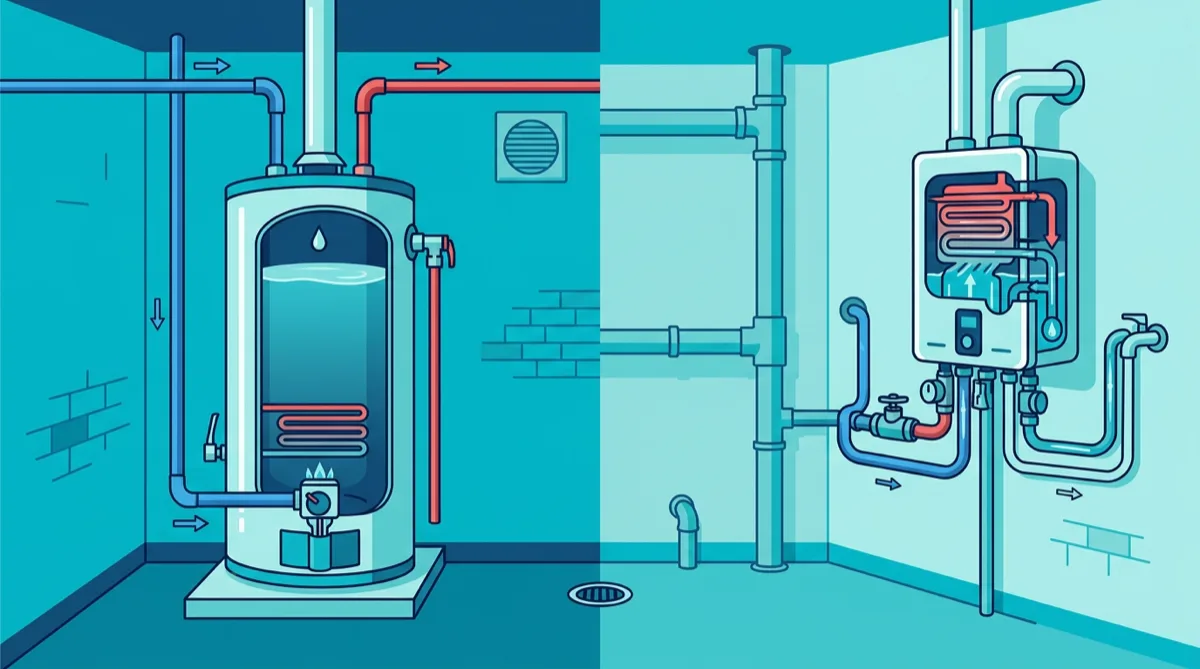
If you’re replacing a failing tank, this is a good moment to evaluate whether tankless is worth the upgrade.
| Factor | Traditional Tank | Tankless |
|---|---|---|
| Upfront cost | $400–$900 (unit + install) | $800–$2,000+ (unit + install) |
| Lifespan | 10–15 years | 20+ years |
| Energy efficiency | Lower | 24–34% more efficient (DOE) |
| Hot water supply | Limited by tank size | On-demand, unlimited |
| Space | Requires tank space | Wall-mounted, compact |
| Maintenance | Annual flush | Scale descaling every 1–2 years |
| Rebates | ENERGY STAR rebates available | Federal tax credit available (up to 30%) |
For Texas homeowners: Tankless units perform well in the Texas climate because they don’t waste energy maintaining a tank of hot water during mild winters. The higher upfront cost typically pays back in 3–7 years through energy savings, and the 20+ year lifespan means one less replacement cycle.
Check with your local utility (CenterPoint Energy in Houston, Oncor in Dallas) for water heater rebates — these can offset $50–$200 of the purchase cost.
How Much Does Water Heater Replacement Cost?
Typical all-in costs (unit + installation by a licensed plumber):
- Traditional tank (40–50 gallon gas): $800–$1,400
- Traditional tank (40–50 gallon electric): $700–$1,200
- Tankless gas: $1,200–$2,500
- Tankless electric: $900–$2,000
In Texas, expect to add $150–$300 for permits in municipalities that require them (Houston, Austin, Dallas). Always get at least two quotes — water heater installation pricing varies significantly between plumbing companies.
For full cost breakdowns by city in Texas, see our Houston home repair costs guide and Austin home repair costs guide.
Hiring a Plumber for Water Heater Replacement
Water heater replacement in Texas requires a licensed plumber. An unlicensed install can void manufacturer warranties, fail inspection, and create liability if the unit later causes damage.
See our guide on how to hire a reliable plumber for what to check before signing a contract. Get at least two quotes, verify the plumber’s state license on the Texas State Board of Plumbing Examiners website, and confirm the quote includes permit fees if required in your city.
Find a vetted licensed plumber on houseescort.com — free for homeowners, zero middleman fees.
Frequently Asked Questions
How do I find out how old my water heater is?
The manufacture date is encoded in the serial number on the label attached to the unit. The format varies by brand — most encode the year in the first two digits of the serial number (e.g., “12” = 2012). Search “[brand] water heater serial number age” for the specific decoding format.
Can a water heater be repaired instead of replaced?
Yes, in some cases. A failing heating element, thermostat, or T&P valve can be replaced. However, if the tank itself is corroding or the unit is 10+ years old, repair costs often approach replacement cost — making a new unit the better investment.
Is tankless worth the extra cost in Texas?
For most Texas homeowners, yes — especially if you have natural gas service. Tankless units are 24–34% more efficient than traditional tanks (DOE data), last 20+ years, and qualify for a 30% federal tax credit on qualifying models. The higher upfront cost typically pays back in 3–7 years.
What size water heater do I need?
For a traditional tank: 40 gallons serves 1–3 people, 50 gallons serves 3–4, 75 gallons for 5+. For tankless, sizing is based on flow rate (GPM) — a plumber can calculate the right capacity based on how many fixtures may run simultaneously.
How long does water heater installation take?
Most residential water heater replacements take 2–4 hours for a direct swap. Switching from tank to tankless, or changing fuel source (electric to gas), involves additional work and can take a full day, including any required venting or electrical upgrades.