Water Softener Installation Cost: Full Guide
House Escort Team
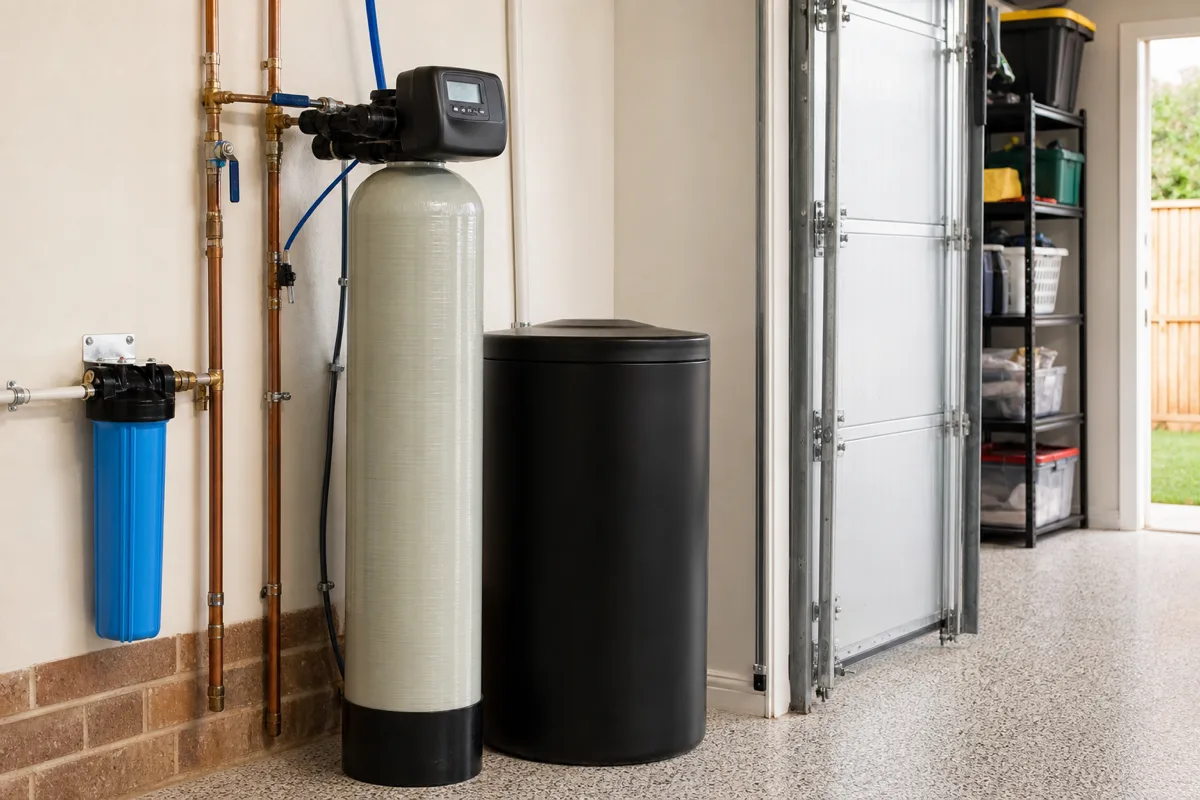
Texas has some of the hardest water in the country. If you’ve noticed white scale buildup on your faucets, spotty dishes after the dishwasher, or showers that leave your skin feeling dry, your water hardness may be the culprit. A water softener can solve all of it — but costs vary widely depending on the system type, installation complexity, and where you live.
Here’s what Texas homeowners need to know before calling a plumber.
How Hard Is Texas Water?
Water hardness is measured in grains per gallon (gpg) or milligrams per liter. The EPA considers anything above 7 gpg “hard.” Texas water is routinely in the 15–25 gpg range in major metros:
- Dallas-Fort Worth: 15–21 gpg (some suburbs above 25 gpg)
- San Antonio: 15–20 gpg (Edwards Aquifer groundwater is naturally very hard)
- Houston: 10–18 gpg depending on the municipality
- Austin: 12–18 gpg
At these hardness levels, scale deposits form inside water heaters, pipe joints, dishwashers, and washing machines — shortening their lifespan and reducing efficiency. The EPA’s drinking water guidance notes that while hard water isn’t a health concern, it has significant impacts on plumbing and appliances.
Types of Water Softeners
Salt-Based Ion Exchange Softeners
The most effective and most common solution for Texas hard water. A resin tank removes calcium and magnesium ions, exchanging them for sodium ions. A brine tank regenerates the resin with salt on a scheduled cycle.
Best for: Whole-house treatment in high-hardness areas like DFW and San Antonio.
Grain capacity to look for: Size your system based on household size and water hardness. A family of four in DFW with 20 gpg water typically needs a 40,000–48,000 grain capacity unit.
Cost range (system + installation): $800–$2,500 for a standard whole-house salt-based system. High-efficiency twin-tank systems can run $2,500–$4,500 installed.
Salt-Free Water Conditioners (Template Assisted Crystallization)
Salt-free systems don’t remove hardness minerals — they change the form of the minerals so they don’t cling to surfaces. Technically, they’re “conditioners” rather than softeners.
Best for: Households concerned about sodium in softened water (heart conditions, low-sodium diets), or Texas cities with soft water discharge restrictions.
Limitations: Less effective in extreme hardness situations above 25 gpg. You won’t feel the same silky water softness on skin/hair.
Cost range: $1,000–$3,000 installed depending on whole-house vs. under-sink installation.
Under-Sink or Point-of-Use Softeners
Smaller units installed at the kitchen sink or a single fixture. More affordable but limited in scope — they don’t protect appliances, water heaters, or showers.
Cost range: $300–$800 installed.
Reverse Osmosis (RO) Systems
Often paired with a softener for drinking water quality. RO removes virtually all dissolved solids — including the sodium added by a water softener — for clean drinking water at the tap.
Cost range: $400–$900 for a standard under-sink RO system installed.
What Does Installation Involve?
A whole-house water softener installation involves:
- Location assessment: Typically installed near the main water line entry point (garage, utility room, or mechanical closet). Needs access to a drain line and electrical outlet for the control valve.
- Water line bypass and connection: Plumber installs a bypass valve, cuts into the main line, and installs inlet/outlet connections.
- Drain line connection: The softener needs a drain connection for the regeneration cycle.
- Electrical connection: The control head requires a 120V outlet.
- Programming: Technician programs hardness level, regeneration frequency, and salt dose.
- First salt load: Initial fill with the correct salt type (solar, evaporated, or potassium chloride).
Labor cost: Most plumbers charge $150–$400 for a standard whole-house installation. Complex setups — older homes, tight spaces, adding an RO system simultaneously — can push labor to $500–$700.
For plumber selection tips, see our guide on how to hire a reliable plumber.
Do You Need a Permit in Texas?
Water softener installation typically does not require a permit in Texas if you’re connecting to an existing line and not moving the main water shutoff or expanding service. However, some municipalities — particularly in DFW — require permits for any work involving the main water line bypass.
Always ask your plumber before work begins. An unlicensed or unpermitted installation can create issues when you sell the home or file a homeowner’s insurance claim.
Maintenance Costs
Owning a water softener isn’t free after installation:
- Salt: Salt-based systems use 6–15 lbs of salt per regeneration cycle. Depending on hardness and household size, you’ll spend $8–$20 per month on salt. Solar or evaporated salt pellets are typically less expensive than potassium chloride alternatives.
- Resin bed replacement: Every 10–15 years, the resin may need replacement — typically $150–$300 for a service call.
- Annual service: Optional but recommended — a plumber tests hardness, checks valve operation, and inspects for sediment buildup. Budget $75–$150 per service visit.
- Salt-free conditioner maintenance: Generally low — media cartridge replacement every 3–5 years at $100–$300.
Will a Water Softener Lower My Utility Bills?
Yes — indirectly. Scale buildup inside a water heater reduces its efficiency. Studies have found that a water heater operating in 20+ gpg hard water can lose 30–40% of its efficiency over time due to scale. Softened water maintains water heater efficiency, extends appliance life, and reduces soap and detergent usage.
The appliance lifespan benefit alone often justifies the investment for Texas homeowners. Dishwashers and washing machines in hard water areas typically fail earlier and require more maintenance.
For a broader look at home improvement costs in the Houston metro, see our Houston home repair cost guide.
DIY vs. Hiring a Plumber
Water softener installation is technically DIY-possible if you have basic plumbing skills and the softener comes with a bypass valve kit. However:
- Cutting into the main water line requires confidence with copper, PEX, or CPVC — and the ability to handle a water shutoff correctly
- Incorrect installation can result in water damage, reduced water pressure, or a voided equipment warranty
- In Texas, any work involving the main water supply line at the meter requires a licensed plumber per state code
For whole-house systems, we recommend hiring a licensed plumber. The labor cost is relatively modest compared to the equipment cost and the risk of a DIY mistake flooding your garage.
Finding a Plumber on House Escort
House Escort lets you browse verified plumbers in your Texas city, see real reviews, and post your water softener project for free. No paid lead middleman — just direct connections to licensed pros.
Frequently Asked Questions
How much does it cost to install a water softener in Texas? A whole-house salt-based water softener typically costs $800–$2,500 installed for a standard residential system. High-efficiency or twin-tank systems run $2,500–$4,500 installed. Under-sink units start around $300–$800.
Is a water softener worth it in Texas? Yes, for most Texas households. With water hardness commonly in the 15–25 gpg range, scale damage to water heaters, appliances, and fixtures adds up significantly over time. Most homeowners see payback within 3–6 years through reduced appliance repairs and energy savings.
Do Texas cities restrict water softeners? Some Texas municipalities restrict discharge from salt-based softeners into the sewer system due to salinity concerns in water reclamation. San Antonio’s SAWS has historically had discharge guidelines for older single-pass systems. High-efficiency demand-initiated systems are typically exempt. Check with your local utility before purchasing.
Can I install a water softener myself? Under-sink units and some salt-free conditioners are DIY-friendly. Whole-house systems involve cutting into the main water line, which Texas law requires be performed by a licensed plumber. A professional installation also protects your equipment warranty.
What type of salt should I use? Solar salt pellets or evaporated salt pellets work well for most Texas households. Potassium chloride is an option for those on sodium-restricted diets but costs roughly 3x more. Avoid rock salt — it leaves more impurities in the brine tank.