Vehicle Wraps for Contractors: ROI and Ideas
House Escort Team
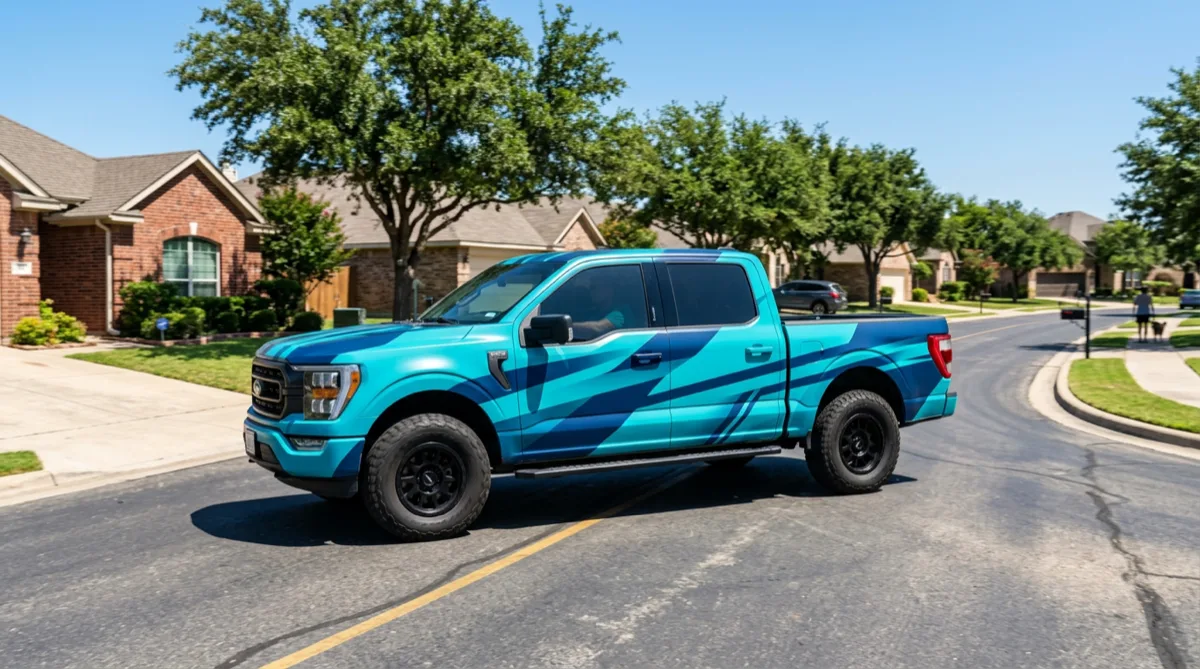
Vehicle Wraps for Contractors: Is It Worth It? ROI and Design Guide
Ask any contractor who’s gotten a vehicle wrap how many calls they get from it, and you’ll get a range of answers — from “at least 10 jobs a year” to “mostly people at stoplights asking if I do the thing they need done right now.” Either way, the underlying math is hard to argue with: a one-time investment that turns your daily driver into a rolling advertisement in your service area.
This guide breaks down the real ROI of contractor vehicle wraps, what makes a wrap effective, cost ranges for 2026, and design ideas by trade.
The ROI Case for Contractor Vehicle Wraps
The oft-cited statistic (sourced from the Outdoor Advertising Association of America) is that a vehicle wrap generates 30,000–70,000 impressions per day depending on how far and where the vehicle is driven. In a suburban market like Houston, Dallas, or San Antonio — where contractors are driving through neighborhoods, parking at job sites, and idling at intersections — that’s a real number.
The math:
- Wrap cost: Full truck or van wrap runs $2,500–$5,000 installed. Partial wraps (rear and sides) run $1,200–$2,500. Magnetic door signs run $150–$400/pair (not a wrap, but similar brand visibility for a lower price).
- Lifespan: A quality vinyl wrap with laminate protection lasts 5–7 years before the colors fade and vinyl begins lifting. Annualized cost: $500–$1,000/year for a full wrap.
- Lead value: A single residential job (HVAC service call, plumbing repair, deck build) typically represents $500–$5,000 in revenue. If a wrap generates 3-5 jobs per year from direct inquiries, it has paid for itself.
The ROI case isn’t about viral lead generation — it’s about consistent, low-effort brand exposure in your exact service area. Your truck is parked in driveways of jobs you’re doing, which means neighbors on that block see your brand at the most high-credibility moment possible: you’re already working in the neighborhood.
What Makes a Contractor Wrap Effective
Your phone number in large type. The whole point is generating calls. If someone driving behind you can’t read your phone number in 3 seconds, the wrap is missing its primary conversion tool. The phone number should be the largest text element, visible from 30+ feet.
Your trade, clearly stated. “ABC Services” is less effective than “ABC Plumbing — Pipes, Water Heaters, Drains.” People need to immediately know whether you do what they need.
One dominant call to action. Don’t put 6 things on the truck. Choose one CTA: a phone number, a website, or both. Your Instagram handle doesn’t belong on a vehicle wrap unless social media is your primary lead channel.
Bold, high-contrast colors. Wraps that get lost in traffic noise (dark navy on a dark truck, for example) work less than high-contrast combinations. The most effective trade contractor wraps tend to use bright base colors (white, yellow, red) with dark text, or very dark backgrounds with bright text.
Professional photography or illustration for the trade. The best wraps for plumbers show water and pipes. HVAC wraps show equipment and clean ductwork. Roofing wraps show clean ridge lines and shingle detail. Stock imagery is fine; low-resolution stretched graphics are not.
Cost Breakdown by Wrap Type (2026)
| Wrap Type | Coverage | Typical Cost | Best For |
|---|---|---|---|
| Full truck/van wrap | All panels | $2,500–$5,000 | Maximum impact, branded fleet |
| Partial wrap | Rear + sides | $1,200–$2,500 | Good visibility, lower cost |
| Door lettering/decals | Doors only | $300–$800 | Budget option, clean look |
| Rear window graphics | Back window | $150–$400 | Add-on to lettering |
| Magnetic door signs | Doors | $150–$400/pair | Non-permanent, flexible |
For a solo contractor with one vehicle, a partial wrap or high-quality door lettering + rear graphics is often the sweet spot: professional appearance, good visibility, at a cost that pencils out within the first couple of jobs.
For a crew of 3+ trucks, a branded fleet with consistent full wraps significantly elevates professionalism and brand recognition in your market area.
Design Ideas by Trade
Plumbing: Blue and white color schemes with water imagery work consistently. Pipe diagrams as subtle background elements. “Licensed & Insured” badge. Emergency service line if you offer it.
Electrical: Yellow/black (high-visibility, echoes electrical caution) or clean navy/white. Lightning bolt as subtle design element. “Licensed Electrician” prominently displayed — this reassures homeowners immediately.
HVAC: Clean, technical aesthetic. Blue for cooling, orange or red accents for heating. Photo of a technician in uniform, or an equipment diagram. Seasonal messaging capability if you use seasonal vehicle graphics.
Roofing: Dramatic roof photography on the rear panels. Strong, reliable design language. Include “Free Estimates” if you offer them — roofing customers almost always get multiple quotes.
Landscaping: Green and earth tones, natural imagery. Before/after yard imagery if resolution allows. “Your Neighborhood’s Landscaper” positioning works well for local market dominance.
Cleaning: Clean and crisp — white and teal or white and navy. Imagery of spotless surfaces. “Bonded & Insured” if applicable.
Practical Advice Before Ordering
Use a local wrap shop, not a national chain. Local wrap shops are often more responsive, better at custom designs, and have accountability in your market. Ask for 5 reference wraps you can see in person before signing a contract.
Start with the design, not the vinyl. The best wraps come from starting with a professional graphic designer who has done vehicle wrap layouts before. Wrap layouts require understanding panel seams, door handles, curved surfaces, and print resolution requirements. Give a designer your vehicle make/model year, dimensions, and brand colors before finalizing.
Don’t cheap out on vinyl. 3M Controltac or Avery Dennison cast vinyl with a gloss or matte laminate is the standard for durability. Economy vinyl without laminate looks good on day one and terrible by year two. The difference in material cost is often $200–$400; the difference in longevity is 3-5 years.
Photograph every job site. Once you have a wrapped vehicle, photographing it at job sites creates social proof content for free. The truck in the driveway, the truck with a completed project in the background, the truck next to your crew — all effective social media content that reinforces brand recognition.
Ready to grow your contractor business? List your business on House Escort and connect with homeowners in your area — one low monthly fee, 0% commission, keep 100% of every job.
Join House Escort — try it free for 1 month → houseescort.com/provider
Frequently Asked Questions
How much does a contractor vehicle wrap cost in 2026?
A full wrap for a pickup truck or cargo van runs $2,500–$5,000 installed, including design and printing. Partial wraps covering the rear and side panels cost $1,200–$2,500. Door lettering with a phone number, company name, and logo starts at $300–$800. Prices vary by market, vehicle size, and shop quality.
How long does a vehicle wrap last for a contractor?
A quality vehicle wrap using cast vinyl (3M or Avery Dennison) with a laminate overlay lasts 5–7 years before the colors begin fading and the vinyl starts lifting at edges. Economy vinyl without laminate may look faded within 2–3 years. Parking in covered spaces, avoiding high-pressure car washes, and regular maintenance extend lifespan.
Are vehicle wraps tax deductible for contractors?
Yes. Vehicle wraps used for business purposes are generally deductible as a business advertising expense under IRS Schedule C. You can typically deduct the full cost in the year of purchase or depreciate it over its useful life. Consult your tax professional for your specific situation. See Tax Deductions Every Contractor Should Know for more.
Should a solo contractor get a full wrap or just door lettering?
For a solo contractor with one vehicle, door lettering with a rear window graphic often provides the best ROI: professional appearance, clear phone number and trade, at $400–$800 total. A full wrap is worth the investment if you’re frequently in high-visibility areas, have a distinctive design concept, or are building a fleet brand. Start with lettering if budget is a concern and upgrade to a partial or full wrap when cash flow supports it.
What information should every contractor put on their vehicle wrap?
At minimum: company name, trade/services offered, phone number, website or social handle. Optional but effective additions: “Licensed & Insured” badge, service area, emergency service line (if offered), a tagline or value proposition. Avoid: pricing, complex diagrams, small text, or more than 3-4 distinct pieces of information. The vehicle is a billboard — the message needs to land in under 5 seconds.