Tree Trimming Cost Texas: What to Expect 2026
House Escort Team
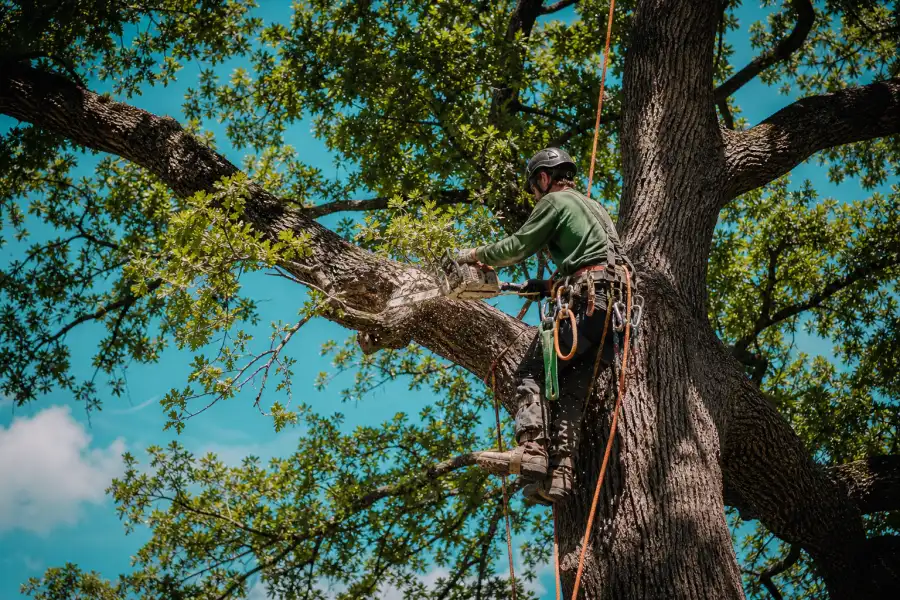
Tree trimming cost in Texas ranges from $150 for a small decorative tree to $1,500+ for a large mature oak or pecan. The size of the tree, access, species, and what kind of work is needed all factor into the price. Here’s what to budget for tree trimming services in Texas in 2026.
Tree Trimming Costs by Tree Size
Small Trees (under 25 feet)
Small ornamentals, young trees, and smaller variety trees.
- Cost range: $150-$450
- Examples: Crepe myrtles (single trunk, young), ornamental plums, Japanese maples, young fruit trees
- Typical service: Crown shaping, dead wood removal, structural pruning
Crepe myrtle note: Texas has millions of crepe myrtles, and “crepe murder” (severe topping) remains common but is destructive to the tree’s long-term health. A proper ISA-certified arborist will prune for structure — not hack at the top. If you’re getting quotes on crepe myrtles, ask specifically about the approach.
Medium Trees (25-60 feet)
The most common category for Texas residential properties.
- Cost range: $400-$1,000
- Examples: Live oaks (young to mature), pecans, red oaks, cedar elms, ash trees
- Typical service: Crown thinning, deadwood removal, clearance pruning (from structures), storm damage cleanup
Live oaks are Texas’s iconic tree and can grow large quickly. Proper structural pruning in early years prevents costly problems later. A 40-foot live oak runs $500-$800 to prune properly.
Large Trees (60-100 feet)
Mature shade trees that define a property.
- Cost range: $800-$1,500+
- Examples: Large live oaks, mature pecans, Arizona ash, large cottonwoods
- Typical service: Crown cleaning, large deadwood removal, clearance from structures
Mature Texas pecans are particularly large and require experienced crews — proper pruning on a 70-foot pecan runs $900-$1,400.
Very Large Trees (100+ feet)
Exceptional specimens or large commercial properties.
- Cost range: $1,500-$3,000+
- These are unusual in residential settings but exist on larger rural Texas properties
Cost Factors That Change Your Price
Access
Trees accessible from the ground with ladders or pole pruners are cheaper to work than trees requiring a bucket truck ($400-$800/day rental) or climbing rigging. If your tree is between structures, near power lines, or on a slope, expect access surcharges.
Proximity to Structures
Trees close to homes, fences, or power lines require more careful rigging and are slower to prune safely. Add $100-$300 for trees directly adjacent to structures.
Debris Removal
Most estimates include hauling debris away, but confirm. Some contractors leave brush piles for homeowner disposal (reduces cost $50-$150). Wood chip or firewood requests can sometimes reduce costs if they can use the material.
Multiple Trees
Most tree services offer 10-20% discounts when pruning 3+ trees in a single mobilization. If you have multiple trees needing attention, schedule them together.
Tree Trimming vs. Tree Removal
This guide covers trimming (preserving the tree). Removal is significantly more expensive:
- Small tree removal: $300-$700
- Medium tree removal: $700-$1,800
- Large tree removal: $1,500-$4,000+
- Stump grinding: $100-$350 additional
See tree removal cost Texas for full tree removal pricing. Note that in Texas, Oak Wilt (a fungal disease spreading through pruning wounds) is a serious concern for live oaks — pruning during oak wilt transmission season (February through June) carries real disease risk. Certified arborists can advise on timing and wound treatment.
Finding a Qualified Tree Service
ISA Certification
The International Society of Arboriculture (ISA) certifies arborists who demonstrate knowledge of tree biology, pruning science, and safety standards. An ISA Certified Arborist credential indicates professional-level training. For any tree work on mature trees, request ISA certification.
TCIA Membership
The Tree Care Industry Association (TCIA) is an industry professional organization. TCIA Accredited companies have passed safety and business practice standards.
Insurance Requirements
Any tree service working on your property must carry:
- General liability insurance ($1,000,000 minimum)
- Workers’ compensation (essential — climbing is dangerous work)
Get the certificates before work begins. If a worker falls on your property without workers’ comp coverage, you can be liable.
Red Flags to Avoid
- Door-to-door solicitation (especially after storms)
- “Has leftover chips from another job” (used to justify door-knocking)
- No written estimate or contract
- Requests for full payment upfront
- No insurance documentation when asked
Find vetted, insured tree service professionals on House Escort — verified contractors, direct booking, zero commission.
Oak Wilt in Texas: What Homeowners Need to Know
Oak wilt is one of the most destructive tree diseases in Texas, transmitted through pruning wounds (spores carried by sap beetles) and root grafts between neighboring oaks. Texas A&M Forest Service identifies Central Texas and the Hill Country as high-risk zones, but oak wilt has spread throughout the state.
Key practices:
- Avoid pruning live oaks February through June (peak transmission season)
- If a tree must be pruned in season, apply wound paint immediately to cut surfaces
- Do not move oak wood from known infected areas
- Hire arborists who understand oak wilt protocols
An ISA Certified Arborist familiar with Texas oak wilt conditions is worth the premium on live oak properties.
Annual Tree Maintenance Budget
For a typical Texas residential property with 3-5 mature trees, budget for tree maintenance annually:
| Tree Inventory | Annual Budget |
|---|---|
| 2-3 small/medium trees | $500-$1,500/year |
| 3-5 medium trees | $1,200-$3,000/year |
| 2-3 large mature trees | $1,500-$3,500/year |
| Large property with significant canopy | $3,000-$8,000/year |
Consistent annual maintenance prevents the expensive emergency situations — large deadwood falling on structures, diseased trees requiring emergency removal, or trees overgrowing power lines.
Frequently Asked Questions
How often should I trim trees in Texas?
Most Texas trees benefit from pruning every 3-5 years for structural maintenance. Live oaks in urban settings (near structures, power lines) may need annual or bi-annual clearance pruning. Fruit trees need annual pruning for production. Ornamentals like crepe myrtles can be shaped annually. An arborist can recommend a maintenance schedule based on your specific trees.
Can I trim my own trees in Texas?
DIY trimming is appropriate for small ornamentals you can safely reach from the ground with pole pruners or a ladder. Any tree work requiring climbing, heavy equipment, or work near power lines should be left to certified professionals. The liability and injury risk of improper tree climbing is significant.
Does homeowners insurance cover tree trimming?
No. Regular tree maintenance and trimming is not covered by homeowners insurance — it’s considered a maintenance expense. However, if a tree or large limb falls on your home due to a storm, damage to structures is typically covered. Proactive trimming reduces the risk of storm damage claims.
What’s the difference between trimming and pruning?
In professional arborist terminology, “pruning” is the science-based removal of specific branches for plant health, structure, and safety. “Trimming” is more of a colloquial term often meaning cosmetic shaping. Quality tree work is always pruning — selecting specific cuts based on branch health and structure.
Do I need a permit to trim or remove trees in Texas?
Some Texas cities require permits for removing or significantly altering protected trees (usually based on diameter/caliper size). Austin, Houston, San Antonio, and Dallas all have tree protection ordinances. Trimming (not removal) is typically not regulated. Check with your city’s urban forestry department before removing any large tree.
Find a Tree Service Near You
Get quotes from ISA-certified arborists and tree service professionals in Texas through House Escort — vetted, insured, and zero commission. Compare local tree services and book with confidence.