Tile Contractor Business Guide: Grow in 2026
House Escort Team
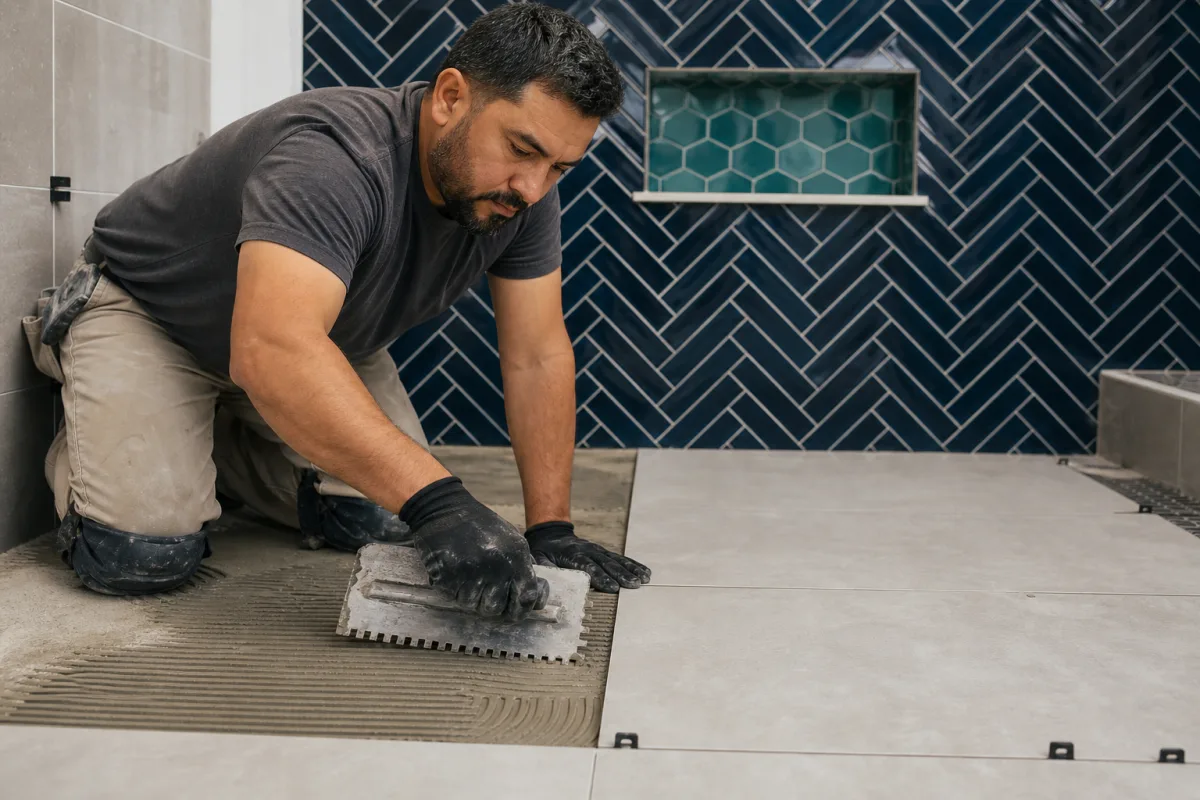
The tile contracting business rewards precision and professionalism. Texas’s active residential remodeling market, strong new construction sector, and demand for quality tile work creates consistent opportunity for contractors who build the right business systems. This guide covers pricing, licensing, marketing, and scaling your tile business profitably.
Licensing in Texas: What Tile Contractors Need
Texas has no statewide tile contractor license — the state doesn’t require a specific tile installation credential. However, running a tile business in Texas legally requires:
- General business license/registration: Register your business with the Texas Secretary of State (LLC or sole proprietorship)
- Registered agent and EIN: For payroll and tax purposes
- General liability insurance: Minimum $1,000,000 — required by most GCs before they’ll hire a sub
- Workers’ compensation insurance: Required if you have employees (optional for sole proprietors with no employees)
Some Texas cities require a local contractor registration or handyman permit for remodeling work. Austin, Houston, and Dallas have their own registration processes — check local requirements before bidding projects in new markets.
While you don’t need a tile license, working under a GC on larger jobs often requires being an approved subcontractor on their insurance rider. Maintain current GL and work comp certificates in an accessible digital format.
Pricing Tile Work to Make Real Margin
The tile industry has significant price variation — from budget DIY pricing to luxury large-format installation. Your pricing should reflect your skill level, materials, and target market.
Labor pricing structures:
| Service | Typical Range (Labor Only) |
|---|---|
| Floor tile installation (standard) | $7-$15/sq ft |
| Floor tile installation (large-format 24x24+) | $12-$22/sq ft |
| Bathroom tile (walls + floor, full bath) | $1,800-$4,500 labor |
| Shower tile installation | $1,200-$3,500 labor |
| Backsplash installation | $400-$1,200 labor |
| Tile removal (demo) | $2-$5/sq ft |
Material markup: Add 20-35% markup on materials you supply. Tile contractors who pass materials through at cost are leaving 15-30% of revenue on the table. Build your material relationships with tile distributors and pass savings to clients while maintaining margin.
Complexity factors that command higher rates:
- Diagonal or pattern layouts (offset, herringbone, basketweave)
- Large-format tiles (more labor-intensive leveling)
- Heated floor system integration
- Custom mosaics or decorative work
- Wet shower areas requiring membrane installation
Review benchmark margins in the contractor profit margins by trade guide.
Finding Tile Jobs: Your Marketing Stack
GC Relationships
Building relationships with general contractors, kitchen and bath remodelers, and custom home builders is the most stable business development channel for tile contractors. GCs need reliable tile subs who show up on time, do quality work, and don’t create callbacks.
To get on GC bid lists:
- Create a simple 1-page capability sheet (photos, specialties, insurance info, contact)
- Identify 15-20 active GCs in your market
- Introduce yourself directly — job sites and lumber yards are good introduction points
- Follow up after your first job to confirm they’d use you again
GC work tends to run at lower margins than direct homeowner work, but provides consistent volume. Target 60-70% of your revenue from direct homeowner work, 30-40% from GC subcontracting.
Google Business Profile
Bathroom and kitchen tile remodel is a high-intent search. Homeowners searching “tile contractor [city]” or “tile installation [city]” are actively looking to hire. A complete, optimized Google Business Profile with photos of completed work is the highest-ROI digital marketing for most tile contractors.
Requirements for an optimized GBP:
- Complete address, phone, website
- Category: “Tile Contractor” primary
- 15+ photos of completed projects (before/after if possible)
- Respond to every review
- Post weekly updates (new project photos, tips)
House Escort
The House Escort platform connects tile contractors directly with homeowners — zero commission, zero lead fees. Unlike Angi or HomeAdvisor where you pay $15-60/lead and compete with multiple other contractors, House Escort puts you in direct contact with homeowners. You keep 100% of what you earn.
Before-and-After Portfolio
Tile work is highly visual. A strong photo portfolio converts leads into bookings. Invest in:
- Good photo lighting (LED work lights or natural light — never overhead fluorescent)
- Clean, staged photos after completion (remove equipment, sweep tiles)
- Phone camera is sufficient — clean, bright, and sharp is what matters
- Post consistently to Instagram, Houzz, and your GBP
Scaling: Adding Your First Employee or Sub
Moving from solo to a two-person crew doubles your capacity without doubling your overhead. The right first hire for a tile contractor:
Option A: Hired employee tile setter
- Pros: Direct control, training investment builds your brand standards
- Cons: Payroll, workers’ comp, benefits, management overhead
- Best for: Steady volume businesses doing $500K+/year
Option B: Regular subcontractors
- Pros: Flexible capacity, lower overhead, pay per job
- Cons: Less control, availability risk
- Best for: Growing businesses that aren’t yet consistent on volume
For either path, have a subcontractor agreement template in place before anyone works on your jobs. Clear scope, payment terms, and liability responsibilities protect you.
Specialization: Higher Rates Through Differentiation
General tile installers compete on price. Specialists command premium rates. Consider developing expertise in:
Large-format tile: 24x24, 32x32, and 48x48+ tiles require specialized skills — lippage control, substrate preparation, large-format leveling systems. Fewer contractors have this skill, so rates are 30-50% higher.
Steam shower and wet room installation: Proper waterproofing membrane installation (Schluter KERDI, Wedi, Laticrete) is technically demanding and high-value. A failed shower membrane is catastrophic — homeowners pay for expertise here.
Commercial tile: Office lobbies, restaurant flooring, healthcare facilities — commercial tile has larger square footage and higher ticket sizes. Requires commercial insurance minimums and bid bond capacity.
Outdoor and pool tile: Texas outdoor kitchens, pool decks, and patio tile work is weather-dependent but high-value. Requires specific frost-resistance and slip-resistance knowledge.
Business Systems That Support Scale
Once you’re past $400,000 in annual revenue, manual processes become bottlenecks:
- Scheduling: Jobber or ServiceTitan for job management, invoicing, and customer communication
- Estimating: A repeatable estimate template with your labor rates pre-built
- Invoicing: Digital invoicing with online payment (Stripe, PayPal, Square) — reduces days-to-payment from 15 days to same day
- Materials tracking: QuickBooks with job costing to identify which job types are most profitable
Review contractor bookkeeping tips for the basics of job-level financial tracking that reveals your true margins.
Frequently Asked Questions
Do I need a tile contractor license in Texas?
Texas has no statewide tile installation license. However, you need a registered business entity (LLC or DBA), general liability insurance, and workers’ comp if you have employees. Some cities require local contractor registrations — check Dallas, Houston, Austin, and San Antonio requirements. General contractors who hire tile subs typically require proof of current insurance.
What should I charge for tile installation per square foot in Texas?
Residential floor tile installation runs $7-$15/sq ft in labor (excluding materials), with complexity factors increasing rates significantly. Large-format tile, diagonal layouts, heated systems, and bathroom wet areas all command higher rates. Avoid pricing below $6/sq ft — at that level, you cannot cover overhead and generate meaningful profit.
How do I win more kitchen and bathroom tile jobs?
Two highest-impact channels: a strong Google Business Profile with project photos, and strong GC relationships. Direct homeowner leads from GBP have higher value and close rate than paid lead sources. GC referrals provide volume. Consistently request reviews after every completed job — photo reviews are especially powerful for visual services like tile work.
How do I handle callbacks (tile cracking, lippage)?
Most tile callbacks stem from improper substrate preparation or wrong mortar selection. Addressing callbacks professionally and promptly turns a problem into a reference — clients who see you stand behind your work become strong advocates. Document your substrate prep steps, use manufacturer-recommended mortars for each application, and build callbacks into your pricing as a cost of doing business (typically 1-3% of revenue for quality operators).
What’s the best way to price a full bathroom tile job?
Start with a takeoff (measure every tiled surface in sq ft). Apply your labor rate by surface type (floor, walls, shower). Add material cost with markup. Add allowances for demo, substrate prep (cement board, membrane), grout, and trim pieces. Contingency of 10% for unknowns. Present the total as a fixed-price bid with a clear scope of work.
Grow Your Tile Business Without Paying Commission
Ready to find more tile jobs without paying lead fees? Join House Escort free — connect directly with homeowners looking for tile contractors. You keep 100% of your earnings.