Texas Foundation Crack Types Homeowners Must Know
House Escort Team
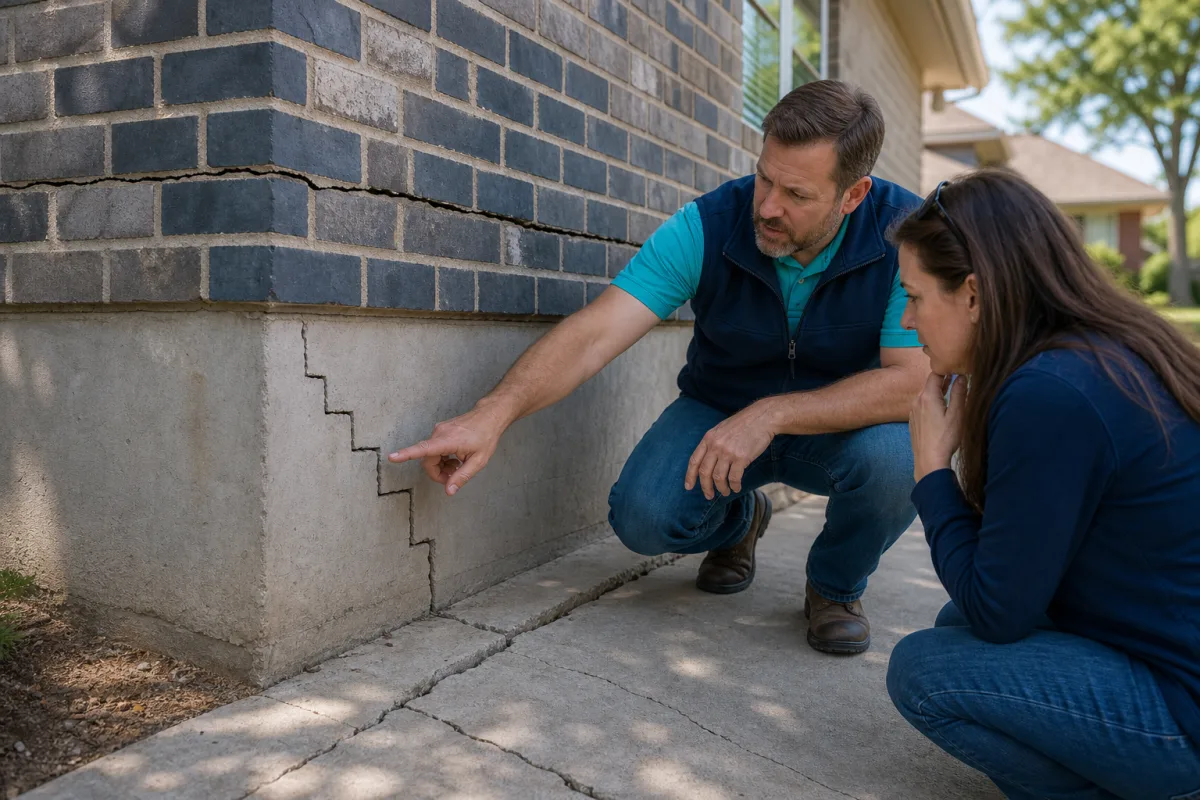
Texas soils present unique challenges for residential foundations. The state’s expansive clay soils swell when wet and shrink when dry, creating constant pressure on concrete slabs and pier-and-beam systems. Understanding crack types helps homeowners distinguish cosmetic concerns from structural emergencies.
Not every crack requires immediate excavation and underpinning. Some hairline cracks represent normal curing and settlement. Others signal differential movement that demands professional evaluation. Early identification prevents minor issues from becoming six-figure repairs.
Horizontal Cracks: Structural Emergency
Horizontal cracks in foundation walls or slabs indicate lateral pressure from soil expansion or hydrostatic forces. These cracks typically appear 3-5 feet above the slab in basements or along the perimeter of slab-on-grade homes.
In Texas, horizontal cracking often results from poor drainage around the foundation. When gutters overflow or irrigation saturates clay soils near the house, hydrostatic pressure pushes against the foundation wall. Over time, this force exceeds concrete tensile strength.
Any horizontal crack wider than 1/4 inch or showing signs of movement warrants immediate structural engineer assessment. These cracks can compromise load-bearing capacity and allow water intrusion that accelerates deterioration.
Stair-Step Cracks in Brick Veneer
Stair-step cracks following mortar joints in brick exterior walls signal foundation settlement or heaving. The pattern follows the weakest path through the brickwork, creating a stepped appearance.
Texas clay soils cause this damage when one section of the foundation moves differently than adjacent areas. Tree roots, plumbing leaks, or uneven watering patterns create moisture differentials that drive the movement.
Stair-step cracks do not always mean the foundation itself has failed. They often indicate the brick veneer has lost support or the foundation has experienced minor differential settlement. A structural engineer can determine whether the crack affects the load path or remains a cosmetic veneer issue.
Vertical Hairline Cracks: Usually Normal
Vertical cracks narrower than 1/16 inch that run straight up foundation walls or across slabs commonly appear during the first two years after construction. These result from concrete shrinkage as it cures and initial soil settlement under the weight of the home.
In Texas, vertical hairline cracks often stabilize after the first or second rainy season. Monitor them for widening or lengthening. Mark the ends with a pencil and date. Re-inspect after heavy rains or prolonged droughts.
Cracks that remain under 1/8 inch wide and show no recent movement typically require only cosmetic repair with flexible caulk or epoxy injection. They do not indicate structural compromise.
Diagonal Cracks: Differential Settlement
Diagonal cracks running at 45-degree angles across slabs or walls point to differential settlement. One corner or section of the foundation has moved vertically relative to the rest of the structure.
Common causes in Texas include:
- Plumbing leaks under the slab eroding soil support
- Large trees planted too close to the foundation pulling moisture from clay soils
- Poor compaction of fill soils during original construction
- Inconsistent irrigation or drainage patterns around the perimeter
Diagonal cracks often accompany uneven floors, sticking doors, and windows that bind. These symptoms together strongly suggest ongoing foundation movement requiring professional diagnosis.
What Texas Clay Soil Does to Foundations
Texas contains some of the most expansive clay soils in the United States. The Houston area, Blackland Prairie, and parts of North Texas feature high-plasticity clays that can expand 20-30% when saturated.
This expansion exerts tremendous pressure on foundations. A slab that was level in dry September can experience 2-4 inches of differential movement after heavy spring rains. The opposite occurs during drought when soils shrink and pull away from the foundation edge.
The Texas Section of the American Society of Civil Engineers has documented these soil behaviors extensively. Their guidelines recommend maintaining consistent soil moisture around the entire foundation perimeter through proper grading, gutter systems, and irrigation management.
When to Call a Structural Engineer vs Cosmetic Repair
Call a licensed structural engineer when you observe:
- Horizontal cracks wider than 1/4 inch
- Multiple stair-step or diagonal cracks
- Doors or windows that suddenly stick or fail to close
- Visible slope in floors (use a marble test)
- Cracks that have widened since you first noticed them
- Water intrusion through foundation cracks
A structural engineer provides an unbiased assessment and written report you can share with repair contractors. Their evaluation typically costs $300-$800 depending on property size and complexity, according to regional inspection industry data.
Cosmetic cracks under 1/8 inch that show no recent movement and lack accompanying symptoms can often be monitored or sealed without engineering consultation. However, when in doubt, professional evaluation provides peace of mind and documentation for future home sales.
Foundation Inspection Costs in Texas
Professional foundation inspections in major Texas metros range from $300 to $800. This includes visual assessment, level surveys, and a written report with repair recommendations if warranted.
Some inspectors offer thermal imaging or ground-penetrating radar for additional fees. These tools help identify plumbing leaks or void spaces under slabs without excavation.
Homeowners should request engineers with Texas-specific experience. Soil conditions vary dramatically between Houston’s gumbo clay, Austin’s limestone, and Dallas sandy loam. Recommendations appropriate for one region may not apply elsewhere.
Link to related services such as pool resurfacing cost considerations or chimney repair evaluations when foundation movement affects attached structures.
Preventive Measures for Texas Homeowners
Maintain consistent soil moisture around your foundation. Install and maintain gutters that direct water at least 5 feet away from the foundation. Grade soil to slope away from the house at 6 inches per 10 feet.
Water foundation perimeter during prolonged dry spells, especially near large trees. Use soaker hoses on low volume for several hours rather than flooding the area.
Avoid planting trees closer than their mature height to the foundation. Oak, elm, and willow roots aggressively seek moisture and can cause significant foundation damage in Texas clay.
Monitor irrigation systems for leaks near the foundation. A single broken sprinkler head can saturate soil and trigger movement within weeks.
Frequently Asked Questions
Can I fix foundation cracks myself?
Minor hairline cracks can be sealed with flexible caulk available at hardware stores. Structural cracks, stair-step patterns, or any crack showing movement require professional diagnosis and repair methods such as epoxy injection, piers, or wall anchors.
Does homeowners insurance cover foundation repair?
Most Texas policies exclude foundation damage from soil movement or poor maintenance. Sudden damage from plumbing leaks or covered perils may receive partial coverage. Review your policy declarations and contact your agent before hiring repair contractors.
How long do foundation repairs last?
Properly engineered repairs using piers or wall anchors typically carry 10-25 year warranties. Success depends on addressing the underlying soil moisture issues. Homes that implement drainage improvements alongside structural repairs experience fewer recurring problems.
Should I repair cracks before selling my home?
Disclose all known foundation issues to buyers. Pre-emptive cosmetic repairs can help showings, but structural repairs should follow engineering recommendations. Buyers will order their own inspections, so transparent documentation builds trust.
How often should I have my foundation inspected?
Annual visual checks by the homeowner combined with professional inspection every 3-5 years or after significant weather events provides adequate monitoring for most Texas homes. Properties with known issues or poor drainage warrant more frequent professional review.
Word count: approximately 1,450