Sprinkler Repair Cost in Texas: What to Expect
House Escort Team
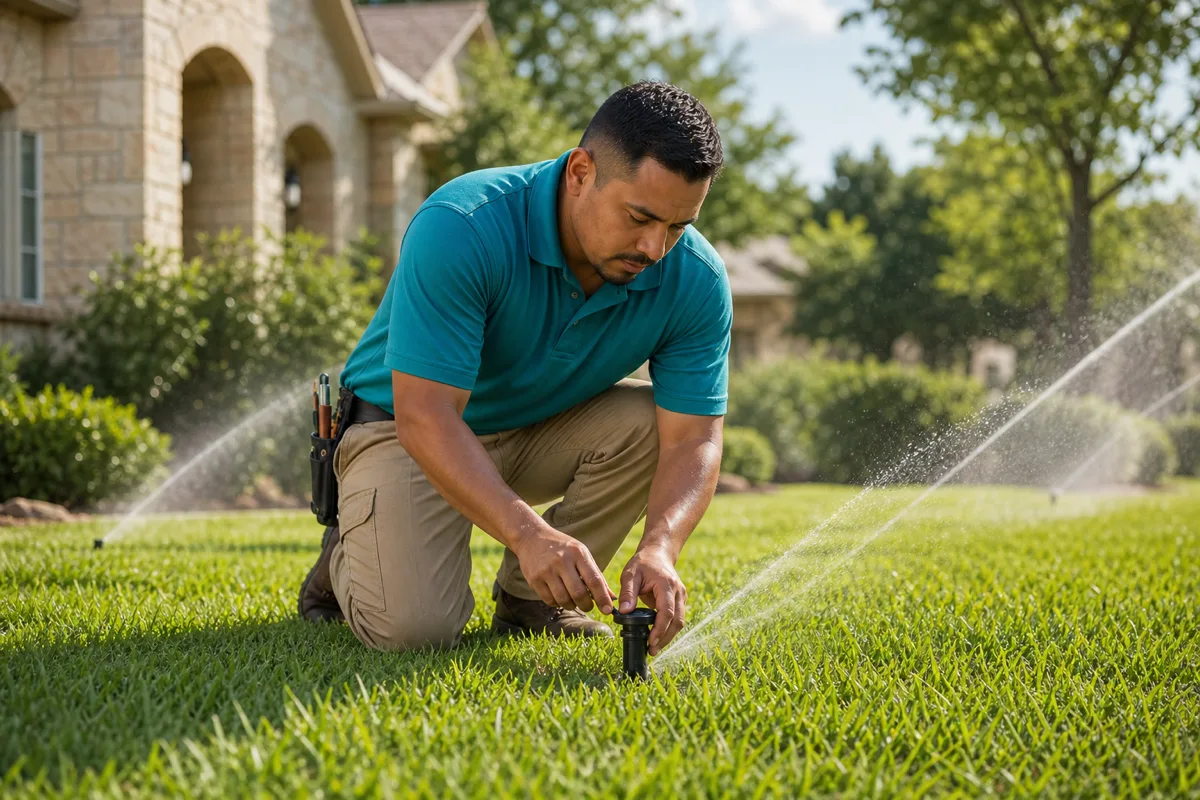
Texas’s hot, dry summers make functional irrigation systems essential for lawn survival. A broken sprinkler system in July means dead grass in days. Here’s what Texas homeowners pay for sprinkler repairs, what’s worth DIYing, and when to call a pro.
Average Sprinkler Repair Costs in Texas
| Repair Type | Average Cost | Range |
|---|---|---|
| Single sprinkler head replacement | $65-90 | $50-120 |
| Multiple heads (3-5) | $150-250 | $100-350 |
| Valve replacement | $100-175 | $80-250 |
| Zone control box repair | $100-200 | $75-300 |
| Broken pipe/main line leak | $150-400 | $100-600 |
| Controller/timer replacement | $125-225 | $80-300 |
| System check + head adjustment | $75-125 | $60-150 |
| Backflow preventer repair | $175-350 | $125-500 |
| Full system inspection + tune-up | $100-175 | $75-200 |
Service call / trip charge: Most Texas irrigation contractors charge $50-75 just to show up, applied toward the repair if work is done. Factor this into your estimate comparison.
Most Common Texas Sprinkler Repairs
Broken sprinkler heads: The most frequent repair. Heads get cracked by lawn mowers, cars, foot traffic, or sun/UV degradation over time. A single head replacement including parts and labor: $65-90 in Texas. Upgrading to higher-quality heads (Hunter, Rain Bird) during replacement is worth the small premium — they last longer in Texas heat.
Stuck or non-rotating heads: Rotary heads (gear-driven heads that rotate) can get dirt in the mechanism or the gear drive can fail. Sometimes cleanable in the field; often replacement is the best fix.
Leaking valve: A zone that keeps watering after the controller shuts it off typically has a failed solenoid valve. Valve replacement is straightforward and parts are $15-40, but a pro handles it in 30 minutes.
Zone not coming on: Electrical issue (bad solenoid, wiring), valve failure, or controller malfunction. Diagnosis is the most time-consuming part — pros use multi-meters to trace the issue.
Controller/timer replacement: Older mechanical timers fail and smart controllers (Rachio, Hunter Pro-HC) are the standard replacement. Controller replacement including installation: $125-225. Smart controllers that adjust watering based on weather data are worth the premium in Texas — they reduce overwatering and save water costs.
Backflow preventer failure: Texas requires backflow preventers on irrigation systems connected to municipal water supply. These can fail or need testing. Backflow preventer repair or replacement: $175-350.
Main line leak: A leak in the main supply line to the system (typically in the ground) requires locating the leak, digging, and repairing PVC pipe. Cost depends on depth, access, and leak location: $150-400.
Why Texas Irrigation Systems Fail Faster
Several Texas-specific conditions accelerate sprinkler system wear:
Clay soil movement: Expansive clay soils (predominant in DFW, Houston, and Central Texas) move seasonally as moisture levels change. This movement stresses buried PVC pipes and fittings, causing cracks and breaks that don’t occur in sandy or stable soils.
UV exposure: Texas’s intense UV degrades exposed irrigation components — above-ground heads, timer boxes, and drip tubing — faster than northern climates.
Lawn mower damage: The frequency of lawn care in Texas’s long growing season means more opportunities for mowers and edgers to clip sprinkler heads.
Freeze events: While Texas winters are mild, periodic hard freezes (the 2021 storm being the extreme) can damage irrigation systems that aren’t properly winterized. Post-freeze damage is one of the most common repair scenarios for Texas irrigation contractors.
DIY vs. Professional Sprinkler Repair
Good DIY candidates:
- Replacing a single pop-up spray head (matching head type and precipitation rate) — $8-15 for parts, 15 minutes
- Adjusting arc and distance on existing heads — free, just needs practice
- Replacing a solenoid on a known-failed valve (if you can identify the valve and solenoid) — $12-25 parts
Leave to a pro:
- Main line leaks (requires locating and digging)
- Backflow preventer issues (often requires licensed contractor for testing)
- Electrical/wiring diagnosis
- Adding zones or significant system modifications
- Controller replacement if you’re not confident with wiring
Texas licensing note: Texas does not require a specific license for irrigation repairs on existing residential systems in most municipalities, but new installations and some cities do require licensed irrigators. For significant repairs, using a licensed irrigator (TCEQ irrigator license) ensures the work meets Texas water code requirements.
Find a reliable irrigation pro in Texas through House Escort — free for homeowners.
Frequently Asked Questions
How much does it cost to replace a sprinkler head in Texas?
Replacing a single sprinkler head in Texas typically costs $65-90 including parts and labor. If multiple heads need replacement in the same visit, pros often discount additional heads. Upgrading to premium heads (Hunter Pro-Spray, Rain Bird 1800) during replacement adds $5-15 per head but extends service life significantly.
Why does my sprinkler system run even when it rains in Texas?
Most likely the rain sensor is missing, failed, or bypassed. Texas requires rain sensors on all new irrigation installations. If your system runs during rain, the sensor has failed (sensors have a finite lifespan and can get clogged) or was disconnected. Rain sensor replacement costs $25-75 installed — well worth it for water savings in a year with normal Texas rainfall.
How do I find a sprinkler leak in my yard?
Check your meter: with all water turned off except the irrigation main, watch the meter. If it’s still turning, you have a leak. Above-ground signs: soggy spots, unexplained green patches, or water pooling near valve boxes. For underground main line leaks, listening devices or pressure testing by a pro is the most reliable method.
Should I upgrade to a smart irrigation controller?
Generally yes for Texas homeowners. Smart controllers (Rachio 3, Hunter Hydrawise) adjust watering schedules based on local weather data, preventing overwatering after rain and adjusting for temperature and evapotranspiration. They can reduce water use by 20-30% and typically pay back their cost ($100-200) in water savings within 1-2 seasons in Texas. Installation is straightforward for most existing systems.
How often should a Texas irrigation system be inspected?
Annual spring startup inspection (before peak irrigation season begins) is the standard recommendation. This includes checking all heads for proper operation, adjusting arcs and coverage, cleaning filters, checking valve operation, and verifying controller programming. Most Texas homeowners schedule this in March-April. The inspection cost ($100-175) is worth it to catch small issues before they become costly mid-summer failures.