Smart Home Installation Cost: What to Expect
House Escort Team
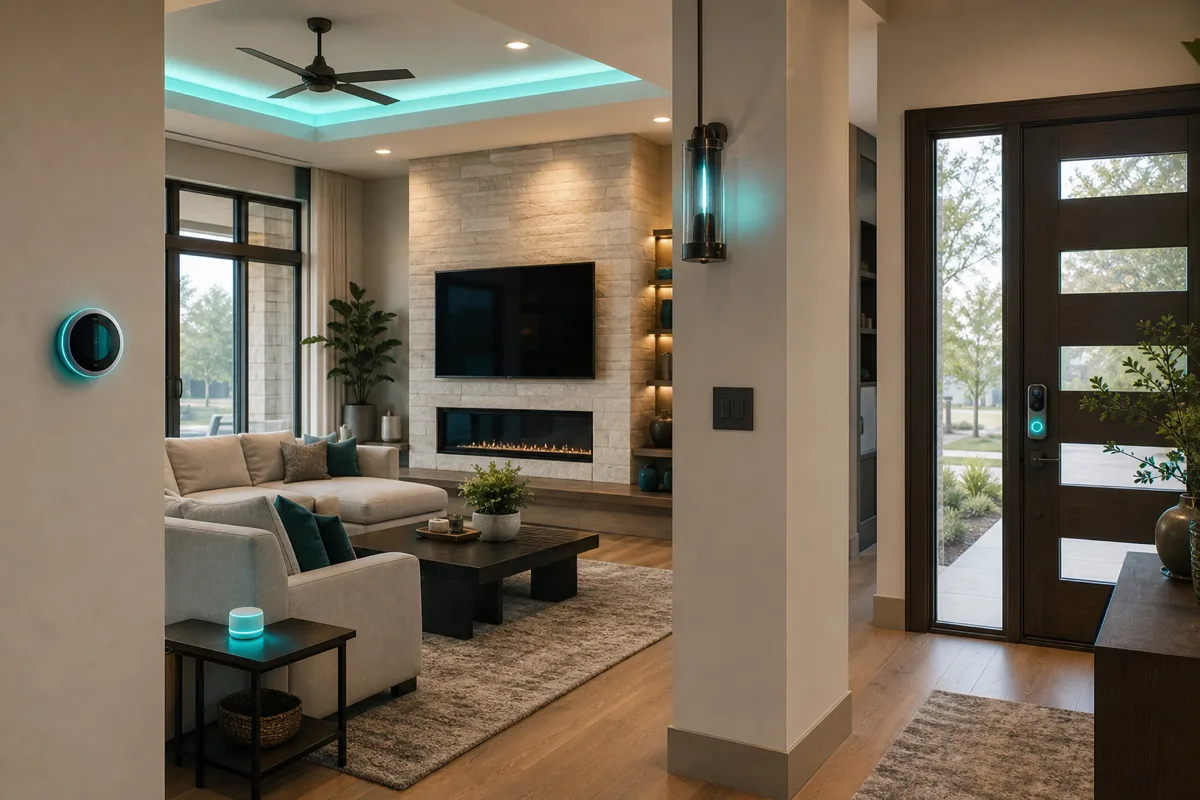
Smart home technology has dropped dramatically in price over the past five years, but the question isn’t just what the devices cost — it’s what professional installation costs, what actually adds home value, and how to avoid paying an electrician $300 to install something a 12-year-old can set up from a YouTube tutorial.
This guide helps Texas homeowners separate the DIY-friendly upgrades from the ones that genuinely benefit from professional installation.
Why Hire a Pro for Smart Home Installation?
Not every smart home device needs a professional. But some situations do:
- New wiring required: Smart lighting switches require a neutral wire — many older Texas homes don’t have neutral wires at every switch box. An electrician may need to run a new wire or install a workaround device.
- Low-voltage wiring: Security cameras, smart doorbells, and multi-zone audio systems often involve structured wiring that benefits from professional planning and installation.
- Whole-home integration: If you want devices to communicate through a central hub (Control4, Savant, SmartThings), an integrator ensures compatibility and programs scenes properly.
- Permits: Some low-voltage work in Texas requires a permit in certain municipalities, particularly when it involves new conduit runs or panel work.
The Department of Energy notes that smart home systems — particularly smart thermostats and connected HVAC controls — can meaningfully reduce energy consumption when properly configured.
Cost by Device Category
Smart Thermostats
Device cost: Most popular smart thermostats (Ecobee, Nest, Honeywell T6) retail between $120–$280.
Installation cost:
- DIY-friendly if your HVAC system has a C-wire (common wire). Most installs take 30–60 minutes.
- Professional installation: $75–$150 if you hire an HVAC tech or electrician for a standard swap.
- C-wire adapter or new wire run: Add $75–$200 depending on HVAC system complexity.
Texas utility rebates: This is one of the best ROI smart home upgrades in Texas:
- Oncor (DFW): Rebates up to $85 per qualifying smart thermostat
- CPS Energy (San Antonio): Rebates available for Ecobee and Nest thermostats
- AEP Texas: Rebates of $50–$100 for qualifying connected thermostats
- Centerpoint (Houston): Rebate programs available through their efficiency portal
Between rebates and energy savings (typically 10–15% on HVAC costs), a smart thermostat often pays back within 12–18 months.
Video Doorbells
Device cost: Ring, Nest Hello, and Eufy video doorbells run $80–$250.
Installation cost:
- Battery-powered doorbells: True DIY — no wiring required.
- Wired doorbells: Requires connecting to existing doorbell wiring (16–24V transformer). Most homeowners can DIY this in 20 minutes.
- If your home lacks existing doorbell wiring: Electrician cost $150–$300 to run new low-voltage wire.
Note: Video doorbells store footage to the cloud, which typically requires a subscription. Avoid quoting specific subscription costs — plans change frequently.
Smart Lighting
Device cost: Smart bulbs range from $10–$30 each. Smart light switches run $25–$65 each.
Installation cost:
- Smart bulbs: Pure DIY — screw in and connect to app.
- Smart switches: More complex. You need a neutral wire at the switch box. Homes built after 2000 in Texas usually have this; older homes may not.
- Electrician cost to swap out standard switches: $75–$150 per switch (covers labor and any necessary wiring fixes)
- Whole-home smart lighting conversion (10–15 switches): $800–$2,000 installed by an electrician
DIY vs. pro: If your home has neutral wires, switching to smart switches is a reasonable DIY project for anyone comfortable with basic electrical work (turning off breakers, wire connections). If neutral wires are missing, hire an electrician.
Security Cameras
Device cost: Consumer cameras (Ring, Arlo, Google Nest) run $80–$200 per camera. Professional-grade PoE (Power over Ethernet) cameras are $100–$300 per camera.
Installation cost:
- Wireless battery cameras: DIY-friendly, just mount and connect to app.
- Hardwired PoE or coax camera systems: Require running cable through walls/attic. Professional installation for a 4-camera system typically runs $500–$1,200 for labor.
- Whole-home professional security systems (ADT, Brinks, or custom PoE): $1,500–$5,000+ installed depending on camera count and access control integration.
What adds home value: Security cameras are increasingly expected by buyers in Texas. A well-installed camera system covering all entry points is a meaningful selling point, especially in suburban DFW and Houston markets.
Smart Hubs and Voice Assistants
Device cost: Amazon Echo and Google Home hubs run $30–$250. Dedicated home automation controllers (Control4, Savant) are $2,000–$10,000+.
Installation cost:
- Consumer hubs (Alexa, Google Home): Pure DIY — plug in and connect.
- Professional home automation systems: Typically $2,000–$8,000 in professional integrator labor for a full Control4 or Savant setup with custom scenes, whole-home audio, and smart lighting integration.
For most Texas homeowners, consumer hubs are sufficient. Professional automation systems are a luxury that adds value in high-end homes.
Bundled Smart Home Installation Packages
Some electricians and smart home integrators offer bundled installation packages, which can reduce per-device labor costs:
- Starter package (thermostat + doorbell + 4 smart switches): $400–$700 installed
- Full security package (doorbell + 4–6 cameras + outdoor lighting): $1,200–$2,500 installed
- Whole-home smart conversion (lighting, thermostat, security, hub): $3,000–$8,000 depending on home size
When getting quotes, ask whether the installer will test and program each device — not just physically install it. A smart thermostat that isn’t configured for your HVAC system type won’t deliver any energy savings.
DIY vs. Hiring an Electrician
A simple rule: if the device requires cutting into drywall, running new wire, or working in the electrical panel — hire a pro. For everything else, DIY is reasonable if you’re comfortable with basic home tech.
See our detailed breakdown at /resources/diy-vs-hire-a-pro-guide/.
For electrical-specific work, review our guide on how to hire a reliable electrician.
What Smart Home Upgrades Add Resale Value?
Not all smart home upgrades translate to resale value. Buyers generally value:
- Smart thermostat: Strong ROI, especially in Texas where HVAC costs are high
- Video doorbell and security cameras: Broadly valued, especially in suburban Texas markets
- Smart locks: Moderate value — but must be compatible with buyer’s phone/ecosystem
- Whole-home security system: Adds value when it’s transferable or professionally monitored
Less likely to move the needle on resale: smart bulbs, branded voice assistants, and proprietary systems that require the buyer to maintain an account.
Finding Smart Home Installers on House Escort
House Escort connects Texas homeowners with electricians and smart home pros who show their license, insurance, and reviews upfront. Post your installation project for free and receive competitive quotes.
Find a smart home installer near you →
Frequently Asked Questions
How much does it cost to install a smart home system in Texas? It depends on scope. A simple smart thermostat and doorbell install runs $200–$400 with professional labor. A full home conversion with smart lighting, security cameras, and hub integration can run $3,000–$8,000+ depending on home size and device selection.
Do I need an electrician to install smart home devices? Not always. Battery-powered cameras, smart bulbs, and voice assistant hubs are pure DIY. Smart switches, hardwired cameras, and new doorbell wiring typically benefit from or require an electrician, especially in older Texas homes without neutral wires at switch boxes.
What Texas utilities offer smart thermostat rebates? Oncor (DFW), CPS Energy (San Antonio), AEP Texas, and Centerpoint Energy (Houston) all offer rebates for qualifying smart thermostats. Rebate amounts change periodically — check your utility provider’s energy efficiency portal for current offers.
Will smart home devices increase my home’s resale value? Smart thermostats, video doorbells, and security cameras are broadly valued by buyers and can support a higher asking price. Proprietary automation systems (Control4, etc.) may not add value unless the buyer specifically values that ecosystem.
What is the easiest smart home upgrade to start with? A smart thermostat is the best first upgrade for most Texas homeowners — high energy savings, substantial utility rebates, straightforward DIY installation in most modern homes, and broad buyer appeal if you sell.