Slab Leak Repair Cost in Texas: 2026 Guide
House Escort Team
Slab leaks are one of the most stressful plumbing problems a Texas homeowner can face — and one of the most expensive if caught late. Texas’s expansive clay soils, combined with decades-old copper piping in many homes, create conditions where slab leaks are more common than in most parts of the country.
Here’s what you need to know about slab leak repair costs, how the repair process works, and when to call a plumber.
What Is a Slab Leak?
A slab leak is a water leak occurring in the supply or drain pipes that run beneath a home’s concrete slab foundation. Texas homes — particularly those built from the 1960s through the 1990s — commonly have copper pipes embedded in or below the slab.
Over time, these pipes corrode, develop pinhole leaks, or are damaged by soil movement. Texas’s expansive clay soils shift seasonally with moisture changes, creating movement that accelerates pipe fatigue.
Warning Signs of a Slab Leak
- Unexplained increase in water bill with no visible leak source
- Warm spots on the floor — a classic sign of a hot water line leak beneath the slab
- Sound of running water when all fixtures are off
- Damp or discolored flooring without an obvious surface source
- Mold or mildew smell without a visible moisture source
- Foundation cracks — a slab leak can erode the soil under the foundation over time, causing structural movement
If you notice any of these, shut off the supply to the hot water heater, note whether the water meter continues moving (indicating a cold-side leak), and call a licensed plumber promptly. Early detection significantly reduces repair cost.
Slab Leak Repair Costs in Texas
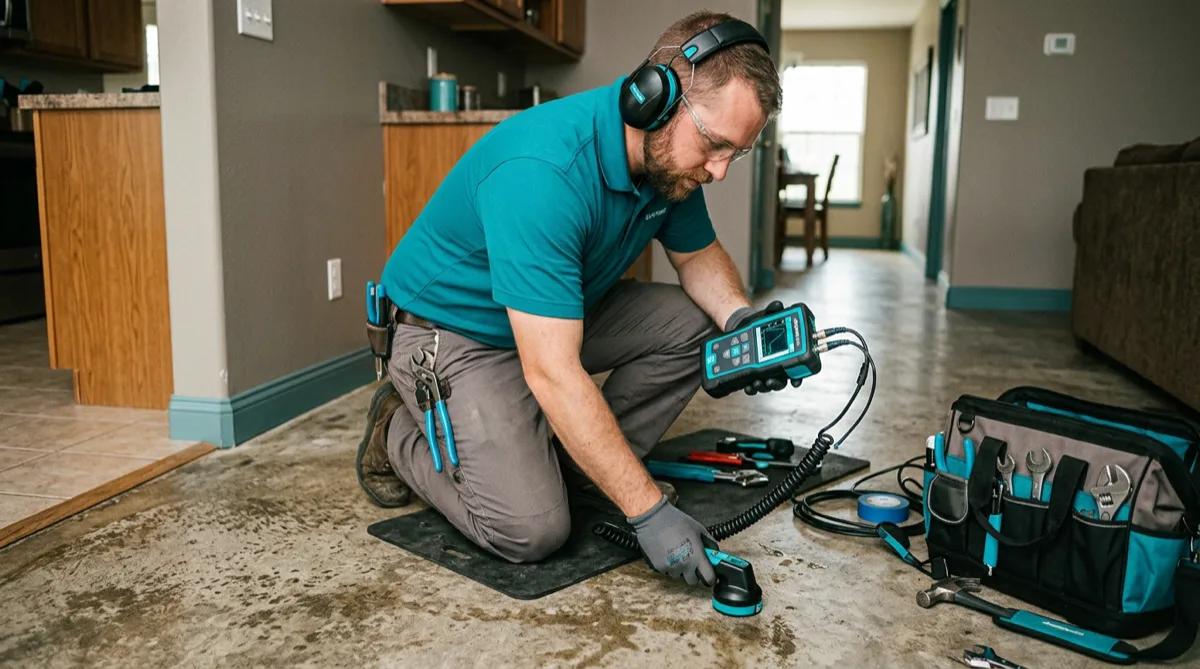
Leak detection: $150–$500. Electronic and acoustic detection equipment locates the exact leak position without unnecessary demolition. Don’t skip this step — professional detection prevents breaking concrete in the wrong place.
Repair costs by method:
| Method | Cost Range | Best For |
|---|---|---|
| Direct access (jackhammer, spot repair) | $500–$2,000 | Single isolated leak, accessible location |
| Pipe rerouting (running new pipe above slab) | $1,500–$4,000 | Multiple leaks or corroded pipe sections |
| Epoxy pipe lining (trenchless) | $2,000–$5,000+ | Older copper pipes throughout the home |
| Full repipe (replacing all underslab plumbing) | $4,000–$15,000+ | Severely corroded systems, older homes |
Most Texas homeowners dealing with a single slab leak pay $1,500–$4,000 total for detection, access, and repair. Older homes or those with multiple leaks often run higher.
Repair Method Breakdown
Spot Repair (Direct Access)
A jackhammer or concrete saw opens the slab at the leak location, the plumber repairs or replaces the damaged pipe section, then the concrete is patched. Flooring must be replaced over the patch.
Best for: A single isolated leak in a copper pipe that’s otherwise in good condition.
Limitations: If the pipe is generally corroded, a spot repair now means another repair — at another part of the house — within months.
Pipe Rerouting
The plumber bypasses the leaking underslab section by running a new line through the walls, attic, or crawlspace. No major concrete demolition required.
Best for: Situations where the underslab pipe section is too deep, too damaged, or in a location that makes direct access expensive. Also appropriate when multiple sections are corroded.
This is often the most cost-effective solution for older Texas homes — it avoids the concrete work entirely and uses modern PEX pipe that won’t corrode.
Epoxy Pipe Lining (Trenchless)
A specialized plumber runs an epoxy-coated liner through the existing pipe, sealing leaks without demolition. This is an effective solution but requires a specialist and isn’t available in all Texas markets.
Full Repipe
When an older home has multiple slab leaks or severely corroded copper throughout, a full repipe — replacing all the underslab water supply lines with new PEX pipe routed through walls — is the most permanent solution. Higher upfront cost but eliminates future slab leak risk from the original pipe system.
Texas-Specific Factors That Affect Cost
Soil conditions: Dallas-Fort Worth and much of Central Texas sits on expansive clay that moves with moisture. This soil movement is a primary driver of slab plumbing fatigue and can also affect how accessible the repair location is.
Flooring type: Repairing a slab leak under tile costs more in total than under carpet — tile replacement after the concrete patch is labor-intensive. Budget separately for flooring restoration.
Home age: Homes built before 1980 with original copper plumbing are high-risk for multiple slab leaks. If your 1970s Texas home has had one slab leak, it’s worth discussing a full repipe with your plumber rather than continuing to do spot repairs.
Homeowner’s insurance: Many Texas homeowners’ policies cover the leak repair itself but not the pipe replacement or flooring restoration. Review your policy before assuming coverage. Some policies have slab leak riders.
How to Hire a Slab Leak Plumber in Texas
Slab leak repair requires a licensed plumber — unlicensed handymen should not be doing this work. Texas requires licensed plumbers for all water line repairs.
When getting quotes:
- Ask specifically what the detection fee includes and whether it applies toward the repair cost if you hire them
- Get the repair method in writing before any concrete is opened
- Ask whether the repaired section is under warranty
- For older homes, ask whether the plumber recommends a full inspection of underslab piping while they’re in there
House Escort lists licensed, verified Texas plumbers with slab leak experience and reviews from homeowners who’ve used them for exactly this type of repair.
Find a Slab Leak Plumber Near You →
Frequently Asked Questions
How much does slab leak repair cost in Texas?
Detection costs $150–$500. Repair costs range from $500–$2,000 for a simple spot repair to $4,000–$15,000+ for full repipe. Most Texas homeowners pay $1,500–$4,000 total for detection and repair of a single slab leak. Older homes with corroded copper often run higher.
What are the warning signs of a slab leak in a Texas home?
Common signs include an unexplained increase in your water bill, warm spots on the floor (indicating a hot water line leak), the sound of running water when all fixtures are off, damp or discolored flooring, and in severe cases, foundation cracking from soil erosion under the slab.
Does homeowners insurance cover slab leaks in Texas?
Many Texas policies cover the damage caused by the leak but not the pipe repair or flooring restoration. Coverage varies significantly by policy. Review your specific policy before filing a claim — some insurers offer slab leak coverage as a rider. Document everything with photos before any repair work begins.
Is it better to spot repair or repipe a slab leak in Texas?
If your home’s copper piping is older (pre-1980) or you’ve had multiple slab leaks, a full repipe using PEX pipe is often more cost-effective long-term. Spot repairs are appropriate for isolated leaks in otherwise sound pipe systems. Ask your plumber to inspect the full underslab system while they’re in there before committing to a repair method.
How long does slab leak repair take in Texas?
A straightforward spot repair can be completed in one day. Pipe rerouting typically takes 1–2 days. Full repipe of a larger Texas home can take 3–5 days. Add flooring restoration time on top of the plumbing work.