How Roofers Build a Thriving Business in Texas
House Escort Team
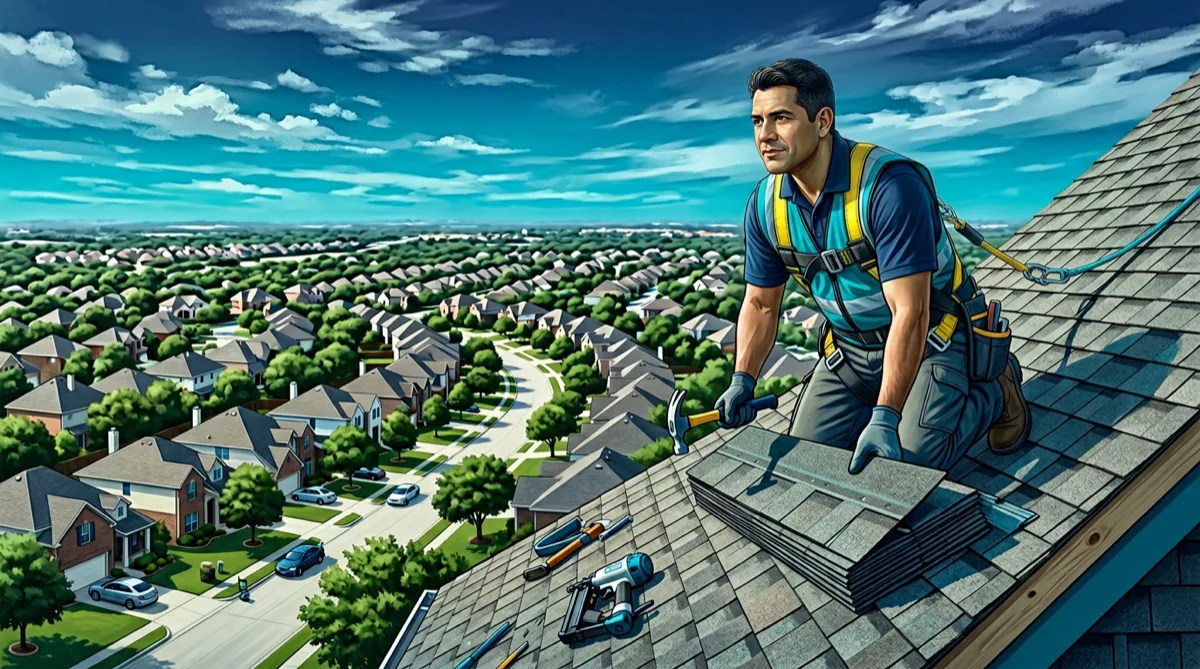
Texas is one of the best states in the country to run a roofing business. The combination of severe hail storms, high heat that degrades roofing materials faster than moderate climates, a growing population building new homes, and homeowners who understand the consequence of roof failure creates persistent, high-value demand.
But the same factors that create opportunity — open market with no roofing license requirement, high storm-season volume, insurance-funded work — also attract intense competition. Roofers who build systems for generating consistent clients year-round, not just chasing storm jobs, build businesses that last.
Here is what works.
The Two Modes of a Texas Roofing Business
Understanding the distinction between storm-mode and non-storm mode helps you plan for both:
Storm mode (post-hail, post-hurricane): High volume, insurance-funded work. Clients need help fast. Competition is intense — fly-by-night contractors flood into storm-hit areas alongside legitimate roofers. The clients you serve well in storm mode become your best referral sources when the storm has passed.
Non-storm mode: Proactive maintenance, re-roofing of aging systems, commercial contracts, and referral-driven replacement work. This is where business stability lives. Roofers who only work storm mode are subject to Texas’s unpredictable weather patterns and boom-bust cash flow cycles.
The most successful Texas roofing businesses generate revenue from both modes, with systems in place to handle storm surges while maintaining a base of non-storm clients year-round.
Google Business Profile: Your Most Important Tool
More Texas homeowners find roofers through Google than any other source. A well-optimized Google Business Profile — with photos of completed work, a verified address, and consistent 5-star reviews — is the foundation of every other marketing effort.
Key Google Business Profile actions for roofers:
- Verify your profile and complete every section (services offered, areas served, hours)
- Post photos after every job — before/after images of reroof projects, storm damage documentation, new install results
- Ask for reviews immediately after project completion — a direct text with the review link right after the client’s positive final walkthrough gets the highest conversion rate
- Respond to every review, good or bad — this signals to Google and potential clients that you are engaged
A roofer with 100+ verified 5-star reviews consistently beats competitors with 10 reviews, even if the competitor’s work is equally good. See our guide to getting more contractor reviews for the full review acquisition system.
Storm Season Marketing That Actually Works
When a hail storm hits the DFW Metroplex or a tropical system affects Houston, the window to capture insurance-funded work is 48–96 hours for the fastest-moving contracts. Strategies that work:
Neighborhood canvassing: The single highest-ROI storm marketing strategy for roofers. Walk the neighborhood with a storm damage assessment offer, show homeowners satellite hail tracking data, and offer free inspection. One person per day can generate 8–12 assessments and 2–4 contracts in an active storm market.
Door hangers with before/after photos: Leave door hangers on neighboring homes of completed jobs. Show the damaged roof, show the finished product, include a QR code for booking a free assessment.
Homeowner and HOA association contacts: Many Texas HOA-governed communities have boards that will hire a single roofer for multiple assessments after a storm. A single HOA contact can yield 20–50 residential jobs in an active subdivision.
Insurance adjuster relationships: Adjusters sometimes recommend roofers to homeowners who don’t know who to call. Building relationships with independent adjusters (not staff adjusters) through professional, claims-documentation-ready work can generate steady referrals.
Building Recurring Revenue with Maintenance Agreements
Most residential roofers ignore maintenance contracts. This is a mistake — in Texas’s extreme heat environment, roofs benefit from annual inspection and minor repair, and the homeowners who invest in maintenance are the ones who eventually need a full replacement.
A simple annual maintenance agreement might include:
- Annual inspection with written condition report
- Sealing around penetrations (vents, pipes, HVAC units) — common failure point in Texas
- Clearing debris from valleys and gutters
- Documentation of condition for insurance purposes
Price at $150–$350 per year depending on roof size and complexity. A base of 200 maintenance agreements generates $30,000–$70,000 in recurring annual revenue, smooths cash flow, and keeps you top-of-mind when re-roofing comes up.
Subcontracting and Crews: Scaling Carefully
Scaling from solo installer to crew-based operation is where many Texas roofers get hurt. Keys to scaling without blowing up your margins:
Know your real cost per square before hiring: Your direct labor cost, materials cost, dump fees, and equipment costs per roofing square need to be tracked precisely before you add the overhead of employees or subs.
Subcontractors vs. employees: Texas allows flexibility in subcontractor arrangements, but misclassifying employees as subcontractors creates IRS and workers comp exposure. See our employee vs. subcontractor guide for the distinction.
Start with 1 trusted lead installer: Add one experienced crew lead before hiring junior laborers. A reliable lead who can manage quality and pace is worth more than two cheaper workers who need supervision.
Use job costing on every project: Know which job types and market segments are actually profitable. Some Texas roofers find residential insurance work has thin margins after supplements and public adjuster fees; commercial work has higher margins per job. Your data tells the real story.
Platform Comparison: Where to Get Clients Without Per-Lead Fees
Lead gen platforms like Angi charge $15–$100+ per shared lead — you compete with 2–4 other roofers for every lead and pay regardless of whether you win the job. For high-ticket roofing work, a few lost leads can wipe out your monthly marketing budget.
House Escort gives roofing contractors a direct connection to homeowners without per-lead fees or commissions. You keep 100% of every job — the platform charges a low flat monthly subscription rather than taking a cut of your earnings.
Join House Escort Free for 1 Month →
Frequently Asked Questions
Does Texas require a roofing license?
Texas does not require a specific roofing license for residential work. However, roofing contractors must register with the Texas Department of Insurance as a residential contractor if they do any work related to insurance claims. Roofing companies must also hold general liability insurance and (if they have employees) workers compensation. Some municipalities have local registration requirements.
How do Texas roofers handle insurance claims?
Texas roofers who work insurance claims must be registered with the Texas Department of Insurance as a residential contractor making an insurance claim on behalf of a homeowner. Never “waive the deductible” for a client — this is insurance fraud under Texas law. Always document damage thoroughly with photos, use a written contract that specifies the scope, and provide the homeowner a complete copy of the insurance adjuster’s scope document.
What is the best way to get roofing clients in Texas without per-lead fees?
The highest-ROI channels for Texas roofers without per-lead fees are: (1) Google Business Profile with consistent reviews, (2) post-storm neighborhood canvassing with free inspections, (3) referrals from past clients through a structured follow-up system, and (4) homeowner and HOA association relationships. These channels build a self-sustaining client flow that does not depend on paid lead platforms.
How do Texas roofers stay busy between hail storms?
Non-storm revenue comes from annual maintenance agreements, aging roof replacements (Texas’s UV intensity degrades shingles faster than moderate climates), new construction referrals, commercial flat roof work, and proactive reach-out to past clients. Roofers who have email lists of past customers send seasonal inspection reminders that generate consistent off-storm bookings.
How much should a Texas roofer charge per square?
Pricing per roofing square (100 sq ft) depends on the material, pitch, and market. In Texas markets, installed price per square typically ranges from $400–$600 for standard 3-tab or architectural shingles, $600–$900 for premium impact-resistant shingles, and $900–$1,500+ for metal roofing. Always build your price from actual cost (materials + labor + overhead + profit target) rather than matching a competitor’s quote.