Questions to Ask a Contractor Before Hiring
House Escort Team
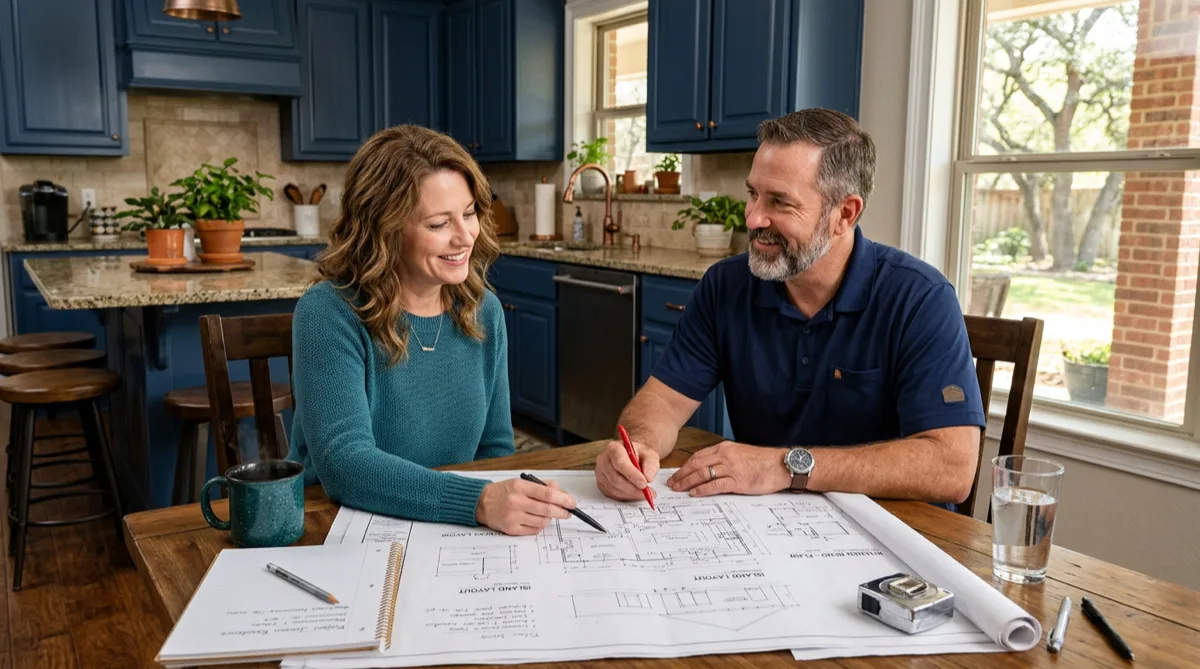
Hiring the wrong contractor is one of the most expensive mistakes a homeowner can make. Unfinished work, surprise costs, unlicensed workers, and outright scams happen more often than most people realize. The antidote is a systematic vetting process — and it starts with asking the right questions before a single nail is hammered.
Here are 20 essential questions to ask every contractor before signing a contract, along with what good answers look like and red flags to watch for.
Before You Start Asking Questions
Get at least three quotes for any project over a few hundred dollars. Use each interview as a chance to evaluate not just the price, but how the contractor communicates, responds to questions, and presents themselves. The cheapest quote isn’t always the best one.
Ask your questions in person or on a video call — not just via text or email. Tone, confidence, and preparation matter.
The 20 Questions (and What Good Answers Look Like)
1. Are you licensed for this type of work?
In Texas, licensing requirements vary by trade. Electricians, plumbers, HVAC technicians, and pest control operators must be licensed through the Texas Department of Licensing and Regulation (TDLR). General contractors in Texas do NOT require a state license, though many counties and cities have local requirements.
Good answer: Provides their specific license number and the licensing body. Invites you to verify it online (TDLR has a public license lookup at tdlr.texas.gov).
Red flag: Vague answer, claims licensing isn’t required when it is, or becomes defensive.
2. Are you insured? What coverage do you carry?
At minimum, contractors should carry:
- General liability insurance: Covers property damage or injury during the project
- Workers’ compensation: Covers their workers if injured on your property
Good answer: Provides a certificate of insurance naming you as an additional insured. Calls their agent to get you a current cert.
Red flag: “I have insurance” but can’t provide documentation.
3. Are your workers employees or subcontractors?
Many contractors use subcontractors for specialized work. This isn’t automatically bad, but you should know who will be on your property.
Good answer: Clear explanation of their crew structure. Subcontractors should also carry their own insurance. Ask if subs are licensed for their specialty.
4. How long have you been in business under this company name?
Business longevity isn’t the only indicator of quality, but it’s relevant. A company that’s been operating under the same name for 5+ years has a track record you can research.
Red flag: Company name just changed. (Some contractors start a new company after complaints pile up under the old one.)
5. Do you have references from similar projects?
Request 3 references from projects comparable to yours — size, type, and approximate budget.
Good answer: Provides references willingly and quickly. Recent references (within the past year) are more relevant than older ones.
Red flag: Only one reference, references are from years ago, or won’t provide any.
6. Can I see photos or visit a completed project?
Seeing real work product — photos or an actual visit to a finished project — tells you far more than any reference call.
7. Who will be managing my project day-to-day?
Will the owner be on site, or will a crew lead manage the job? Will the contractor you’re meeting even show up after you sign?
Good answer: Clear answer about the point of contact and who leads the crew. You should be able to reach this person directly throughout the project.
8. What’s the timeline for my project?
Get a realistic start date and estimated completion date in writing. Ask what could cause delays and how they handle schedule slips.
Red flag: Vague timeline, no written schedule, or unrealistically fast estimates that don’t account for inspections.
9. What permits will this project require?
Most structural, electrical, plumbing, and HVAC work in Texas requires a permit. Contractors who suggest skipping permits to save money are putting you at risk — unpermitted work can cause problems when you sell your home and may not be covered by your homeowner’s insurance.
Good answer: Explains which permits are required and confirms they will pull and manage the permits.
10. Who pulls the permits — you or me?
The contractor should always pull their own permits. When they do, they’re legally responsible for the work meeting code. If they ask you to pull the permit as an owner-builder, be cautious — this may limit your recourse if the work is deficient.
11. What is your payment structure?
A common payment schedule for Texas home projects:
- 10–20% down at contract signing
- Progress payments tied to project milestones (rough-in complete, drywall complete, etc.)
- Final payment (10–15%) only after final walkthrough and your approval
Red flag: Demands 50%+ upfront before any work begins. This is the #1 contractor scam structure.
12. Will this be a fixed-price or time-and-materials contract?
Fixed-price contracts protect you from cost overruns. Time-and-materials contracts pass open-ended cost risk to you. Both are legitimate, but you should understand which applies.
13. What’s your change order process?
Changes happen on real projects. Understanding how the contractor handles scope changes — in writing, with pricing, before work begins — prevents disputes.
Good answer: Change orders are in writing, priced before work starts, and require your signature before proceeding.
14. How do you handle warranty and defects after completion?
Most reputable contractors offer a minimum 1-year workmanship warranty. Material warranties are separate (manufacturer’s warranty).
15. Who are your main subcontractors and how long have you worked with them?
Long-term sub relationships indicate reliability. A contractor who works with the same electrician and plumber repeatedly has a vested interest in maintaining that relationship — which means accountability.
16. How do you keep the job site clean and safe?
In Texas’s summer heat, job site debris becomes a safety hazard quickly. Daily cleanup, dust containment, and secure waste disposal reflect professionalism.
17. What happens if you can’t finish the project?
Ask about their protocol if they get sick, if a key worker leaves, or if they win a bigger project that pulls their attention.
18. Are there any aspects of this project you’d subcontract out?
Know upfront if specialized portions (electrical, HVAC) will go to a sub, and verify those subs are also licensed and insured.
19. Can I see a sample contract before deciding?
A professional contractor has a standard written contract. Ask to review it before committing. Look for: scope of work, payment schedule, timeline, warranty terms, and change order process.
20. What questions do you have for me?
Good contractors ask questions: timeline expectations, budget range, decision-making process, access to the property. A contractor who asks nothing back may not be genuinely interested or may not do a thorough job.
Finding Contractors Who Answer These Questions Confidently
The difference between a great contractor and a problematic one is often visible in this 20-question conversation. Pros who are licensed, insured, experienced, and communicative will answer these questions easily and fully. Those who hedge, get defensive, or can’t provide documentation are telling you something important.
House Escort connects homeowners with vetted local pros who keep 100% of their earnings — so they’re focused on doing great work, not paying lead fees. Find a trusted contractor near you at houseescort.com.
Frequently Asked Questions
How many contractor quotes should I get before hiring?
Get at least three quotes for any project over a few hundred dollars, and ideally more for larger projects ($10,000+). Multiple quotes help you understand what a fair market price looks like, spot outliers (unusually low bids that may indicate corners being cut), and compare approaches to the project.
What’s the biggest red flag when hiring a contractor in Texas?
Asking for a large upfront payment — more than 20–30% of the total project cost — before any work begins is the #1 red flag. It’s the most common structure for contractor fraud. Legitimate contractors have enough working capital or established supplier credit to begin a project without requiring most of the money upfront.
Do I need to verify a contractor’s license before hiring in Texas?
Yes, for licensed trades (electricians, plumbers, HVAC, pest control). You can look up contractor licenses for free at the Texas Department of Licensing and Regulation’s website (tdlr.texas.gov). For general contractors, Texas has no state license requirement, but verify that they carry liability insurance and confirm any local city or county licensing requirements that may apply.
What should a contractor contract include at minimum?
A solid contractor contract should include: detailed scope of work, materials specifications, payment schedule (tied to milestones, not calendar dates), project timeline, warranty terms, change order process, and what happens if either party defaults. Get everything in writing — verbal agreements are nearly unenforceable in construction disputes.
Should I check a contractor’s reviews before hiring?
Absolutely. Check Google, Yelp, and the Better Business Bureau. Look for patterns in the reviews — a single negative review matters less than five reviews all mentioning the same problem (communication issues, incomplete work, billing disputes). Also check with the Texas Secretary of State for business entity registration status.