Pool Resurfacing Cost in Texas: 2026 Price Guide
House Escort Team
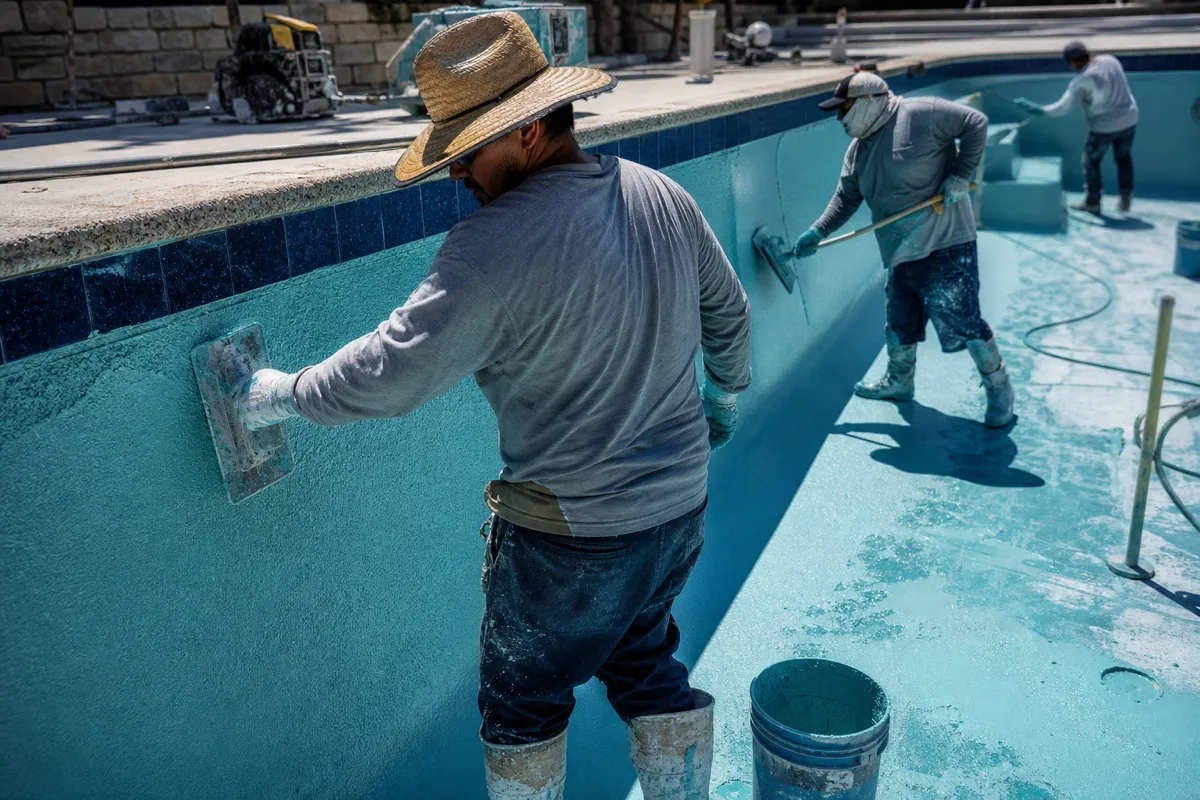
Texas pools work hard — UV exposure, high chemical demand in hot summers, and the state’s expansive clay soils all put pressure on pool finishes. Most plaster pool surfaces need resurfacing every 7–15 years. When your pool develops rough, chalky, or etched surfaces, staining, or visible plaster failures, it’s time to resurface. Here’s what it costs and what your options are.
Average Pool Resurfacing Cost in Texas
| Finish Type | Cost for Typical Texas Pool (450–600 sq ft surface) |
|---|---|
| Marcite (basic white plaster) | $3,500–$6,000 |
| Colored plaster | $4,000–$7,000 |
| Quartz aggregate | $5,500–$9,000 |
| Pebble finish (PebbleTec, etc.) | $7,000–$14,000 |
| Glass bead finish | $8,000–$15,000 |
| Tile (full pool) | $15,000–$30,000+ |
These prices cover a standard 15×30-foot Texas residential pool with diving well. Larger pools, spas, waterfalls, and tanning ledges add to the total. Prices include acid washing and prep of the existing surface.
Pool Resurfacing Finish Options Compared
Marcite (White Plaster)
The most common and least expensive pool finish. A mixture of white Portland cement and marble dust. Smooth, classic look. The tradeoff: it’s the least durable option — typically 5–10 years before it shows significant wear. In Texas with high UV and high chemical demand, marcite at the lower end of this range is common.
White plaster also shows staining more readily than aggregate finishes. If your pool is frequently used by kids or has iron in the fill water, white plaster discolors faster.
Colored Plaster
Same material as marcite but with added pigments for a blue, gray, or other tinted finish. The water color reflects the finish color — a medium blue plaster creates a visually striking pool with deeper blue water appearance. Marginally more expensive than white plaster, similar durability.
Quartz Aggregate
Blends fine quartz crystals into the plaster matrix. More durable than standard plaster (8–12 year lifespan typical), more stain-resistant, and available in dozens of color blends. This is the most popular mid-range upgrade for Texas pool owners replacing worn plaster — the combination of improved durability, appearance, and reasonable cost makes it the dominant choice.
Brand names you’ll see quoted: Hydrazzo, QuartzScapes, Diamond Brite with quartz aggregate.
Pebble Finishes (PebbleTec, Pebble Sheen, etc.)
Premium textured finishes that embed small river pebbles or glass pebbles into the plaster. The most durable residential pool finish — 15–20 years typical. Rough underfoot (especially PebbleTec vs. the smoother PebbleSheen or glass bead versions). Beautiful appearance with natural stone-like look. PebbleTec and similar brands are franchise products — ensure your pool contractor is a certified applicator.
Best for: Texas homeowners who want maximum longevity and are willing to pay the premium. Particularly good for pools with automatic cleaners that would quickly wear softer finishes.
Signs Your Texas Pool Needs Resurfacing
- Rough or sandpaper-like texture that scratches feet
- Visible white/chalky patches or peeling plaster
- Dark staining that won’t respond to acid washing or chemicals
- Visible cracks or hollow spots (tap the surface — hollow spots sound dull)
- Algae that returns constantly despite correct chemical treatment (algae colonizes micro-pores in worn plaster)
- Plaster bead separation (small pebbles coming loose from the surface)
Some of these symptoms can be temporarily treated with acid washing and chemical correction — not all worn pools immediately need full resurfacing. Get a professional evaluation to assess whether spot repairs, acid washing, or full resurfacing is appropriate for your pool’s condition.
Additional Costs to Budget For
Tile replacement: Waterline tile is typically replaced or refreshed during resurfacing. Plan $500–$2,500 for a tile refresh, depending on current tile condition and the tile style selected.
Plumbing and equipment inspection: While the pool is drained for resurfacing, inspect fittings, main drain covers, return jets, and the light housing. Replacing worn equipment during resurfacing is cheaper than draining again later.
Decking work: If your pool coping or deck is cracked, damaged, or needs updating, doing it simultaneously with resurfacing saves mobilization cost. Texas concrete pool decks crack from expansive clay movement — assess the deck at the same time.
Chemicals and fill: After resurfacing, the pool must be chemically balanced using a specific startup protocol for the new finish. Budget $200–$500 for startup chemicals. Your pool service company should handle this.
Finding a Qualified Texas Pool Resurfacing Contractor
Pool resurfacing requires specialized skills — applying plaster correctly requires timing, consistency, and proper prep. Always verify:
- Texas contractor license (TDLR regulated for pool work)
- Manufacturer certification for premium finishes (PebbleTec requires certified applicators)
- Verifiable portfolio photos and references
- Whether they do the work themselves or subcontract
Find a Texas Pool Contractor →
Frequently Asked Questions
How long does pool resurfacing take in Texas?
Most Texas pool resurfacing projects take 3–7 days from draining to refill. The largest variables are cure time (plaster needs to cure before filling — typically 24–48 hours) and water refill time. A 15,000-gallon pool refills in 12–24 hours from a standard garden hose. The startup chemical balancing process takes an additional 7–14 days.
How often does a Texas pool need resurfacing?
Basic white plaster needs resurfacing every 5–10 years in Texas conditions. Quartz aggregate finishes last 8–15 years. Pebble finishes last 15–25 years. Actual lifespan depends on water chemistry maintenance, UV exposure, usage intensity, and the quality of the original application.
Can I resurface a fiberglass pool in Texas?
Fiberglass pools don’t use plaster — they have a gel coat surface that requires different restoration techniques (gel coat repair or refinishing). Standard plaster resurfacing contractors don’t work on fiberglass. If you have a fiberglass pool with a failing gel coat, look specifically for fiberglass pool restoration specialists in Texas.
Is quartz aggregate worth the extra cost over basic plaster in Texas?
Yes, for most Texas homeowners. The cost premium over basic white plaster is $1,500–$3,000, and quartz aggregate lasts significantly longer (8–15 years vs. 5–10 years for basic plaster) while providing better stain resistance and aesthetic options. The math on longevity alone typically favors quartz. Glass bead and pebble finishes provide further durability but at higher price points that require longer payback periods.