Pool Maintenance Cost in Texas: Monthly Guide
House Escort Team
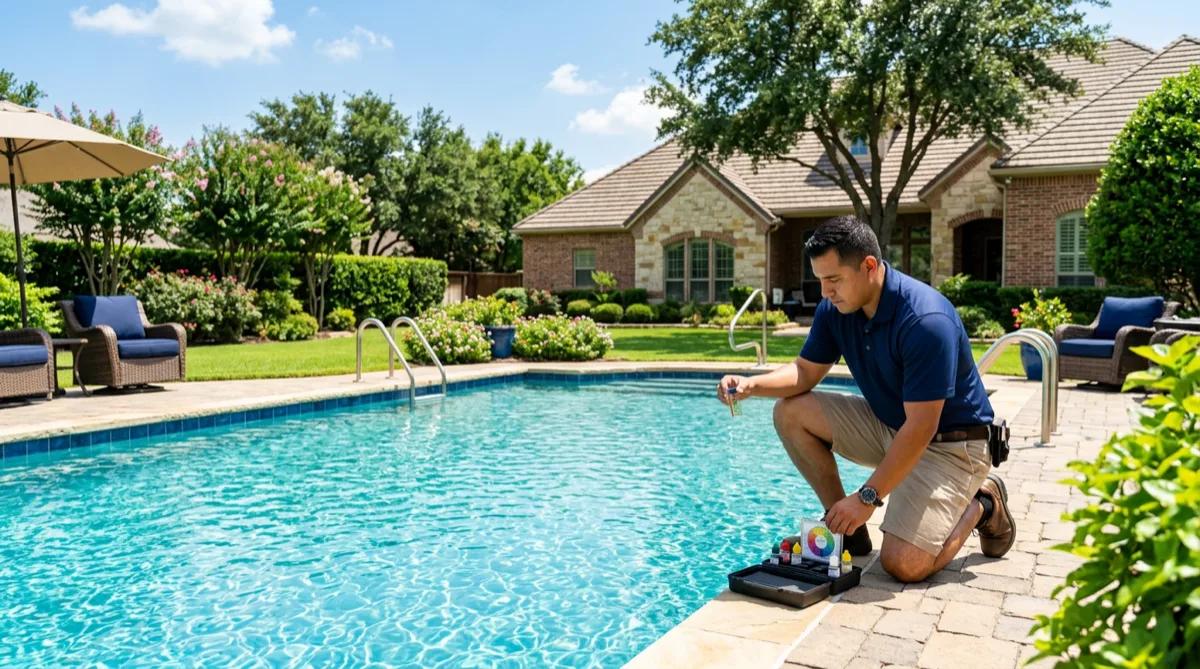
Pool Maintenance Cost in Texas: What You’ll Pay in 2026
Texas is one of the most pool-dense states in the country — and one where pools get used 8–10 months of the year. That year-round use means year-round maintenance costs that many homeowners underestimate when they buy a home with a pool or decide to build one.
Understanding what professional pool service actually covers, what it costs in Texas’s major markets, and when DIY makes sense vs. when professional service pays for itself helps you budget accurately and avoid the expensive consequences of a poorly maintained pool.
Average Monthly Pool Maintenance Cost in Texas (2026)
| Service Level | What’s Included | Monthly Cost |
|---|---|---|
| Basic chemical service | Weekly chemicals + testing | $80–$120 |
| Full service (weekly) | Chemicals + brush/vacuum + skimmer + filter | $120–$180 |
| Full service (biweekly) | Same as above, every other week | $70–$100 |
| Premium service | Full service + filter clean quarterly + equipment check | $150–$250 |
Houston market: $100–$180/month for weekly full service. Houston’s humidity and algae pressure (especially in summer) make weekly chemical management essential. Monthly averages toward the high end during peak summer.
Austin/Dallas/San Antonio: $90–$150/month for weekly full service. Slightly less humidity pressure than Houston but still requiring consistent treatment during hot months.
These rates are for pools of average size (15,000–20,000 gallons). Larger pools or those with features (spa, waterfall, automation) will run toward the higher end.
What’s Included in a Standard Pool Service Plan
Weekly or biweekly service typically includes:
- Water chemistry testing (pH, chlorine, alkalinity, calcium hardness, cyanuric acid)
- Chemical addition to balance water
- Skimmer basket emptying
- Surface brushing (walls and steps)
- Vacuuming (floor and walls)
- Equipment inspection (pump, filter, heater, automation — visual check)
- Filter backwash when pressure rises
Usually additional or annual fees:
- Filter deep clean ($75–$200 depending on filter type — sand, D.E., cartridge)
- Green pool cleanup ($200–$500 for severe algae blooms)
- Equipment repair and replacement (variable by component)
- Acid wash for severe staining ($300–$600)
- Winter closing/spring opening (if applicable — less common in Texas than northern states)
Make sure you understand exactly what’s included before signing a service contract. “Full service” means different things at different companies.
Texas Pool Chemistry: Why Summer Is Hardest
Texas summers — particularly Houston with its combination of heat, humidity, and frequent storms — create the most challenging pool chemistry conditions in the country:
High UV index: Texas summer sun degrades chlorine rapidly. Pools need more chlorine and higher cyanuric acid (CYA) levels as a stabilizer. CYA levels over 80 ppm create “chlorine lock” where the chlorine is present but ineffective. Managing the CYA/chlorine balance is a constant challenge.
Algae pressure: Warm water + Texas summer sun + any chemistry gap = algae. Green pools can develop in 24–48 hours when chemistry is off during peak summer. Black algae (which is actually a bacteria) is common in Texas pools and particularly hard to eliminate.
Storm runoff: Texas thunderstorms wash organic debris, leaves, and runoff into pools, spiking phosphate levels (algae food) and destabilizing pH within hours. Post-storm treatments are often necessary.
Professional service companies schedule more frequent visits in July–August for high-demand customers precisely because summer chemistry management is a full-time job.
Annual Pool Cost Beyond Monthly Service
Monthly service is the baseline. Here’s the fuller annual picture for a Texas pool:
| Cost Component | Annual Estimate |
|---|---|
| Monthly service (12 months × $140) | $1,680 |
| Filter clean (1–2x/year) | $150–$300 |
| Equipment maintenance | $200–$500 |
| Chemical supplements (shock, algaecide, phosphate remover) | $100–$200 |
| Unexpected repairs (pump, heater, plumbing) | $0–$1,500+ |
| Total annual range | $2,100–$4,200+ |
Equipment repairs are the wildcard. A pool pump ($400–$900 to replace), a pool heater ($1,500–$3,500), or a plumbing leak can add significantly to a year’s cost. Older pool equipment (10+ years) has a higher probability of requiring replacement.
DIY vs. Professional Service: The Real Math
Texas pool owners who DIY their chemical maintenance need to be honest about the time commitment:
DIY time requirement: 30–60 minutes per week for chemical testing, chemical purchase, and application, plus monthly equipment inspection. Annually: 24–50 hours.
DIY cost: Chemicals ($100–$200 for a season of DIY treatment is optimistic; plan $300–$500 with the testing kits, equipment, and margin for error). Significant savings require consistent attention.
Where DIY fails in Texas: The worst pool outcomes in Texas come from homeowners who try to DIY but don’t do it consistently. A pool that’s skipped for 3 weeks in August becomes a green pool — requiring $200–$500 in professional remediation that costs more than 2 months of professional service.
The case for professional service: $120–$150/month for a service you don’t have to think about is often the better financial decision when you factor in time, consistency, and the cost of mistakes. Most pool professionals will be cheaper than DIY-gone-wrong.
For occasional equipment repairs, finding a local pool service technician who handles equipment (separate from weekly chemistry service) is often the most cost-effective approach.
Find a vetted pool service professional in Houston, Austin, Dallas, or San Antonio through House Escort — free for homeowners to use.
Find a pool service pro near you → houseescort.com
Frequently Asked Questions
How much does pool maintenance cost per month in Texas?
Professional pool maintenance in Texas costs $80–$180/month for weekly service depending on your city and service level. Houston tends toward $100–$180/month due to higher algae pressure. Austin, Dallas, and San Antonio run $90–$150/month. Biweekly service is available for $70–$100/month but may be insufficient during peak Texas summer heat.
What happens if I don’t maintain my pool in Texas?
Without consistent chemical maintenance in Texas, a pool can turn green (algae bloom) within 24–48 hours during summer months. Green pools require shock treatment, algaecide, filtration, and sometimes acid washing — typically $200–$500 in remediation costs. Prolonged neglect can damage equipment, stain surfaces, and require significantly more expensive restoration. Texas’s heat and UV intensity make regular maintenance more critical than in cooler climates.
Is it cheaper to maintain a pool yourself or hire a service in Texas?
DIY pool maintenance saves money if done consistently — roughly $300–$500 annually in chemicals vs. $1,200–$2,000 for professional service. However, the most expensive pool problems come from inconsistent DIY care. If you’ll skip testing during busy weeks or leave the pool unattended for vacation, professional service is often cheaper when you account for remediation costs from neglect.
What should a Texas pool service contract include?
A good Texas pool service contract should specify: service frequency (weekly vs. biweekly), what’s included in each visit (chemicals, brushing, vacuuming, skimmer, equipment inspection), whether filter cleaning is included or additional, the protocol for green pool remediation and whether it’s covered, and response time for equipment emergencies. Ask what triggers additional charges beyond the monthly fee.
When should I call a pool professional vs. handle issues myself?
Handle routine chemical maintenance yourself if you’re consistent. Call a professional for: equipment not working (pump, filter, heater), green or black algae that hasn’t responded to shock treatment, persistent pH or alkalinity imbalances despite chemical additions, pool surface staining or etching, or any plumbing or electrical issues near the pool. Electrical work near pools requires a licensed electrician regardless of the specific issue.