Landscaping Equipment Financing: Guide for Texas Lawn Pros
House Escort Team
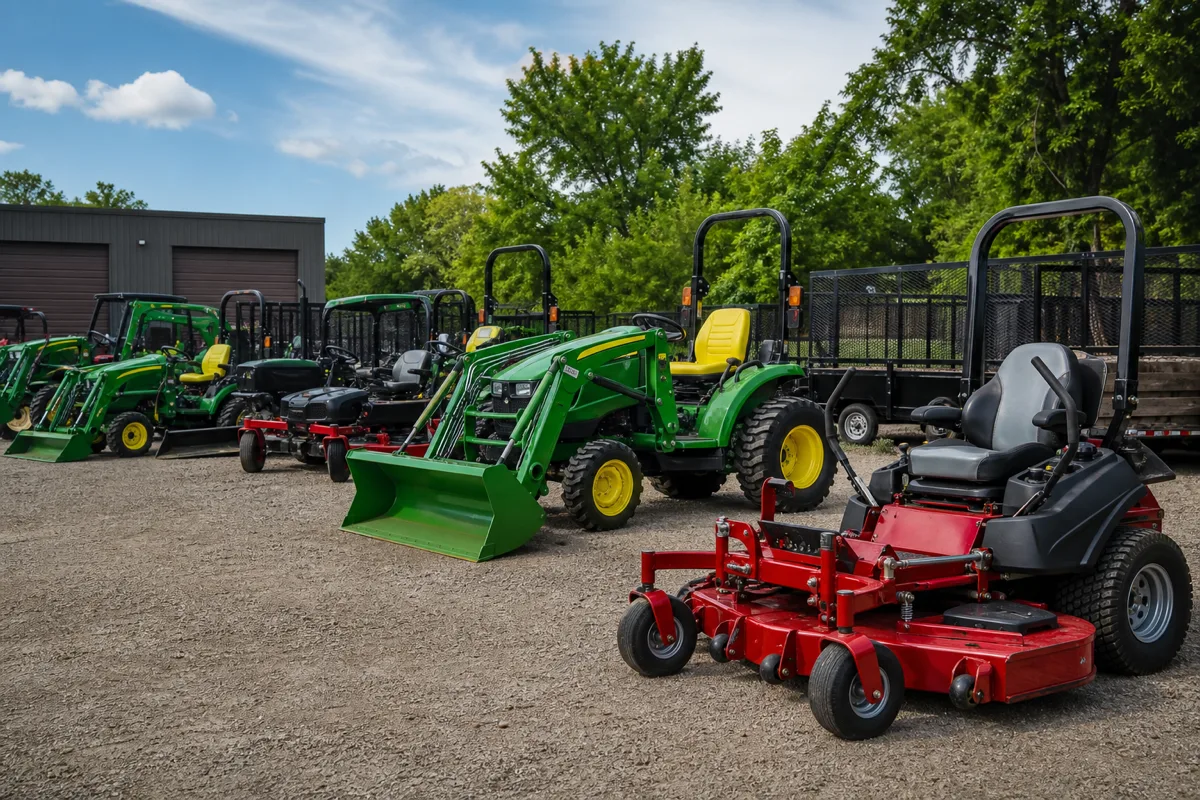
Texas landscaping is a year-round business in most of the state — and a quality equipment setup is the difference between efficient, profitable operations and constant breakdowns that cost jobs and reputation. This guide covers financing options for every stage of growth, from your first commercial mower to a full multi-crew fleet.
Equipment You Will Need to Finance
Mowers:
- Stand-on or walk-behind commercial mowers: $5,000–$12,000
- Zero-turn commercial mowers (Husqvarna, Exmark, Scag, Toro): $8,000–$18,000 each
- Large-area zero-turn riders: $15,000–$30,000
Trailers:
- 6×12 open utility trailer: $2,000–$4,000
- 16–20 foot enclosed equipment trailer: $8,000–$18,000
- Dump trailer (landscaping and debris removal): $7,000–$15,000
Trucks:
- Used F-250/350 or RAM 2500/3500: $30,000–$55,000
- New commercial truck with bed liner and service body: $45,000–$75,000
Irrigation systems:
- Trencher for irrigation installation: $8,000–$25,000 (purchase or rent-per-job)
- Pipe fusion and fittings tools: $2,000–$5,000
Miscellaneous: Blowers, trimmers, chain saws, skid steer for larger landscape installs — another $5,000–$15,000+ to fully equip a landscape installation crew.
A fully equipped 2-person residential mowing crew (mowers + trailer + truck) requires $60,000–$100,000 in equipment investment.
Equipment Financing Options for Landscapers
Manufacturer Financing Programs
Exmark, Scag, Husqvarna, and Toro all offer dealer financing programs through their commercial dealer networks. Promotional offers — 0% for 12–18 months, low rate programs — are available throughout the year, particularly at trade shows and spring buying season.
How to access: Purchase through an authorized commercial dealer and ask specifically for commercial financing options. Having a business bank account and business EIN established helps dealers process financing more efficiently.
Best for: New mower purchases when you want to preserve cash and take advantage of promotional rates.
Equipment Loans (Banks and Credit Unions)
Traditional bank equipment loans for landscaping equipment require:
- Personal credit score 650+ (or business credit score if established)
- 2+ years in business preferred (some lenders work with startups with strong personal credit)
- Business bank statements or tax returns for established businesses
- Down payment of 10%–20% typically
Community banks and credit unions that serve Texas agricultural and small business markets are often the most favorable lenders for landscaping equipment. Ask specifically about their small business equipment lending programs.
Typical terms: 36–60 months. Rates currently in the 7%–12% range depending on credit profile and collateral.
Equipment Leasing
Leasing landscaping equipment makes sense for:
- High-cost equipment that may become obsolete (technology-heavy items)
- Managing seasonal cash flow — lower monthly payments than buying
- Businesses that want to continuously upgrade equipment on a regular cycle
Operating lease vs. capital lease: Operating leases (equipment returned at end) work for equipment you don’t want to own long-term. Capital leases (buyout at end, typically $1) function more like a loan. Most small landscaping businesses benefit from capital leases on core production equipment (mowers, trucks) since they use the equipment until it’s worn out.
SBA Loans for Growth-Stage Landscapers
A landscaping company that has been operating for 2+ years with growing revenue and needs significant capital for fleet expansion is a good SBA loan candidate. SBA 7(a) loans provide longer repayment terms than conventional equipment loans, making monthly payments lower for large capital investments.
Requirements: 2+ years in business, positive cash flow, business and personal financial statements, no major credit events. Application process takes 60–90 days — plan ahead.
Business Line of Credit
For established Texas landscapers with consistent revenue, a revolving line of credit (typically $25,000–$100,000 for a mid-size operation) provides flexibility for equipment repairs, opportunistic equipment purchases, and managing seasonal cash gaps.
Requirements: Usually 2+ years in business, consistent revenue, business banking relationship. Interest is only paid on amounts drawn.
Building Equipment Purchase Strategy
Start with used, buy new as revenue grows. A used commercial zero-turn mower with 500–800 hours costs 40%–60% of new and runs for thousands more hours with proper maintenance. Starting with used equipment minimizes debt while you build client base and revenue.
Finance equipment that generates more than its payment. A $400/month mower payment should generate $1,200–$2,000+/month in additional billing capacity. If the math doesn’t work, reconsider the purchase.
Build business credit systematically. Supplier accounts at Ewing Irrigation, John Deere Landscapes, or SiteOne Landscape Supply that report to Dun & Bradstreet build business credit that improves future financing terms.
Growing Your Customer Base
Equipment is the means; customers are the end. House Escort connects Texas landscaping and lawn care contractors with homeowners in their service area looking for professional lawn and landscape services.
Get Landscaping Leads on House Escort →
Frequently Asked Questions
What credit score do I need to finance commercial landscaping equipment?
Most commercial equipment lenders require a personal credit score of 640–680 for approval at reasonable rates. Scores below 620 may still qualify for equipment financing but at significantly higher rates (15%–25%+). Some startup-friendly programs work with lower credit scores given a larger down payment (20%–30%). Building strong personal credit before making major equipment financing decisions is advisable.
Should I buy or lease commercial mowers for my Texas landscaping business?
For core production mowers used intensively in commercial operations, buying (via equipment loan or capital lease with buyout) generally provides better long-term economics than operating leases. You build equity in the equipment, can sell it when upgrading, and own it outright after the loan. Leasing makes more sense for high-cost equipment with rapid technological obsolescence — less applicable to commercial mowers which are fundamentally unchanged year-to-year.
Can I finance landscaping equipment with bad credit?
Yes, but with significantly higher interest rates or larger down payments. Equipment financing companies that specialize in challenged credit (Forward Financing, Credibly, National Funding) approve below-standard credit borrowers but at costs that substantially reduce your margin on the equipment. Improving your credit before major equipment purchases is worth the delay in most situations.
How do I know when to add another crew instead of more equipment?
The scaling decision depends on whether your single crew is fully booked (you’re turning away work or unable to provide reliable turnaround times). If you have more demand than capacity, adding a second crew makes economic sense. A second crew adds fixed costs (truck, equipment, labor) but should generate 80%–100% incremental revenue relative to crew 1, significantly increasing total profit.