Landscaping Cost in Texas: 2026 Price Guide
House Escort Team
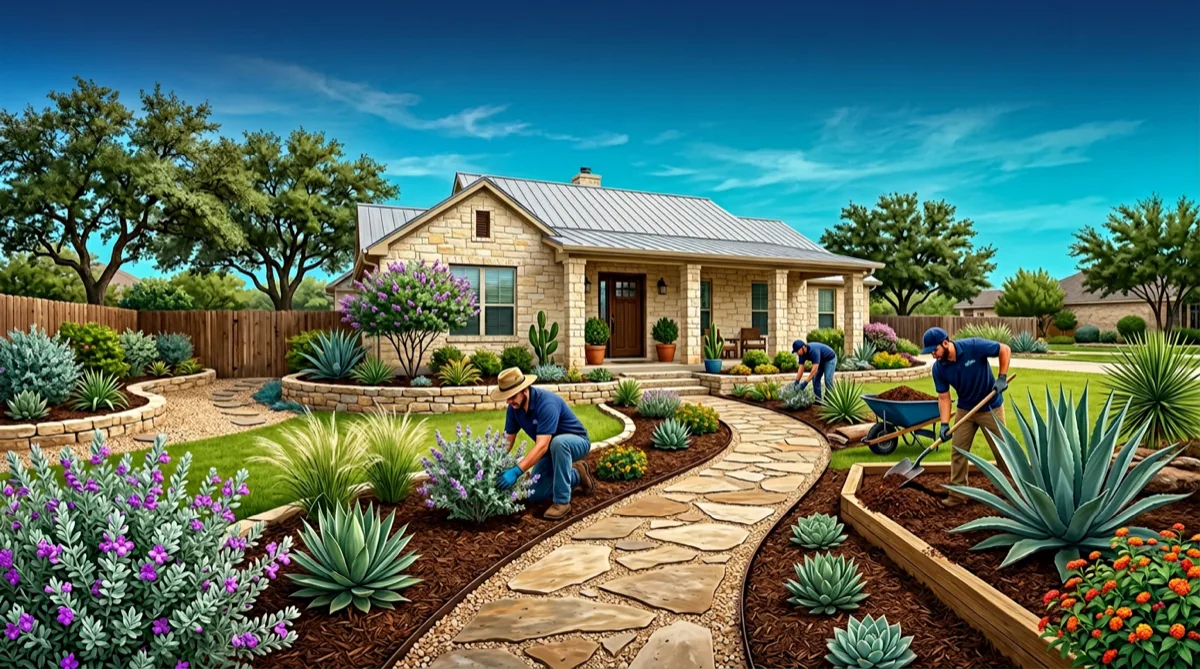
Landscaping in Texas is different from anywhere else in the country. The combination of intense summer heat, clay-heavy or sandy soils, unpredictable rainfall, HOA requirements, and a year-round growing season that demands ongoing maintenance creates a unique pricing and service environment. Here is what Texas homeowners should actually expect to pay in 2026.
Landscaping Cost Overview for Texas
Landscaping costs break into two main categories: ongoing maintenance and one-time installation or improvement projects.
Ongoing Lawn Maintenance Costs
| Service | Typical Range | Frequency |
|---|---|---|
| Basic lawn mowing (average lot) | $35–$80 per visit | Weekly or biweekly |
| Full-service lawn maintenance | $100–$200 per month | Monthly contract |
| Lawn fertilization and weed control | $50–$100 per application | 4–6x per year |
| Tree trimming (residential) | $200–$800 per tree | Annual or as needed |
| Shrub and hedge trimming | $75–$200 per session | Monthly or quarterly |
| Irrigation system inspection | $75–$150 | Annual (spring startup) |
Average monthly lawn care cost for a typical Texas suburban home (5,000–8,000 sq ft lawn): $80–$180/month for mowing plus trimming.
Landscaping Installation Projects
| Project Type | Typical Cost |
|---|---|
| Sod installation (Bermuda or St. Augustine) | $1.50–$3.00/sq ft installed |
| Landscape bed design and planting | $500–$5,000+ depending on size |
| Sprinkler system installation | $2,500–$5,000 for average lot |
| Retaining wall (block, 10 linear feet) | $800–$2,500 |
| Decomposed granite pathway | $500–$2,000 |
| Tree planting (15-gallon container) | $200–$500 installed |
| Lawn drainage / French drain | $1,500–$5,000 |
| Full landscape redesign with installation | $5,000–$25,000+ |
Texas City Price Differences
Landscaping labor rates track Texas’s overall contractor labor market:
Houston: Above average demand; hurricane recovery and year-round growth create consistent demand. Expect 10–15% above state average on labor.
Austin: Highest landscaping costs in Texas due to strong homeowner investment culture and higher overall contractor rates. Water conservation rules also affect plant and irrigation choices.
Dallas/Fort Worth: Competitive market with mid-range pricing. HOA-heavy communities drive consistent demand for professional maintenance.
San Antonio: Generally 5–10% below Houston for comparable services; strong market for xeriscape and drought-tolerant installations.
Texas-Specific Landscaping Factors
Grass selection matters: Texas has three primary lawn grass zones. St. Augustine thrives in Houston’s heat and humidity but requires more water. Bermuda is more drought-tolerant and preferred in Dallas, Austin, and drier West Texas. Zoysia is a premium, low-maintenance option that is gaining popularity. The wrong grass species for your microclimate increases watering costs and creates maintenance challenges.
Clay soils in Dallas and Houston: North Texas clay (black clay, sometimes called “black gumbo”) and Houston’s gumbo clay soils are notorious for poor drainage, cracking in drought, and waterlogging in heavy rain. Good landscaping professionals in these markets understand how to amend and grade properly. This work costs more than in sandy-soil markets but is essential for long-term plant health.
Water conservation and restrictions: Texas cities have tiered water rates and drought-stage restrictions that limit watering days and times. Austin Water, Houston Public Works, and Dallas Water Utilities all publish watering schedules and restrictions. Landscaping that ignores these constraints leads to fines and higher utility bills.
HOA requirements: Many Texas suburban neighborhoods have HOA landscape standards — approved plant lists, mulch requirements, minimum turf coverage, and approval processes for major changes. Always check your HOA deed restrictions before starting any landscaping project. Non-compliance fines can exceed the project cost.
Fire ant management: Fire ants are endemic in Texas and can damage plant roots and create hazards in lawns. Professional pest control for fire ants costs $75–$150 per treatment. Some lawn care companies include fire ant treatment in their maintenance programs.
Finding a Reliable Texas Landscaper
Texas landscaping is minimally regulated at the state level. The Texas Nursery and Landscape Association (TNLA) offers a certified landscape contractor designation, and the Texas Department of Agriculture issues pesticide applicator licenses for contractors applying lawn chemicals.
For any landscaping project involving irrigation, look for contractors certified through the Texas Commission on Environmental Quality (TCEQ) or holding a Landscape Irrigation Association credential.
Key questions to ask any Texas landscaper before hiring:
- Do they carry liability insurance (ask for a certificate)?
- Are they licensed to apply pesticides and herbicides (if the job requires it)?
- What grass and plant species do they recommend for your specific zone and soil type?
- What is their warranty on newly installed plants?
Find vetted Texas landscapers through houseescort.com — free for homeowners.
Frequently Asked Questions
How much does basic lawn care cost in Texas per month?
For a standard suburban Texas lot (5,000–8,000 sq ft), expect to pay $80–$180 per month for regular mowing and trimming. Full-service lawn care programs that include fertilization, weed control, and pest management typically run $150–$250 per month on an annual contract.
What is the best grass for Texas lawns?
St. Augustine is the most common choice in Houston and other humid East Texas markets — it tolerates shade and heat but requires more water. Bermuda grass is preferred in Dallas, Austin, and drier parts of Texas — it is tough, drought-tolerant, and recovers quickly from heat stress. Zoysia is a premium option that requires less water and maintenance than St. Augustine.
How much does sod installation cost in Texas?
Sod installation in Texas typically costs $1.50–$3.00 per square foot installed, including materials and labor. For a 5,000 sq ft lawn, that means $7,500–$15,000. Bermuda and St. Augustine sod are the most affordable options. Zoysia and Buffalo Grass sod cost more per pallet due to slower production.
Do I need a permit for landscaping in Texas?
Most routine landscaping — planting, mulching, sod installation — does not require a permit. Projects involving irrigation systems, retaining walls over 30 inches, drainage modifications, or tree removal in protected tree zones may require permits. Check with your local city planning department and confirm HOA deed restrictions before starting any significant landscaping project.
How do I find a reliable landscaper in Texas?
Ask neighbors and friends for referrals from landscapers they have used consistently. Check Google reviews (look for 4+ star average with at least 20 reviews). Verify they carry liability insurance before they start any work on your property. For irrigation and chemical application work, confirm appropriate licensing. Platforms like House Escort connect you with vetted local professionals — free for homeowners.