Landscaping Contractor Business Growth Guide
House Escort Team
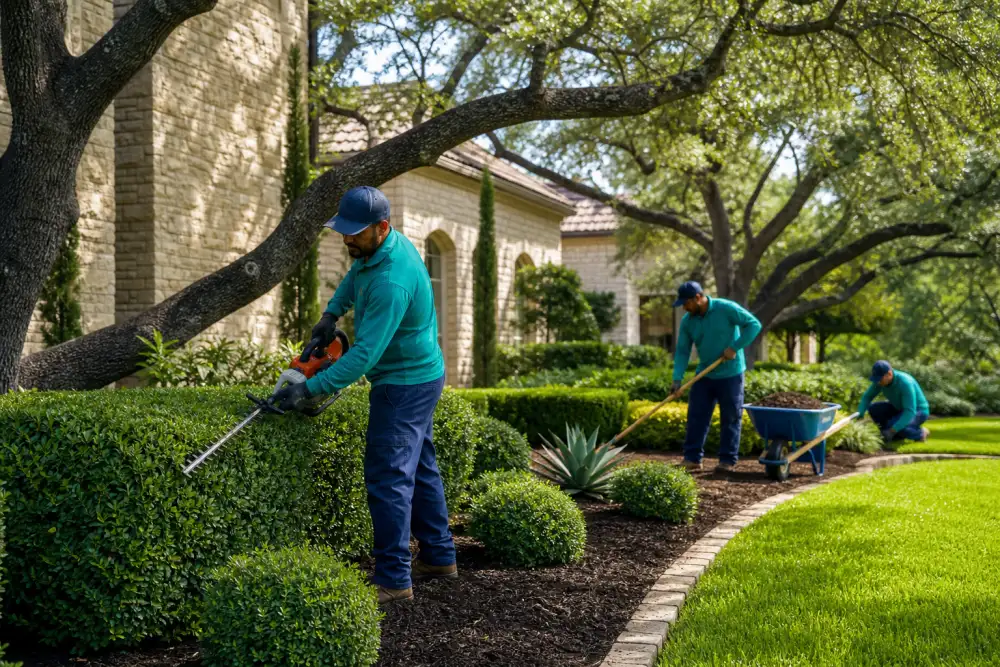
Texas landscaping is a year-round business with strong recurring revenue potential. Unlike most trades that depend on one-time project work, lawn care and landscaping services can be converted into monthly contracts that provide predictable cash flow. Growing a landscaping business past $500,000 requires mastering recurring revenue, operational efficiency, and the right growth channels.
Licensing and Legal Requirements
Texas doesn’t require a general landscaping license, but several specific services do require credentials:
- Irrigations: Texas State Board of Plumbing Examiners licenses irrigation contractors. Irrigation installation without a license is illegal and can void homeowner insurance claims.
- Pesticide application: The Texas Department of Agriculture licenses commercial pesticide applicators for lawn treatment and pest control applications.
- Arborist services (tree work): While no license is required to trim trees, TCIA (Tree Care Industry Association) certification and proper insurance are expected on significant tree work.
For basic lawn maintenance, mowing, mulching, and landscaping installation, no license is required — but proper insurance is non-negotiable.
Essential insurance for Texas landscaping:
- General liability: $1,000,000 minimum
- Commercial auto: Required for all company vehicles
- Workers’ comp: Required once you have employees
Recurring Revenue: The Business Model That Changes Everything
The difference between a landscaping business that grinds and one that grows is recurring contracts. Monthly lawn maintenance agreements convert one-time customers into predictable revenue:
Standard residential maintenance agreement:
- Weekly or bi-weekly lawn mowing
- Edging, blowing, cleanup
- Seasonal services (mulching, flower bed cleanup, overseeding) at preset pricing
- Annual contract with monthly billing
Pricing structure:
- Average Texas residential lawn maintenance: $150-$300/month
- Route density is key — 8-12 properties per day in close geographic proximity is profitable; scattered properties waste 30-40% of your day in drive time
How to convert one-time customers: After completing a landscaping project, offer an annual maintenance agreement. Conversion rates improve dramatically when:
- The proposal comes immediately after a successful project (while satisfaction is highest)
- The price is framed as monthly (“$199/month, cancel anytime”) rather than annually
- You include 1 free month with annual prepayment
A book of 50 monthly maintenance customers at $200/month = $10,000/month in recurring revenue — before any project work.
Irrigation: Your Highest-Margin Upsell
Texas homeowners spend heavily on irrigation — lawns die in the summer heat without it. For licensed irrigation contractors (or those willing to pursue the license), irrigation is the highest-margin upsell in the landscaping business:
- Irrigation system installation: $2,500-$6,000 for average residential
- System repair and maintenance: $100-$350/service call
- Smart controller upgrade (Rachio, Rain Bird): $350-$700 installed
- Spring startup and fall winterization: $75-$150 each
Irrigation tech also enables the annual “smart water audit” — a premium service that analyzes water usage and optimizes zone timing. Homeowners see real savings on water bills; you get a recurring touchpoint and typically identify work to sell.
If you’re not yet licensed for irrigation, consider partnering with a licensed irrigator and building a referral relationship. You refer irrigation jobs to them; they refer landscaping to you.
Seasonal Marketing Calendar for Texas
Texas landscaping demand follows a predictable seasonal pattern:
| Month | Primary Service | Marketing Focus |
|---|---|---|
| January-February | Pruning, cleanup, planning | Pre-spring project consultations |
| March-April | Spring cleanup, mulching, planting | Social media, door hangers, referrals |
| May-June | Irrigation, sod installation | Irrigation ads, heat-prep messaging |
| July-August | Maintenance, drought response | ”Keep your lawn alive” messaging |
| September-October | Fall cleanup, overseeding, aeration | ”Get ready for fall” offers |
| November-December | Holiday lighting, cleanup | Add-on services, customer appreciation |
Spring (March-April) is the highest-demand period. Start marketing in January to get on booking calendars before competitors fill them. Pre-season package promotions with early-booking discounts are effective.
Door-to-Door and Yard Sign Marketing
For a growing landscaping business, neighborhood-focused marketing outperforms digital ads in cost per lead:
Yard signs: After completing a job in a new neighborhood, post a yard sign with your company name, phone number, and a QR code to your Google Business Profile. Leave for 2-3 weeks with homeowner permission. Signs in high-traffic areas generate 2-5 calls per placement.
Door hangers: Print 500-1,000 door hangers for $150-$250. Drop them within a 5-block radius of every new customer. Response rates are 1-3% (5-30 calls per 1,000 hangers). Target newer neighborhoods and areas with visible lawn neglect.
“I just worked in your neighborhood” postcard: A direct mail piece sent to 50-100 neighbors after a notable landscaping project. Include before/after photos and a limited-time offer.
Hiring a Crew: Route Density First
Don’t add employees until you have enough route density to keep them busy. Adding a crew member before routes are optimized increases overhead without increasing revenue. The rule: your first hire should increase your daily revenue by at least 50-70% — if adding one person only adds 30%, your routes aren’t dense enough.
Route optimization math:
- Solo operator: 6-8 residential properties/day
- Two-person crew: 10-15 properties/day
- Three-person crew: 16-22 properties/day
Build route density within geographic clusters before expanding geographically. Driving 30 minutes between customers kills productivity.
For hiring guidance on first team members, see the pool service business growth guide which covers similar recurring-service crew expansion dynamics.
Platform Lead Generation
Beyond Google Business Profile and referrals, House Escort connects landscaping contractors directly with homeowners — no commission, no lead fees. Compare this to lead aggregators like Angi or HomeAdvisor where you pay $20-60 per lead and compete with 3-5 other contractors. House Escort’s direct-connection model puts you in front of homeowners ready to hire, and you keep 100% of what you earn.
Frequently Asked Questions
Do I need a license to do landscaping in Texas?
Basic landscaping (mowing, planting, mulching) requires no state license. However, irrigation installation requires an irrigator license from the Texas State Board of Plumbing Examiners. Pesticide and herbicide applications require a Texas Department of Agriculture commercial pesticide applicator license. Work requiring unlicensed activities (irrigation, chemical apps) without proper credentials exposes you to fines and liability.
How much should I charge for lawn mowing in Texas?
Residential lawn mowing in Texas averages $45-$80 per visit for a standard suburban lot (5,000-8,000 sq ft). Larger properties, difficult terrain, and longer grass command more. Monthly maintenance agreements typically price at a slight discount to per-visit rates — typically 10-15% discount in exchange for commitment.
How do I get my first landscaping maintenance contracts?
Start with your existing network — friends, family, neighbors. Do exceptional work and ask for referrals. Offer a referral incentive ($25 bill credit). Distribute door hangers in dense residential neighborhoods. Optimize your Google Business Profile. Within 6 months of consistent effort, a quality landscaping operator typically has 15-25 maintenance contracts.
What’s the most profitable landscaping service in Texas?
Irrigation installation and commercial landscaping maintenance are typically the highest-margin services. Residential maintenance provides the most recurring revenue stability. The highest-value growth trajectory: build a residential maintenance base (recurring revenue stability), then layer in irrigation services (high margin projects) and commercial contracts (volume + margin).
How do I handle the Texas summer heat for crew productivity?
Heat management is a serious operational challenge in Texas summers. Protect your crew: start at 6:30-7:00 AM to work in cooler hours, provide mandatory water breaks every 45 minutes, issue UV-protective long-sleeve shirts and hats (they’re cooler than short sleeves in direct sun), and schedule the most physically demanding work in morning hours.
Grow Your Landscaping Business Without Lead Fees
Join House Escort free — connect directly with Texas homeowners who need landscaping services. No commission, no lead fees, and you keep 100% of your earnings.