Kitchen Remodel Costs in Texas: 2026 Guide
House Escort Team
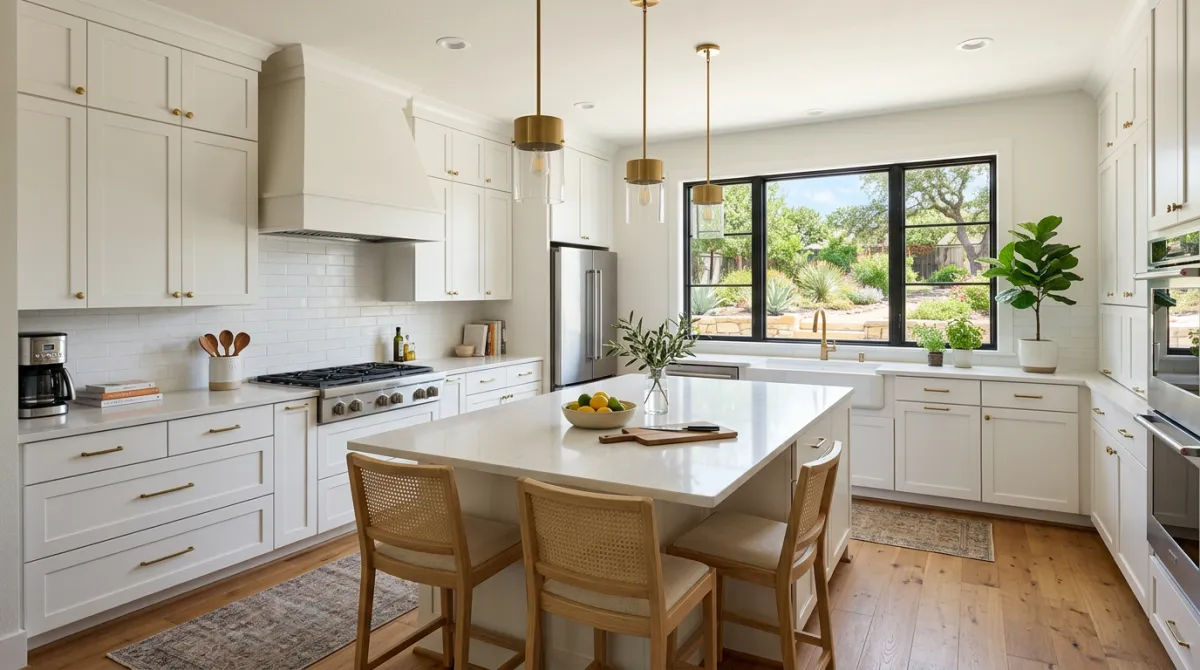
Kitchen Remodel Costs in Texas: 2026 Guide
Texas homeowners remodel kitchens more than almost any other room — and for good reason. The kitchen is the hub of the home, it’s where resale value is made or lost, and Texas’s strong real estate markets mean your renovation investment has solid upside potential.
But kitchen remodels are also where budgets go sideways fast. The gap between a $15,000 refresh and a $75,000 overhaul is massive, and the decisions that determine where your project lands happen early in the planning process.
This guide gives you real 2026 numbers for kitchen remodels across Texas’s major metro areas, breaks down costs by component, and shows you where to spend and where to save.
Texas Kitchen Remodel Costs by Metro Area
Labor rates, material availability, and cost of living vary significantly across Texas. Here’s how the major metros compare in 2026:
| Metro Area | Minor Refresh | Mid-Range Remodel | High-End Remodel |
|---|---|---|---|
| Austin | $8,000–$15,000 | $25,000–$50,000 | $55,000–$100,000+ |
| Dallas–Fort Worth | $7,000–$14,000 | $22,000–$45,000 | $50,000–$90,000+ |
| Houston | $7,000–$13,000 | $20,000–$42,000 | $45,000–$85,000+ |
| San Antonio | $6,500–$12,000 | $18,000–$38,000 | $40,000–$80,000+ |
Austin tends to be the most expensive Texas market for kitchen remodels due to higher labor rates and strong housing demand. San Antonio typically offers the most competitive pricing. For detailed city-specific cost data, check our guides for Austin, Dallas, Houston, and San Antonio.
Cost Breakdown by Component
Cabinets (30–40% of Total Budget)
Cabinets are the single largest expense in most kitchen remodels.
- Stock cabinets (off-the-shelf, standard sizes): $3,000–$8,000 for a typical kitchen
- Semi-custom cabinets (modified sizing and finishes): $8,000–$20,000
- Custom cabinets (built to your exact specifications): $15,000–$40,000+
- Cabinet refacing (new doors and drawer fronts on existing boxes): $4,000–$10,000
Texas trend for 2026: White and off-white shaker-style cabinets remain dominant, but warm wood tones (white oak, walnut) are gaining ground, especially for islands. Two-tone kitchens (white perimeter cabinets with a colored or wood-tone island) are increasingly popular in Texas homes.
Budget tip: If your cabinet boxes are structurally sound, refacing saves 40–60% compared to full replacement and can look just as good.
Countertops (10–15% of Total Budget)
- Laminate: $10–$30/sq ft installed — budget-friendly and much better looking than it used to be
- Butcher block: $40–$70/sq ft installed — warm, natural, great for islands
- Granite: $50–$100/sq ft installed — durable, still popular in Texas
- Quartz: $60–$120/sq ft installed — engineered, low maintenance, widest color selection
- Marble: $75–$150/sq ft installed — premium look, requires more maintenance
- Quartzite: $80–$150/sq ft installed — natural stone with quartz-like durability
The average Texas kitchen has 30–50 square feet of countertop space. At quartz pricing, that’s $1,800–$6,000 for materials and installation.
Texas consideration: Granite remains more popular in Texas than national trends suggest, partly because Texas has significant granite quarries that keep local pricing competitive. Austin and Dallas buyers tend to prefer quartz, while Houston and San Antonio markets still show strong granite demand.
Flooring ($1,500–$5,000)
- Luxury vinyl plank (LVP): $3–$7/sq ft installed — waterproof, durable, and the most popular choice for Texas kitchens in 2026
- Ceramic/porcelain tile: $5–$12/sq ft installed — classic, waterproof, vast design options
- Hardwood: $8–$15/sq ft installed — beautiful but requires more maintenance in a kitchen
- Polished concrete: $3–$8/sq ft (for existing slabs) — popular in modern Texas homes
Texas-specific factor: Texas homes built on slab foundations (the majority) are well-suited for tile and LVP. Homes in flood-prone areas of Houston should avoid hardwood in the kitchen.
Appliances ($2,000–$15,000+)
- Budget package (basic brand, standard features): $2,000–$4,000
- Mid-range package (Samsung, LG, KitchenAid): $4,000–$8,000
- Premium package (GE Profile, Bosch, Café): $8,000–$15,000
- Luxury package (Sub-Zero, Wolf, Thermador): $15,000–$40,000+
A “package” typically includes refrigerator, range or cooktop/wall oven, dishwasher, and microwave. Many retailers offer package deals that save 10–20% over buying individually.
Energy savings: The Department of Energy notes that ENERGY STAR-certified appliances can reduce energy costs by 10–50% compared to standard models. In Texas, where electricity bills run high in summer, energy-efficient appliances pay for the price difference over time.
Plumbing ($1,000–$4,000)
- Sink replacement (same location): $300–$800 (fixture + installation)
- Faucet replacement: $200–$600 (fixture + installation)
- Garbage disposal: $150–$400 installed
- Moving sink to a new location: $1,500–$4,000+ (requires rerouting supply and drain lines)
- Adding a prep sink in an island: $800–$2,000
As with bathrooms, keeping plumbing in its current location is one of the biggest money-savers in a kitchen remodel.
Electrical ($500–$3,000+)
- Under-cabinet lighting: $300–$800
- Pendant lighting over island: $200–$1,000 (fixtures + installation)
- Recessed lighting: $100–$250 per fixture installed
- Additional outlets (required by code for counter spacing): $150–$300 each
- Dedicated appliance circuits: $200–$500 each
Texas building codes require specific electrical configurations in kitchens, including GFCI protection for all countertop outlets and dedicated circuits for major appliances. If your home’s electrical panel is already near capacity (common in older Texas homes), a panel upgrade ($1,500–$3,000) may be necessary.
Backsplash ($800–$3,000)
- Ceramic subway tile: $5–$10/sq ft installed — the classic choice
- Glass tile: $8–$20/sq ft installed
- Natural stone: $10–$30/sq ft installed
- Peel-and-stick tile: $2–$5/sq ft (DIY-friendly, budget option)
A typical kitchen backsplash covers 25–40 square feet. Subway tile in a running bond pattern remains the most requested backsplash in Texas kitchens, but larger-format tiles and natural stone slabs are trending up in 2026.
Labor Costs in Texas
Texas labor rates for kitchen remodels are generally lower than coastal markets but have risen steadily:
- General contractor: $45–$90/hour (or 15–25% of total project cost for management)
- Plumber: $65–$130/hour
- Electrician: $60–$120/hour
- Tile installer: $35–$80/hour
- Cabinet installer: $40–$85/hour
- Painter: $30–$55/hour
Labor typically accounts for 35–45% of a Texas kitchen remodel budget. Austin labor rates are 10–20% higher than the state average due to the city’s construction boom.
Texas-Specific Factors That Affect Cost
Foundation Type
Most Texas homes sit on concrete slabs. This means moving plumbing involves cutting into the slab — a significantly more expensive process than rerouting pipes in a basement or crawl space. Budget an additional $2,000–$5,000 if your remodel requires plumbing relocation on a slab foundation.
HOA Restrictions
Many Texas neighborhoods, especially in the DFW metroplex and Houston suburbs, have HOA rules that affect exterior venting, window placement, and even the scope of interior renovations that require exterior modifications. Review your HOA covenants before finalizing your remodel plan.
Permit Requirements
Texas municipalities handle permits differently. Austin has the most rigorous permitting process, often requiring architectural drawings for significant kitchen remodels. Houston famously has no zoning but still requires permits for plumbing and electrical work. Dallas and San Antonio fall somewhere in between.
Your contractor should handle the permit process, but expect $200–$800 in permit fees for a significant kitchen remodel.
Texas Heat and Construction Scheduling
Texas summers are brutal for construction — especially if any work involves exterior elements (venting, windows, additions). Scheduling your remodel for fall, winter, or early spring often means better contractor availability and more comfortable working conditions, which can translate to faster timelines and potentially better pricing.
Where to Spend and Where to Save
Spend More On:
- Countertops: you touch and see them every day, and they’re the visual centerpiece
- Soft-close hardware: inexpensive upgrade that dramatically improves daily experience
- Adequate lighting: under-cabinet, task, and ambient lighting layers transform how a kitchen feels and functions
- A quality faucet: you use it dozens of times a day — cheap faucets show it
- Layout efficiency: the “work triangle” between sink, stove, and refrigerator matters more than any single material choice
Save Money On:
- Cabinet hardware: easy to upgrade later if your taste changes
- Backsplash: classic subway tile is affordable and timeless
- Interior cabinet finishes: nobody sees the inside of your upper cabinets
- Appliance brands: mid-range brands deliver 90% of premium performance at 50% of the cost
- Flooring: LVP looks excellent, performs well, and costs a fraction of hardwood
Return on Investment in Texas
Kitchen remodels in Texas consistently deliver strong ROI due to the state’s active housing markets:
- Minor kitchen remodel: 75–85% ROI (one of the highest-ROI home improvements)
- Major mid-range remodel: 60–70% ROI
- Upscale remodel: 50–60% ROI
The best ROI strategy: don’t over-improve for your neighborhood. A $60,000 kitchen in a neighborhood of $250,000 homes won’t recoup the same percentage as a $25,000 kitchen in that same neighborhood. Match your renovation level to your market.
For more Texas home improvement guidance, see our guide on the best home improvement projects in Texas.
Finding a Kitchen Remodel Contractor in Texas
The contractor you choose matters as much as the materials you select. For a kitchen remodel:
- Get 3–5 detailed bids from licensed and insured contractors
- Ask for recent kitchen remodel references — not just general contracting references
- Verify their contractor license through the Texas Department of Licensing and Regulation (for projects over $500 in some municipalities)
- Review their portfolio of completed kitchen projects
- Confirm their timeline and get it in writing with a payment schedule tied to milestones
Find a trusted pro near you → houseescort.com
Frequently Asked Questions
How long does a kitchen remodel take in Texas?
A minor refresh (paint, hardware, countertops) takes 1–3 weeks. A mid-range remodel typically takes 4–8 weeks. A full gut renovation can take 8–14 weeks depending on complexity, permit timelines, and material lead times. Austin permit processing can add 2–4 weeks to the overall timeline.
Is a kitchen remodel worth it in Texas’s housing market?
Yes — Texas’s strong real estate markets in Austin, Dallas, Houston, and San Antonio mean kitchen remodels consistently deliver solid ROI. A minor to mid-range kitchen remodel is one of the best investments you can make for resale value. Just don’t over-improve for your neighborhood’s price range.
Can I live in my home during a kitchen remodel?
Yes, most homeowners stay in their homes during kitchen remodels. Set up a temporary kitchen (microwave, coffee maker, mini-fridge) in another room. The inconvenience typically lasts 3–6 weeks for a mid-range remodel. Full gut renovations that involve relocating walls or major systems may require more significant adjustments.
What’s the biggest mistake homeowners make in kitchen remodels?
Underestimating the budget — specifically, not including a 15–20% contingency for unexpected issues (old plumbing, electrical upgrades, structural surprises behind walls). The second biggest mistake is prioritizing trends over function. A beautiful kitchen that doesn’t work well for how you actually cook and live will disappoint you daily.
Should I hire a kitchen designer or just work with a contractor?
For mid-range to high-end remodels, a kitchen designer adds significant value by optimizing layout, selecting cohesive materials, and preventing costly mistakes. Many design-build firms include design services in their contractor fees. For minor refreshes, a good contractor with kitchen experience is sufficient. Our contractor bidding guide covers how to evaluate contractor bids and scope.