Kitchen Range Hood Installation Cost in Texas
House Escort Team
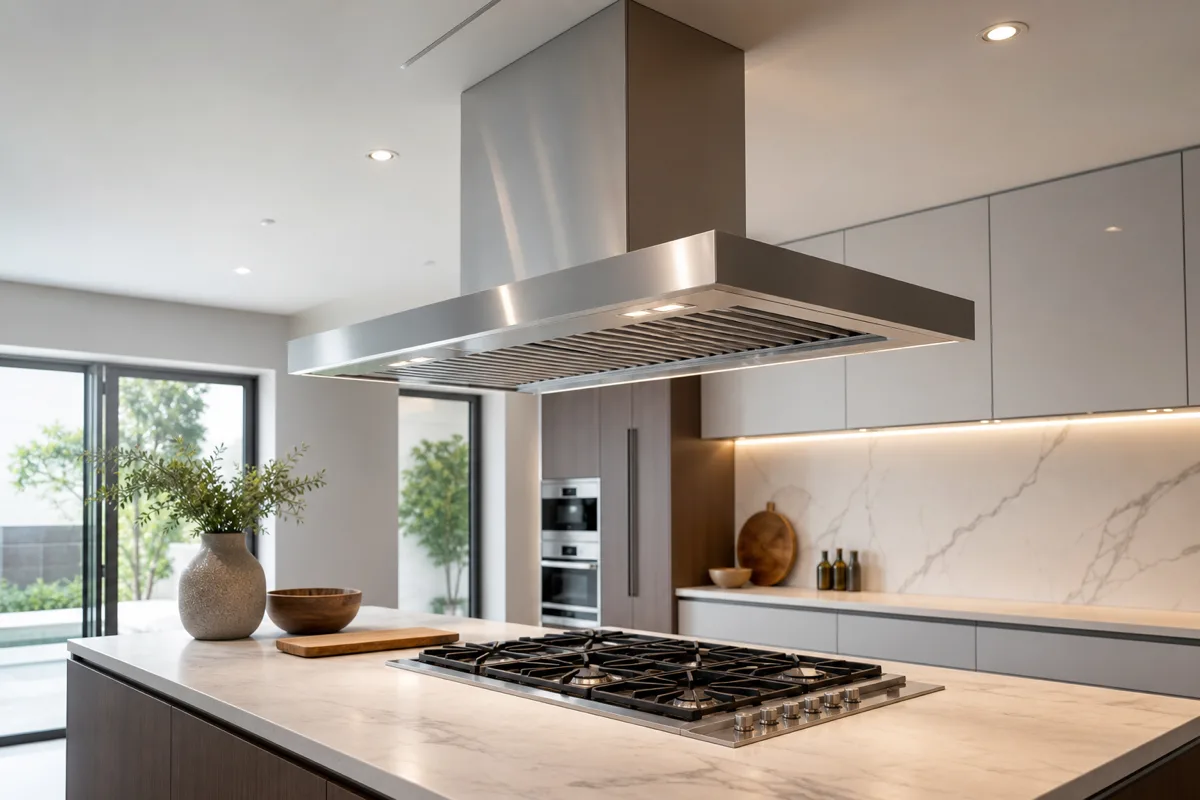
A range hood is essential for kitchen air quality — removing smoke, grease, steam, and cooking odors before they spread through the home. If you are upgrading an existing hood or installing one in a kitchen that doesn’t have ventilation, knowing the total cost — hood + installation + ductwork — helps you plan accurately.
Average Range Hood Installation Cost in Texas
| Hood Type | Hood Cost | Installation Labor | Total Estimated |
|---|---|---|---|
| Under-cabinet (recirculating, ductless) | $80–$400 | $100–$200 | $200–$600 |
| Under-cabinet (vented to exterior) | $150–$800 | $150–$400 | $300–$1,200 |
| Wall-mount chimney (vented) | $300–$1,500 | $250–$600 | $550–$2,100 |
| Island/ceiling mount | $600–$3,000 | $400–$900 | $1,000–$3,900 |
| Commercial-style insert | $500–$3,000 | $300–$700 | $800–$3,700 |
| Custom built-in with custom enclosure | $800–$5,000 | $500–$1,500+ | $1,300–$6,500+ |
Installation labor includes mounting, electrical connection (typically a standard 120V circuit), and basic ductwork connection. New ductwork runs are priced separately (see below).
What Affects Installation Cost
Ductwork: The biggest variable in range hood installation cost. If your kitchen doesn’t have existing ductwork to the exterior, adding it costs:
- Straight short run (1–6 feet through an exterior wall): $150–$350
- Medium run with turns (up and through cabinet, then exterior): $300–$600
- Long run (10–20 feet, through multiple walls or ceiling): $500–$1,200+
- Island ventilation requiring ceiling duct run: $600–$1,500+
Electrical circuit: Standard under-cabinet hoods run on 120V circuits already present for kitchen outlets. High-CFM commercial-style hoods may require a dedicated 20-amp circuit — add $200–$400 for new circuit wiring.
Hood weight and ceiling height: Island hoods mounted at ceiling height require ceiling anchoring, which adds complexity and labor time. Custom or commercial-grade hoods over 50 lbs require structural mounting points.
Cabinet modification: Installing an under-cabinet hood sometimes requires removing or modifying a cabinet section — cabinet work is additional.
City permits: Most Texas cities require a permit for new ductwork penetrations through exterior walls. Your contractor should include permit costs in their quote.
Ductless vs. Vented Range Hood: Which Is Better?
Vented (exterior-ducted): Exhausts air, grease, and moisture outside. More effective at removing smoke, steam, and heat. Recommended for any cooking done at high heat or with significant smoke/grease generation.
Ductless (recirculating): Filters air through charcoal and recirculates it into the kitchen. Easier to install (no ductwork required). Less effective — charcoal filters capture some odors but do not remove moisture or heat. Requires filter replacement every 3–6 months (~$20–$50 per filter replacement).
For Texas kitchens without existing ventilation ductwork, many Texas homeowners choose ductless under-cabinet hoods for budget installation — but vented is the performance upgrade worth considering if ductwork is feasible.
CFM (Cubic Feet Per Minute) Requirements
The correct fan capacity depends on your cooking surface:
- Standard residential gas or electric range: 100–400 CFM
- High-BTU gas range (30,000–60,000 BTU): 400–900 CFM
- Professional/commercial gas range: 800–1,200+ CFM
Texas Building Code (based on IRC) requires makeup air for hoods exhausting 400+ CFM to prevent negative pressure in the home. Consult your installer about makeup air requirements if you are installing a high-CFM hood.
Finding a Range Hood Installer in Texas
A skilled handyman can handle standard under-cabinet hood replacements. Wall-mount and island hoods with new ductwork may require a contractor with carpentry, HVAC (for ductwork), and electrical experience. For complex installations involving significant cabinetry work, a kitchen remodeling contractor is the right choice.
Find a Kitchen Contractor Near You →
Frequently Asked Questions
How long does range hood installation take?
A simple under-cabinet hood swap with existing ductwork takes 1–3 hours for a skilled handyman or contractor. New wall-mount hood installation with new ductwork through an exterior wall typically takes 3–6 hours. Island hood installation requiring ceiling ductwork runs is a half-day to full-day project depending on the ceiling construction.
Can I install a range hood myself in Texas?
A ductless under-cabinet hood replacement is a reasonable DIY project for a handy homeowner — it’s primarily a mounting and electrical connection job. Vented installations requiring new ductwork through walls or ceilings involve more complexity (measuring, cutting, fire-blocking, sealing) and are better suited to a professional. Any electrical work beyond connecting an existing circuit requires a licensed Texas electrician.
What is the best range hood for a Texas gas range?
For a standard 4-burner gas range, a 400–600 CFM vented wall-mount or under-cabinet hood from brands like Broan, Zephyr, Cosmo, or Hauslane provides good performance at mid-range price points. For high-BTU professional ranges (48”, 60” with multiple burners), a 900–1,200 CFM commercial-style or professional insert hood is necessary. Matching the CFM rating to your BTU output is more important than brand.
Does a range hood add value to a Texas home?
A properly installed, functional range hood is expected by buyers in Texas homes with gas cooking. An upgraded, visually attractive range hood (stainless chimney style, modern design) enhances kitchen appeal. Outdated, non-functional, or absent range ventilation is a buyer concern — particularly in kitchens that will be used for serious cooking.