Job Site Safety Checklist for Contractors
House Escort Team
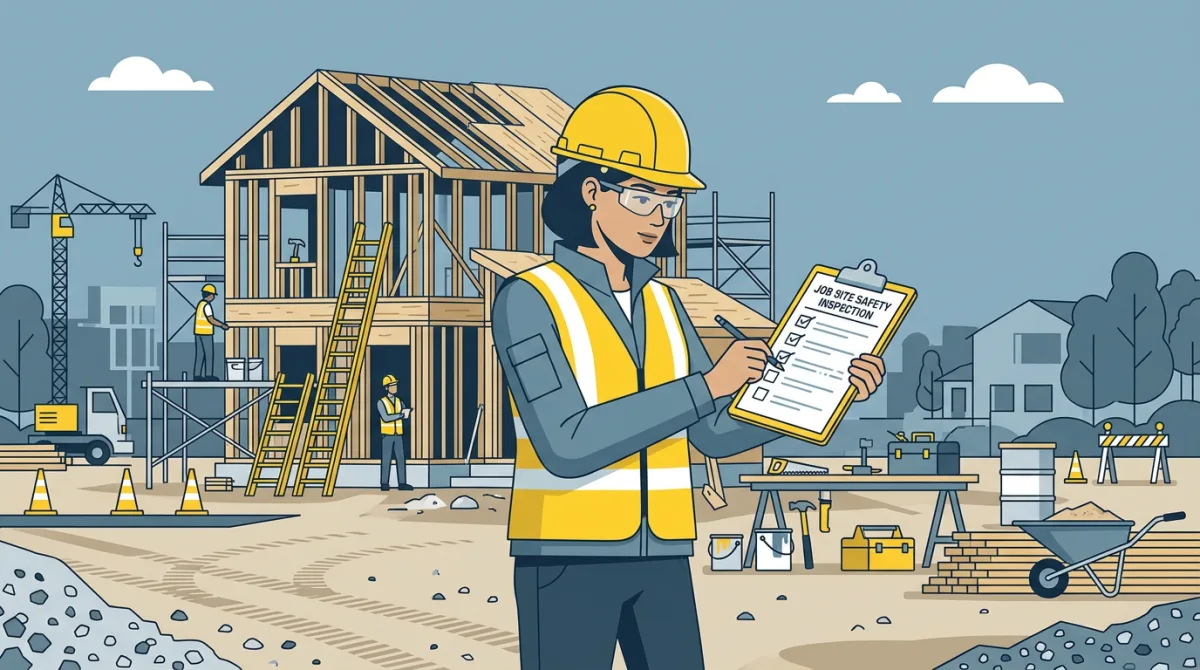
Job site safety is not just about avoiding OSHA fines. A safe job site means fewer injuries, lower insurance costs, faster project completion, and a reputation that gets you referred. Homeowners who see a contractor running a tight, organized, safe operation trust them more — and refer them more. Here’s a practical checklist you can use on every job.
Why Safety Matters for Your Business
One serious job site injury can:
- Trigger workers’ comp claims that raise your premiums for 3–5 years
- Expose you to direct lawsuit if a worker lacks coverage
- Delay or cancel a project, costing you the contract and reputation
- Result in OSHA citations if you have employees
The flip side: contractors who run safe, organized job sites win commercial accounts, property management relationships, and high-end residential clients who ask about safety and insurance before signing.
See our contractor insurance guide for Texas for what coverage you need to protect your business.
Daily Job Site Safety Walk-Through Checklist
Run this before workers arrive each morning.
General Site
- Job site clearly marked with address visible (emergency services can locate the address)
- Emergency contact numbers posted
- First aid kit stocked and accessible
- Fire extinguisher present (especially if any open flame, torch, or electrical work)
- Site secured from unauthorized entry (especially overnight — tools, hazards, and liability)
- No tripping hazards on primary walkways (cords, hoses, debris)
- Debris removal plan in place (not letting it accumulate around workers)
- Portable toilet on site for jobs longer than 4 hours (OSHA requirement for crews)
Tools and Equipment
- All power tools inspected — guards in place, cords intact, no visible damage
- Ladders inspected — no cracks, missing rungs, or bent rails
- Extension cords appropriate gauge for load, no splices or tape repairs
- Grinders, saws, and angle grinders have functioning guards
- Air compressors and hoses checked for leaks
- All tools stored securely when not in use (prevents falls and theft)
PPE (Personal Protective Equipment)
- Hard hats available for all workers in overhead hazard zones
- Safety glasses or goggles for cutting, grinding, or demolition
- Hearing protection for prolonged power tool use
- Respirators or dust masks where applicable (drywall, insulation, old paint)
- Work gloves for material handling
- High-visibility vests near vehicle traffic
Ladder and Fall Safety
- Ladders secured at top and bottom — never propped against gutters or windows alone
- Three-point contact maintained on ladders (one hand, two feet or two hands, one foot)
- Extension ladders extending 3 feet above roof edge
- Roof work: fall protection required for OSHA purposes at heights above 6 feet
- Skylight openings covered and marked
- No standing on top two rungs of a stepladder
Electrical Safety
- All extension cords are GFCI-protected or connected to GFCI outlets in wet areas
- Electrical panels clearly marked — no unidentified breakers
- No work on live circuits (lock-out/tag-out if applicable)
- Underground utility locates completed (call 811) before any digging
Chemical and Hazardous Materials
- Safety Data Sheets (SDS) available for any chemicals on site
- Flammables stored away from ignition sources
- Lead paint identified in pre-1978 homes — proper containment and PPE in place
- Asbestos: if suspected, stop work and test before disturbing any suspect material
- Proper disposal containers for paint, solvents, adhesives — never drain into sink or ground
Trade-Specific Safety Items
Roofing
- Personal fall arrest system (harness + anchor) for pitches over 4:12
- Roof jacks and planks for sustained work on steep slopes
- No open flame equipment near roofing materials without fire watch
- Ladder must extend 3 feet above eave
Electrical
- Voltage tester used before touching any wire
- GFCI everywhere outdoors and in wet areas
- No aluminum wiring improvisation in older homes — consult licensed electrician
Plumbing
- Gas line locates before cutting
- Never work on pressurized lines without isolation
- Proper trap protection during drain work (hydrogen sulfide risk in some sewer situations)
HVAC
- EPA 608 refrigerant certification for refrigerant handling
- Duct work dust containment in occupied homes
- CO monitoring when working near combustion equipment
OSHA Compliance for Contractors with Employees
If you have any employees (even part-time W-2 workers), OSHA standards apply to your job sites. Key requirements:
- OSHA 10 training for all workers; OSHA 30 recommended for supervisors
- Written Hazard Communication program (required for chemical use)
- Injury and illness recordkeeping (OSHA 300 log for employers with 10+ workers)
See our contractor safety training requirements for Texas guide for OSHA training specifics.
Safety as a Sales Tool
When you show a homeowner your safety checklist, your COI, and your trained crew, you win the job before you even quote price. Most homeowners have been burned by an “affordable” contractor who cut corners — on safety AND work quality.
On House Escort, your pro profile lets you highlight certifications, insurance, and safety training. This is free signal that separates you from uninsured operators. Join House Escort free for 1 month → houseescort.com/provider
Frequently Asked Questions
What are the most common OSHA violations for residential contractors?
The “Fatal Four” — fall protection, struck-by hazards, electrocution, and caught-in/between — account for more than 60% of construction fatalities. For residential contractors, fall protection (ladders, roof work) and electrical safety are the most frequently cited. See OSHA’s residential construction page for specific standards.
Do I need OSHA training as a solo contractor?
OSHA standards technically apply to employers — if you work alone with no employees, most OSHA regulations don’t legally require certification. However, OSHA 10 training ($180–$300) makes you safer, is required by commercial general contractors as a hiring condition, and demonstrates professionalism to homeowners.
What should I do if someone is injured on my job site?
Ensure immediate medical care is the first priority. Then: document everything (photos, witness accounts), contact your insurer before making any statements, report to OSHA within 24 hours if the injury is hospitalization-level or worse (required for employers), and follow your workers’ comp insurer’s instructions. Never instruct an injured worker to avoid seeking medical care.
How often should I inspect my tools and equipment?
A visual inspection before each use is the minimum standard. Power tools should receive a more thorough inspection monthly — checking guards, cords, switches, and wear patterns. Ladders should be inspected before every use and retired if cracked, bent, or repaired with tape or wire.
Does job site safety affect my insurance rates?
Absolutely. Workers’ comp premiums are experience-rated — your claims history directly affects your future rates. A clean 3-year safety record qualifies you for experience modification rates (EMRs) below 1.0, which lowers your premiums. Some commercial clients require EMRs below 0.85 to bid work. Safety pays, literally.