Irrigation Contractor Business Guide: 2026
House Escort Team
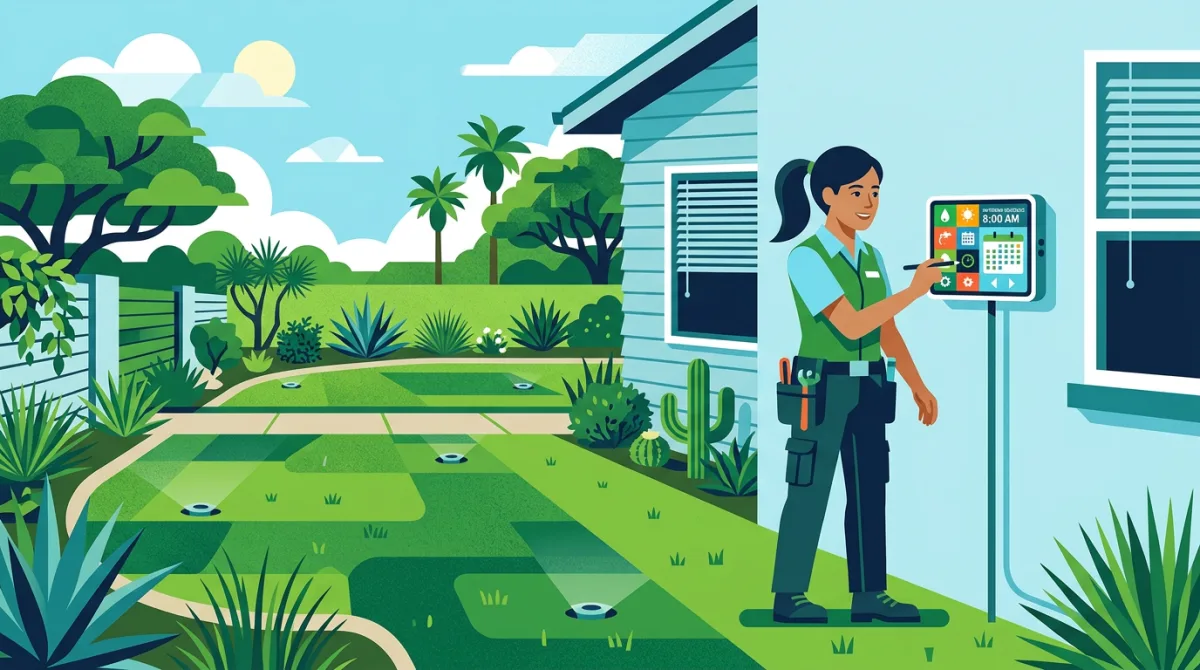
Irrigation contracting is one of the most recession-resistant home services niches in Texas. Homeowners and HOAs with established lawn irrigation systems need them serviced, winterized, activated, and repaired on a recurring basis. Done right, irrigation contracting builds a predictable revenue model with high margins and recurring service contracts. Here’s how to build the business in 2026.
Why Irrigation is a Strong Business Niche
Recurring revenue: Unlike one-off home repairs, irrigation has a natural service rhythm — spring activation, summer adjustments, fall winterization — plus emergency repairs from broken heads, valve failures, and controller malfunctions.
License creates a moat: Texas requires an irrigation license (see below), which limits competitors. Unlicensed operators can’t legally bid commercial or HOA work. The license barrier keeps pricing from being driven to the floor by unqualified competition.
Growing demand: Texas’s growing suburban markets (DFW, Austin, San Antonio suburbs, Houston’s exurbs) mean more established irrigated lawns needing service each year. Water conservation regulations are also driving demand for smart controller retrofits.
High margin per hour: Irrigation work is skilled, and homeowners often don’t understand what’s involved. Experienced irrigators regularly bill $85–$150/hour effective rates.
Texas Irrigation Licensing Requirements
Texas regulates irrigation through the Texas Commission on Environmental Quality (TCEQ). Licensing is mandatory for anyone who installs, maintains, or modifies an irrigation system.
License tiers:
- Irrigator License: The primary license for business owners and supervisors. Requires passing the TCEQ irrigator exam.
- Irrigation Technician License: For employees working under a licensed irrigator. Less rigorous.
To get the Irrigator License:
- Complete 16 hours of approved irrigation instruction (multiple providers offer this in Texas)
- Pass the TCEQ written exam (covers hydraulics, water conservation, backflow, efficiency)
- Submit application with exam results and $75 fee
- Maintain license with 12 hours of continuing education every 3 years
Backflow prevention: If you work on backflow prevention devices, you also need a licensed backflow prevention assembly tester (BPAT) certification from TCEQ.
Why the license matters beyond compliance: The license is proof of competence. Texas cities, HOAs, and commercial property managers require seeing an irrigator license before awarding contracts. It’s a business development asset, not just a compliance requirement.
Irrigation Service Lines and Pricing
Spring Activation / Startup
After Texas’s occasional freezes, irrigation systems need to be turned on, pressure-tested, and each zone inspected for winter damage.
Pricing: $75–$150 for a standard residential system (up to 10 zones). Add $10–$20 per zone beyond 10.
This is your highest-volume service in March–April. A single irrigator can complete 6–10 activations per day, generating $600–$1,500/day in revenue with minimal materials.
System Inspection + Tune-Up
A systematic zone-by-zone inspection looking for broken heads, damaged lateral lines, pressure issues, and controller programming problems.
Pricing: $100–$200 for a full inspection + minor adjustments. Bundle with activation for a package rate.
Winterization (Blowout)
Before Texas freeze events, systems should be winterized by blowing compressed air through each zone to evacuate standing water that would freeze and crack poly pipe.
Pricing: $75–$150 for standard residential. Fall window is October–December.
Equipment needed: A minimum 20 CFM air compressor (not the little pancake compressor — you need a trailer-mounted commercial unit for this). A used commercial compressor runs $2,000–$5,000 and pays for itself in one season.
Repairs
Broken sprinkler heads, valve failures, controller replacements, and lateral line breaks are your repair bread-and-butter.
Pricing model: $75–$150 service call + parts at 40–60% markup + labor at $85–$130/hr
Valve replacement: $150–$300 per valve Sprinkler head replacement: $30–$80 per head depending on type Controller replacement: $300–$800 + programming Lateral line repair: $150–$400 depending on location and length
Smart Controller Upgrades
Homeowners are replacing outdated clock-based controllers with smart controllers (Rachio, Rain Bird, Hunter) that adjust watering based on weather. This is a growing service with excellent margins.
Pricing: $350–$700 installed for most residential smart controllers (includes controller, installation, zone programming, and app setup)
Material cost: $100–$200 (controller at wholesale). Labor: 1.5–2 hours. Margin: strong.
New Irrigation Installation
Design and install a new irrigation system for a new lawn or an existing home without irrigation.
Pricing: $2,500–$8,000+ depending on zones and lot size. Design fee can be charged separately.
This is the highest revenue per job but also the most labor-intensive. Good for filling slower periods.
Building Recurring Service Contracts
The most predictable revenue model in irrigation is a service agreement:
- Spring activation + inspection: included
- Mid-summer check: included
- Fall winterization: included
- 10% discount on all repairs during contract period
Pricing: $200–$350/year for a standard residential system. Bill annually in February (before spring activation) for best collection rates.
A base of 100 service contract customers generates $20,000–$35,000 in predictable annual revenue before any repair or upsell work.
Marketing Your Irrigation Business
Google Business Profile: Irrigation is a high-intent local search. Ranking on “irrigation service [city]” generates year-round inbound leads. See our Google Ads guide for home service contractors for paid search strategy.
Door hangers: The most cost-effective marketing for irrigation. In spring and fall, target neighborhoods where you’re already working — print 500 door hangers and walk the street after a job. Conversion rates of 2–5% are achievable.
HOA relationships: One HOA contract can be worth 10–50 residential service agreements. HOA landscape committees make vendor decisions — attend meetings, sponsor the annual event, or simply introduce yourself to the property manager.
House Escort: List your irrigation business on House Escort to capture homeowners who are actively looking for irrigation pros. Zero commission — you keep every dollar you earn. Join free for 1 month → houseescort.com/provider
Frequently Asked Questions
Do I need a license to start an irrigation business in Texas?
Yes. Texas requires an Irrigator License from TCEQ for anyone performing, supervising, or bidding irrigation work commercially. Getting licensed involves completing 16 hours of approved coursework, passing the TCEQ exam, and paying a $75 fee. Working unlicensed is a violation that can result in fines and loss of ability to obtain the license.
How much do irrigation contractors make in Texas?
Solo irrigators working a strong residential route in Texas typically gross $80,000–$150,000 in revenue per year, with net margins of 35–55%. The high margins come from recurring seasonal work and repair call volume. Growing to a 2–3 person crew can push gross revenue to $300,000–$500,000.
What equipment do I need to start an irrigation business?
Minimum startup kit: reliable truck or van, pipe cutters and PVC glue, solenoid valve tools, head adjustment tools, pipe probe, multimeter, and a commercial air compressor for winterizations ($2,000–$5,000). Budget $5,000–$10,000 for initial tools and equipment. Add a laptop or tablet for estimates and contract management.
Is irrigation work seasonal in Texas?
Less seasonal than northern states, but there’s still a rhythm. Peak seasons are spring (activations, March–May) and fall (winterization, October–December). Summer is steady with repairs and adjustments. Winter is the slowest period in North Texas — some operators use this time for commercial installation or training.
How do I find my first irrigation clients?
Door-to-door in the neighborhoods where established irrigation systems exist (typically 1990s–2010s suburban developments). Offer free system inspections for the first 5 clients. Partner with local landscape companies who don’t do irrigation. List on House Escort to capture homeowners actively searching for irrigation help.