HVAC Replacement Cost in Texas: Complete 2026 Guide
House Escort Team
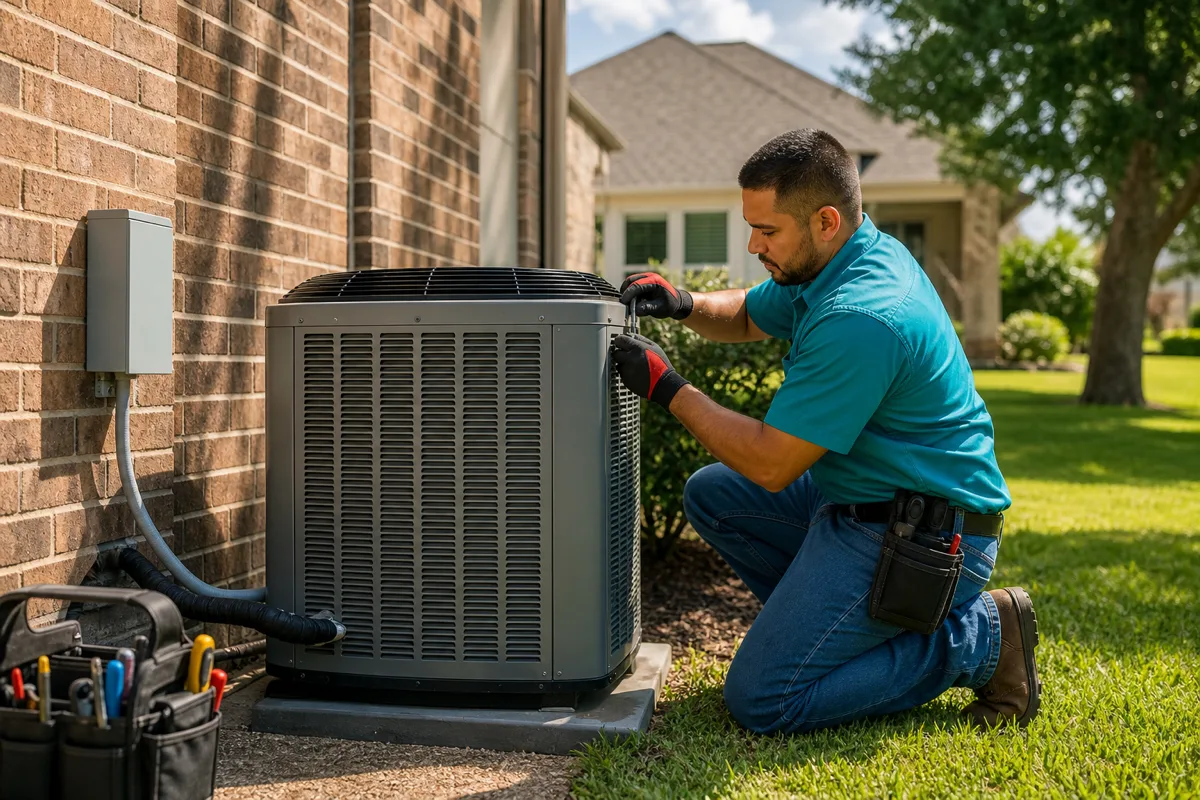
Texas HVAC systems work harder than almost anywhere in the country — units in Houston and DFW can run 8-10 months of the year. When your system fails or reaches end of life, replacement is one of the most significant home expenses you’ll face. Here’s what to expect to pay and how to navigate the decision in 2026.
Average HVAC Replacement Cost in Texas
| System Type | Unit Size | Equipment + Installation | Total Range |
|---|---|---|---|
| Split system AC + air handler | 3 ton | $5,000-8,000 | $4,500-9,000 |
| Split system AC + air handler | 4 ton | $6,000-9,500 | $5,500-11,000 |
| Split system AC + air handler | 5 ton | $7,500-11,000 | $7,000-13,000 |
| Heat pump (cooling + heating) | 3 ton | $6,000-10,000 | $5,500-11,500 |
| Heat pump | 4 ton | $7,500-12,000 | $7,000-13,500 |
| Mini-split (ductless) | 1-1.5 ton per zone | $2,500-5,000/zone | $2,000-5,500/zone |
| Package unit (one cabinet) | 3-4 ton | $5,500-9,000 | $5,000-10,500 |
Notes:
- These are installed prices (equipment + labor + materials)
- Texas homes typically need 1 ton of cooling per 400-600 sq ft (varies with insulation, ceiling height, sun exposure)
- Labor in major Texas metros (Houston, DFW, Austin) is typically $1,500-3,000 for a standard split system replacement
What’s Included in HVAC Replacement
Standard split system replacement includes:
- Removal and disposal of old equipment
- New outdoor condensing unit
- New indoor air handler (or evaporator coil if you keep the furnace)
- New refrigerant charge (R-410A is being phased out; R-454B and R-32 are the new standards — verify what your new unit uses)
- New thermostat (sometimes included, sometimes separate)
- Startup, testing, and commissioning
What’s extra:
- Ductwork repairs or replacement (significant additional cost if ducts are in poor condition)
- New thermostat upgrade (smart thermostat: $150-350 added)
- Permits (required; included in most installers’ price but verify)
- Air handler / furnace if keeping existing (may need to be replaced to match new outdoor unit)
- Extended labor warranty beyond standard
Replacing AC Only vs. Complete System
A common situation: the outdoor AC condenser fails but the indoor air handler/furnace is in good condition. Can you replace just the outdoor unit?
Technically yes, but often not recommended:
- Mismatched equipment (new condenser + old air handler) is less efficient and may void efficiency ratings (SEER2 ratings require matched systems)
- Older air handlers may not be compatible with new refrigerant types
- Replacing both at the same time saves labor cost (replacing both together costs less than two separate jobs)
- Many HVAC manufacturers require matched systems for warranty coverage
When replacing just the outdoor unit makes sense:
- Air handler is recent (5 years old or less)
- Air handler is confirmed compatible with the new refrigerant system
- Budget constraints are real — partial replacement buys time while saving for full replacement
Always get your HVAC contractor’s recommendation with the reasoning — a good contractor will explain the tradeoffs transparently rather than just upselling.
SEER2 Ratings: Texas Efficiency Standards
As of January 2023, DOE increased minimum efficiency standards for HVAC equipment. In the South region (which includes Texas), the minimum is now:
- Split system AC: 15 SEER2
- Heat pumps: 15 SEER2 cooling / 8.8 HSPF2 heating
New units sold in Texas must meet these standards. Higher SEER2 units are available (18-26 SEER2) and cost more upfront but save more on energy.
Is a high-efficiency unit worth it in Texas?
The breakeven analysis on SEER2 upgrades:
- A 15 SEER2 unit costs ~$500-1,000 less than a 20 SEER2 equivalent
- The energy savings difference: roughly 25% less cooling energy on a 20 vs. 15 SEER2 unit
- For a Texas home running AC 8+ months/year at $150-300/month in cooling costs, that’s $30-75/month savings = $240-600/year
- Payback on the $500-1,000 premium: 1-4 years for higher efficiency
In Texas, high SEER2 units often pay back quickly. If your budget allows, 18-20 SEER2 is worth considering.
Utility Rebates and Tax Credits
Texas utility rebates: Several major Texas utilities offer HVAC replacement rebates:
- Oncor (North Texas): Rebates on high-efficiency AC and heat pumps
- CenterPoint Energy (Houston): Efficiency rebates on qualifying equipment
- Austin Energy: Significant rebates on high-efficiency systems and heat pumps
- CPS Energy (San Antonio): AC efficiency rebates
Rebate amounts vary by equipment type and efficiency level — typically $100-600 for qualifying units. Your HVAC contractor should know the current rebates in your market.
Federal tax credit: The Inflation Reduction Act provides a 30% federal tax credit (up to $600 for central AC, up to $2,000 for heat pumps meeting efficiency thresholds). Verify current eligibility — these programs have specific efficiency requirements. Confirm with a tax professional.
Find a vetted HVAC contractor in Texas through House Escort — free for homeowners.
Frequently Asked Questions
How do I know if I need a full HVAC replacement or just repairs?
General rule: if repair cost exceeds 50% of replacement cost, or the unit is 10-15+ years old, replacement is usually the better financial decision. Texas units have shorter effective lifespans (10-15 years) due to intense use. A 12-year-old unit with a $2,500 compressor failure is typically better replaced than repaired. Ask your contractor for honest guidance — a trustworthy contractor will present the repair vs. replace math transparently.
How long should HVAC systems last in Texas?
Due to intensive year-round use, Texas HVAC systems typically last 12-15 years compared to 15-20 years in milder climates. Regular maintenance (biannual tune-ups, monthly filter changes, coil cleaning) extends system life. Systems in the harsh coastal humidity of Houston and Corpus Christi may fall toward the shorter end of this range.
What size AC do I need for my Texas home?
Proper sizing requires a Manual J load calculation — not just square footage. Factors include ceiling height, insulation level, window area and orientation, local climate, and duct conditions. A properly sized unit is as important as a high-efficiency one. Oversized units short-cycle (turn on and off frequently), reducing efficiency and dehumidification performance — a real problem in Texas’s humid climate. Undersized units run constantly without reaching setpoint.
Should I get a heat pump instead of traditional AC in Texas?
Heat pumps are gaining popularity in Texas as heat pump technology has improved significantly. Modern heat pumps (particularly dual-fuel systems that pair with a gas furnace for backup) work efficiently in Texas’s climate range. The benefits: one system for both cooling and heating, eligibility for larger federal tax credits. The trade-off: slightly higher upfront cost than a straight AC system. For new construction or full system replacements, heat pumps are worth serious consideration.
How do I find a reliable HVAC contractor in Texas?
Look for NATE-certified technicians, TDLR contractor licensing, and a history of verifiable reviews. Get 2-3 quotes — significant price variation is common. The cheapest quote isn’t always the best (improperly sized equipment, inferior brands, skipped permits). Ask about the brand of equipment, warranty terms (manufacturer warranty on parts, contractor warranty on labor), and permit pulling. House Escort connects you with licensed, reviewed HVAC contractors in your Texas market.