HVAC Maintenance Contract: What Techs Need to Include
House Escort Team
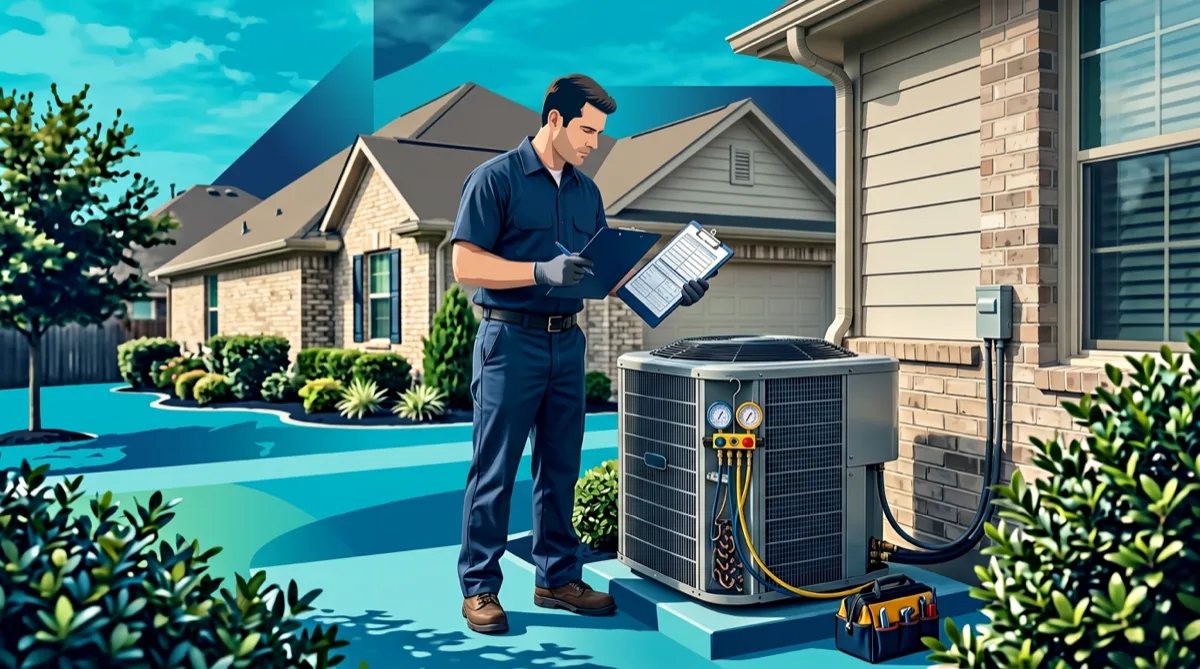
A single repair call pays once. A maintenance agreement pays every year — and it comes with priority scheduling, reduced price sensitivity, and clients who call you first when they need a new system. For HVAC techs who want a stable, predictable business in Texas’s demanding climate, building a maintenance contract book is one of the highest-ROI moves available.
Here is how to structure your HVAC maintenance contracts to attract clients, protect your business, and generate the recurring revenue that makes your business genuinely scalable.
Why Maintenance Contracts Beat Repair-Only Revenue
The math is straightforward. A repair call averages $250–$500. An annual maintenance agreement averages $150–$350 per year per system. But the maintenance agreement:
- Pays without a breakdown emergency
- Books your schedule in advance (not reactive)
- Builds long-term client loyalty (maintenance clients convert to replacement at 2–3x the rate of repair-only clients)
- Reduces your customer acquisition cost (they renew without being sold again)
- Gives you visibility on aging systems — you know which clients will need new equipment in the next 12–24 months
Texas’s heat makes HVAC maintenance particularly valuable for homeowners. Systems that run 8–10 months per year in Houston and DFW degrade faster than in moderate climates. Homeowners who have experienced a broken AC in a 100°F July know they do not want to go through that again.
What to Include in an HVAC Maintenance Contract
A professional maintenance agreement should clearly define what is included, what is not, and what both parties agree to. Key sections:
1. Scope of Services
Define exactly what each maintenance visit includes. Standard HVAC maintenance scope for a Texas residential system:
Cooling system (AC) — spring visit:
- Replace or inspect air filter
- Check refrigerant levels (not adding refrigerant — just check)
- Inspect and clean evaporator coil (exterior inspection; cleaning add-on)
- Inspect condenser coil
- Check electrical connections and capacitors
- Inspect drain line; clear or treat if needed
- Verify thermostat calibration
- Test system operation and document temperatures
Heating system (furnace or heat pump) — fall visit:
- Inspect heat exchanger (gas furnace)
- Check igniter and flame sensor
- Inspect blower motor and belt
- Check gas connections (gas furnace)
- Test safety switches
- Verify heat pump reversing valve operation (heat pump)
- Document system operation
Be specific. Vague scopes lead to disputes. If evaporator coil cleaning is not included (it is typically a separate charge of $150–$300), say so explicitly.
2. Pricing and Payment Terms
Clearly state:
- Annual price (e.g., $180/year for single-system, $280/year for two systems)
- Payment timing: upfront annually or monthly auto-charge
- What happens if a visit is missed by either party (reschedule within 30 days)
Pricing strategy for Texas HVAC maintenance agreements:
- Single system, 2 visits/year: $150–$250/year
- Dual system, 2 visits each: $250–$450/year
- Commercial/large residential with complex systems: negotiate individually
Auto-renewal with annual credit card charge is the cleanest approach for cash flow. Send a 30-day renewal notice so clients can opt out. Most won’t.
3. Priority Scheduling
This is the benefit homeowners pay for most willingly. Your agreement should state that active maintenance clients receive priority scheduling for repair calls — ahead of non-contract clients. In Texas’s summer emergency window (June–September), this benefit is real and valuable.
“Agreement holders receive priority scheduling for service calls, with same-day or next-day response during normal business hours.”
4. Discounts on Repairs
Many HVAC maintenance agreements include a labor discount (10–15%) for repairs made to the maintained system during the contract period. This sweetens the deal, reduces price friction on repair approvals, and keeps the client from getting a competing quote for straightforward repairs.
5. Exclusions (Critical)
Be explicit about what is NOT covered:
- Refrigerant adds (if refrigerant charge is needed, billed separately)
- Deep coil cleaning (separate charge)
- Duct cleaning (separate service)
- Any equipment repairs or parts
- Damage from improper use, power surges, or acts of nature
- Systems over 20 years old (consider excluding or pricing separately)
Unclear exclusions are the most common source of client disputes. If it is not listed as included, it is not included — but saying so explicitly prevents misunderstandings.
6. Term and Cancellation
- Agreement term: typically 12 months from first service date
- Auto-renewal: standard in the industry; clearly disclosed
- Cancellation: allow cancellation with 30-day written notice, with prorated refund for unused visits
- Service area: define your geographic service area
How to Sell Maintenance Agreements
The best time to sell a maintenance agreement is immediately after completing a repair call — when the client has just experienced the pain of a breakdown and trusts your work.
After every repair, make this offer: “I’d like to offer you our maintenance plan — we’ll check your system in fall and spring, give you priority scheduling, and knock 10% off any repair labor. It’s just $180 a year, and you’ve seen today what a breakdown costs. Most of my clients sign up right after a repair call. Can I get you on the plan?”
Most well-executed maintenance sales happen in under 3 minutes at the end of a service call. Have your phone or tablet ready to collect payment and document the agreement on the spot.
Legal Protection Basics
Your agreement should clearly state:
- The contractor’s license number (required in Texas for HVAC work under TDLR)
- Insurance coverage on file
- That the agreement does not guarantee equipment performance or system longevity
- Limitation of liability language protecting you from claims beyond the agreement value
Have an attorney review your template once — a clean template used on hundreds of contracts is worth the $300–$500 in legal review costs.
See our service contract writing guide for additional clauses that protect you in dispute situations.
Ready to grow your maintenance base and keep 100% of what you earn? House Escort connects HVAC techs directly with homeowners — no commissions, no per-lead fees.
Join House Escort Free for 1 Month →
Frequently Asked Questions
What should an HVAC maintenance contract include?
At minimum: a clear scope of services (exactly what each visit includes), pricing and payment terms, priority scheduling commitment, labor discount on repairs, explicit exclusions, and a term/cancellation policy. Each section should be written to prevent disputes — vague contracts create more problems than they solve.
How much should I charge for an HVAC maintenance agreement in Texas?
Standard pricing for Texas residential HVAC maintenance runs $150–$250 per year for a single system with two visits (fall and spring). Dual-system homes pay $250–$450. Charge enough that the contract is worth your time after covering drive time, materials, and the labor for two visits — thin pricing on maintenance agreements can actually cost you money if not priced correctly.
Can I require upfront annual payment for HVAC maintenance contracts?
Yes, and it is the recommended approach. Upfront annual payment eliminates collection risk, gives you immediate cash flow, and simplifies your accounting. Clients who pay upfront are also less likely to cancel mid-year. Offer a modest discount (5–10%) for upfront annual payment versus monthly auto-charge to encourage this option.
How do maintenance agreements help HVAC techs sell more equipment?
Maintenance clients see their system’s condition documented every year. When a 12-year-old Texas AC is on its second capacitor replacement and running at declining efficiency, you have the documented data to have an honest conversation about replacement timing — before an emergency failure forces a rushed decision. Clients who trust their maintenance tech for annual care almost always call that same tech when they need a new system.
Do HVAC maintenance contracts reduce emergency call-backs?
Yes. Proactive maintenance catches capacitor failures, low refrigerant, dirty coils, and clogged drain lines before they cause breakdowns. Properly maintained Texas AC systems have significantly fewer emergency breakdowns during peak season. This is good for clients and good for you — emergency calls are expensive to staff and difficult to schedule profitably at peak demand times.