How to Start a Handyman Business in Texas
House Escort Team
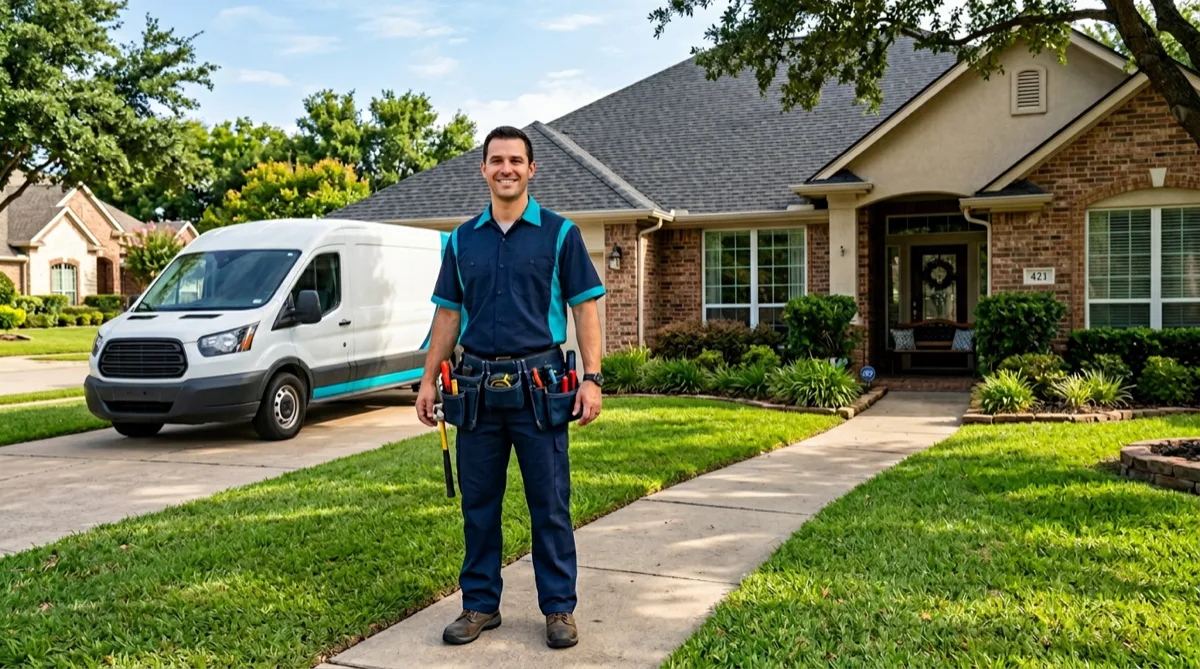
How to Start a Handyman Business in Texas: The No-License Path
Texas is one of the most business-friendly states in the country for handymen, and here’s the most important thing to know before anything else: Texas has no state handyman license. Unlike electricians, plumbers, and HVAC techs who need specific state licenses for their trade, a general handyman in Texas can legally start working on day one — without taking an exam, registering with the state, or waiting for an approval.
That doesn’t mean there’s nothing to do. But it does mean the primary startup activities are: get insured, register your business, buy your tools, and get your first clients.
What Work You Can and Can’t Do as a Texas Handyman
The no-license rule has important limits. In Texas, certain types of work require a licensed professional regardless of who does them:
Requires a Texas license:
- Electrical work (any new wiring, panel work, or repairs require a Texas Licensed Electrician — TDLR)
- Plumbing (pipe installation, fixture replacement with supply line work — Texas State Plumbing License)
- HVAC (installation, repair, refrigerant handling — TDLR HVAC Technician license)
- Structural changes to load-bearing walls
- Gas line work
Typically okay for licensed handyman (no license required):
- Drywall patching and painting
- Door and window installation (not electrical or plumbing)
- Tile installation
- Flooring installation (hardwood, laminate, vinyl)
- Carpentry, trim work, shelving
- Fence repair and installation
- Deck repair (non-structural)
- Minor roof repairs (patching, flashing)
- Gutter cleaning and repair
- Pressure washing
- Furniture assembly
- TV mounting and basic home organization
Many handymen operate in the gray area of “minor” plumbing (replacing a toilet, swapping a faucet) and “minor” electrical (replacing a light switch, installing a ceiling fan). The risk is that code enforcement may disagree about what’s “minor.” When in doubt, sub those tasks to a licensed trade and build a referral relationship with a licensed electrician and plumber who you send trade work to, in exchange for referrals back.
Step 1: Business Structure and Registration
Register your business with the state:
Sole proprietorship: The simplest structure. No formal registration required if you operate under your own name. File a DBA (“doing business as”) with your county clerk if you want to operate under a business name like “Austin Handyman Solutions.” DBA filing fee: $15–$50 depending on county.
LLC: Better liability protection. If a customer sues, an LLC shields your personal assets. Texas LLC formation: file a Certificate of Formation with the Texas Secretary of State ($300 fee). Annual franchise tax report required (but no franchise tax payment for businesses under $1.23M in revenue).
EIN: Apply for a free Employer Identification Number (EIN) from the IRS at irs.gov. You’ll need it for business bank accounts, contracts, and if you ever hire employees.
Business bank account: Keep business and personal finances separated from day one. This makes tax time dramatically simpler and gives you clean records if you’re ever audited.
Step 2: Insurance (Non-Negotiable)
No license doesn’t mean no insurance. Two essential policies:
General liability insurance: Covers property damage and bodily injury arising from your work. If you crack a tile during a repair, or a customer trips over your tool bag, GL covers the resulting claim. Cost: $500–$1,200/year for a solo handyman with $1M per occurrence / $2M aggregate coverage. This is table stakes — many homeowners and property managers won’t hire uninsured handymen.
Workers’ compensation: If you hire employees (even part-time), Texas requires workers’ comp in many situations. As a solo operator, it’s optional — but getting a policy that covers you as the owner is good practice if you’re doing physical work where injuries are possible.
Get a certificate of insurance and carry it with you on every job. Customers will ask.
Step 3: Tools and Equipment
Your initial tool investment depends on your service scope. A minimal startup kit:
Essentials ($500–$1,000):
- Power drill (cordless, 18V minimum, with drill and driver bits)
- Circular saw
- Oscillating multi-tool (the most versatile tool in a handyman kit)
- Level, tape measure, square
- Stud finder
- Drywall tools (knives, mud pan, sanding block)
- Caulking gun
- Basic screwdrivers and wrenches
For expanded services ($1,500–$3,000 additional):
- Miter saw (for trim and carpentry work)
- Jigsaw
- Random orbital sander
- Tile saw (for tile installation services)
- Pressure washer
Vehicle: You’ll need a reliable truck or van. Cargo van is ideal — protected cargo area, wrappable surface for branding. A used Chevy Express or Ford Transit in the $15,000–$25,000 range is common for startup handymen.
Step 4: Pricing Your Services
Two pricing models work for handyman businesses in Texas:
Hourly rate: $75–$150/hour is the current Texas market range for solo handymen, depending on market (Houston/Dallas are toward $100–$150; smaller Texas cities toward $75–$100). Hourly is simpler and protects you on jobs that take longer than expected.
Flat rate (project pricing): Better for the customer experience (no bill shock) and better for your profitability on efficient jobs. Develop flat rates for your most common job types: TV mount ($125), ceiling fan ($150), door installation ($250), drywall patch ($175–$350 depending on size).
Materials: Always charge for materials plus a markup. A 15–20% markup on materials is standard and justified by procurement time and warranty responsibility. Bill materials separately on the invoice.
See How to Price Your Services as a Contractor for a full pricing framework.
Step 5: Getting Your First Clients in Texas
Google Business Profile: Create your free Google Business Profile immediately. Fill it out completely — business name, category (“Handyman”), service areas (your Texas city and surrounding area), phone number, photos, and hours. This is how people searching “handyman near me” in Houston or Austin find you. See Google Business Profile for Contractors for setup guidance.
House Escort: List your handyman business on House Escort — free for your first month. House Escort connects Texas homeowners with local handymen at zero commission. You keep 100% of every job. Get listed → houseescort.com/provider
Neighborhood marketing: Door hangers in your target neighborhoods ($150–$300 for 1,000 pieces). Leave behind a business card on every job. Ask satisfied customers for Google reviews.
NextDoor: Create a business profile on NextDoor and post helpful home maintenance tips in your local neighborhoods. Consistent, helpful presence converts to bookings over time.
Frequently Asked Questions
Does Texas require a handyman license?
Texas has no state handyman license. A general handyman can legally operate without any state-issued license. However, specific trade work (electrical, plumbing, HVAC, gas lines) does require a licensed professional regardless of who performs it. Handymen should stick to their scope of competence and refer trade work to licensed contractors.
How much do handymen charge per hour in Texas?
Handymen in Texas typically charge $75–$150/hour in 2026, with lower rates in smaller markets and higher rates in Houston, Dallas, and Austin. Specialization in specific skill sets (tile, flooring, carpentry) or offering 24-hour availability can support the higher end of the range. Most established handymen transition to project-based pricing rather than hourly as they build their service menu.
What insurance does a handyman need in Texas?
At minimum, general liability insurance ($1M/$2M coverage) is essential for working in homes and commercial properties. Workers’ compensation is optional for solo operators in Texas but recommended as the business grows. Some homeowners and property managers require proof of insurance before allowing work. Get a certificate of insurance from your carrier and carry it on every job.
How do I get my first handyman clients in Texas?
Start with a Google Business Profile (free) optimized for your service area. List on House Escort to reach homeowners looking for local handymen. Post on neighborhood apps like Nextdoor. Leave door hangers in target neighborhoods. Tell everyone you know — friends and family referrals are the highest-conversion source for new handyman businesses.
Can a Texas handyman do minor plumbing or electrical work?
This is a gray area. Texas law requires licensed professionals for plumbing and electrical work, but “minor” repairs (like replacing a light switch or swapping a toilet) are sometimes performed by unlicensed handymen in practice. The risk is code enforcement and liability if something goes wrong. Most experienced handymen build referral relationships with licensed electricians and plumbers for trade work, staying clearly within their legal scope.