How to Get a Contractor License in Texas
House Escort Team
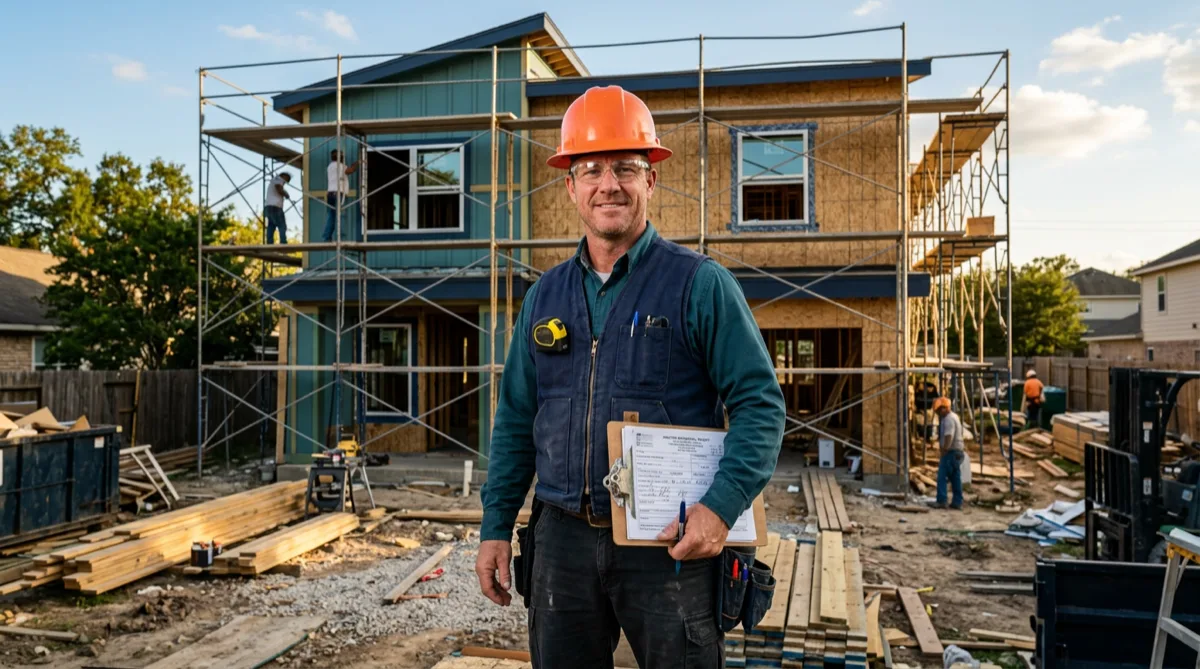
If you’re starting or growing a trade business in Texas, understanding the licensing landscape is essential. Texas takes a trade-by-trade approach to contractor licensing — some trades require strict state licensing, others have no state requirement but face local rules, and general contracting exists in a category of its own.
Here’s a definitive breakdown of contractor licensing in Texas, trade by trade, with TDLR requirements, exam information, fees, and realistic timelines.
The Texas Licensing Landscape: State vs. Local vs. None
State-licensed trades: Texas requires state licensing for electricians, plumbers, HVAC/AC contractors, pest control operators, elevator inspectors, and a few others. These are regulated through the Texas Department of Licensing and Regulation (TDLR) or the Texas State Board of Plumbing Examiners (TSBPE).
No state license for general contractors: Unlike many states, Texas does not require a state license for general contractors or remodeling contractors. However, many cities and counties have local registration or permit-pulling requirements. Always check local rules.
Local licensing: Houston, Dallas, Austin, San Antonio, and most larger Texas cities have their own contractor registration systems for general contractors. Some require background checks, insurance verification, and fees.
Electrical Contractor Licensing in Texas (TDLR)
Electrical licensing in Texas is tiered, with multiple levels of certification:
Apprentice Electrician
- No exam required
- Register with TDLR; work under a licensed journeyman or master
- Fee: ~$20–$30
- Experience required: None (starting point)
Journeyman Electrician
- Exam: Written examination (National Electrical Code + Texas-specific)
- Experience required: 8,000 hours (approximately 4 years) under a licensed electrician
- Fee: ~$50–$75 application + exam fee
- Exam provider: PSI Exams (testing centers across Texas)
- Renewal: Every 2 years with continuing education
Master Electrician
- Exam: More comprehensive than journeyman exam
- Experience required: 2 years after journeyman license (total ~6 years)
- Fee: ~$75–$100
- Required to: Pull electrical permits and run an electrical contracting business
Electrical Contractor (Business License)
- The business entity pulling permits and entering contracts must hold an Electrical Contractor license
- Requires at least one Master Electrician as the “license holder” for the business
- Fee: ~$100 + insurance verification
Verify and apply at TDLR Electrical.
Plumbing Licensing in Texas (TSBPE)
Plumbing in Texas is licensed through the Texas State Board of Plumbing Examiners (TSBPE) — a separate body from TDLR.
Plumber’s Apprentice
- Register with TSBPE; work under a licensed plumber
- Fee: ~$30
- Requirement: Must be registered to legally perform any plumbing work
Journeyman Plumber
- Experience: 8,000 hours (4 years) as a registered apprentice
- Exam: Written exam covering plumbing codes and standards
- Fee: ~$60–$80
- Renewal: Annual, with continuing education
Master Plumber
- Experience: 4 years as a journeyman (total ~8 years)
- Exam: Comprehensive master exam
- Fee: ~$100–$120
- Required to: Pull plumbing permits and run a plumbing business
Responsible Master Plumber (RMP)
- The person responsible for a plumbing business’s licensed work
- Must hold a current Master Plumber license
- Business registration required separately
Details at the Texas State Board of Plumbing Examiners.
HVAC/AC Contractor Licensing in Texas (TDLR)
Air conditioning and refrigeration work in Texas is regulated through TDLR’s Air Conditioning and Refrigeration Program.
EPA 608 Certification (Federal)
- Required before any state licensing for work involving refrigerants
- Available from ESCO Institute, NATE, and other approved testing bodies
- Cost: ~$20–$60 depending on provider
Journeyman HVAC Technician
- Experience: 2 years under a licensed technician
- Exam: Written exam
- Fee: ~$50–$70
Master HVAC Technician
- Experience: 4 additional years after journeyman (6 years total)
- Exam: Comprehensive master exam
- Fee: ~$75–$100
HVAC Contractor (Class A)
- Business license for companies employing master technicians
- Fee: ~$150–$200 + insurance verification
Details at TDLR Air Conditioning.
General Contractor: No State License, But Local Rules Apply
Texas is one of few large states without a state general contractor license. This is both an opportunity and a responsibility — anyone can legally call themselves a general contractor in Texas, which means the market has both excellent professionals and unreliable operators.
However, before you start pulling permits:
- Houston: Requires a General Contractor registration with the city; requires liability insurance verification
- Dallas: Similar registration requirement, varies by work type
- Austin: Building contractor registration required for work over a certain threshold
- San Antonio: Contractor registration through the Development Services Department
Check the city or county government website wherever you plan to work.
Handyman Licensing in Texas
Texas has no handyman license. A person can legally perform minor repair and maintenance work (under specific dollar or scope thresholds) without a license. However, tasks that cross into licensed trade work — replacing electrical outlets, soldering plumbing — require the appropriate license even if the job is small.
See our guide on how to start a handyman business in Texas for more on building a compliant handyman operation.
Insurance and Bonding Requirements
Even where licensing isn’t required, insurance is non-negotiable:
- General liability insurance: Minimum $300,000–$1,000,000 coverage recommended; many commercial clients require $1M+
- Workers’ compensation: Not required by Texas law (unlike most states), but highly recommended. Without it, you’re personally liable for worker injuries.
- Surety bond: Some local licensing programs require a contractor bond ($5,000–$25,000 typical)
Operating without insurance exposes you to financial catastrophe on a single job gone wrong. Get coverage before you take your first job.
How Long Does It Take to Get Licensed?
Realistic timelines for first-time applicants:
| Trade | Experience Required | Exam + Processing | Total Timeline |
|---|---|---|---|
| Apprentice (any trade) | None | 1–2 weeks | 1–2 weeks |
| Journeyman Electrician | 4 years | 4–8 weeks | ~4 years |
| Journeyman Plumber | 4 years | 4–8 weeks | ~4 years |
| Journeyman HVAC | 2 years | 4–8 weeks | ~2 years |
| Master (any trade) | 6–8 years | 4–8 weeks | ~6–8 years |
If you’re coming from another state with documented experience, some reciprocity agreements exist. Check with TDLR or TSBPE for your specific situation.
Growing Your Licensed Business
Once you’re licensed, the business side starts. The fastest path to growing your client base is a combination of strong online presence, great reviews, and smart platform use. House Escort lets licensed pros list their business and connect with homeowners — with zero commission on every job you complete.
List your business on House Escort → — 1 month free, low monthly fee. Cancel anytime.
Also see our guide to growing your business without lead fees for practical marketing strategies for newly licensed Texas contractors.
Frequently Asked Questions
Does Texas require a general contractor license?
No. Texas does not have a state-level general contractor license. However, many cities (Houston, Dallas, Austin, San Antonio) have local contractor registration requirements for pulling permits. Always check your specific city’s requirements before starting work.
How long does it take to get a journeyman plumber license in Texas?
Getting a journeyman plumber license in Texas requires 8,000 hours (approximately 4 years) of documented work experience as a registered plumber’s apprentice, followed by passing the TSBPE journeyman examination. After passing the exam, processing typically takes 4–8 weeks. Plan for a 4-year journey from apprentice to journeyman.
Can I start an HVAC business in Texas without a master license?
You need a master HVAC technician to serve as the “Responsible Master Technician” (RMT) for your business. If you’re a journeyman HVAC tech, you can work for a licensed business but cannot run your own. To operate independently and pull permits, you need to either hold a master license yourself or employ someone who does.
What insurance do Texas contractors need?
At minimum, general liability insurance (protecting against property damage and bodily injury to third parties) is essential. The coverage amount depends on your work type and client requirements — $500,000 is a common minimum, with $1M+ required by many commercial clients. Workers’ compensation is optional under Texas law but strongly recommended. Some city licensing programs also require a surety bond.
What is the difference between a TDLR license and a local contractor registration in Texas?
TDLR issues state-level licenses for specific regulated trades (electricians, HVAC, pest control). Local contractor registrations are city-level requirements for general contractors or other trades not covered by TDLR. You may need both — a state TDLR license for your specific trade AND a local city registration to pull permits in that city. These are separate applications with separate fees.