Build a Before & After Portfolio: Contractor Guide
House Escort Team
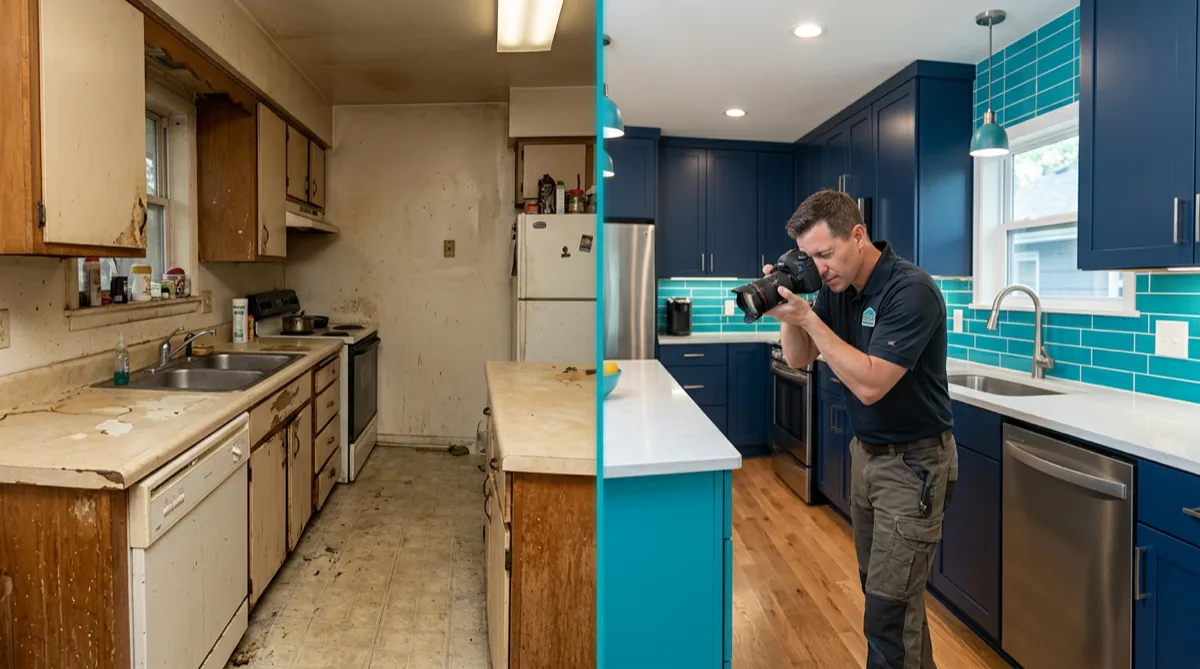
A compelling before-and-after portfolio is the single most effective marketing asset a contractor can have. Before a homeowner calls you or sends a message, they want proof of what you can do. A well-documented portfolio answers that question before the conversation even starts — and it converts skeptical strangers into ready-to-hire prospects faster than any ad campaign.
This guide covers exactly how to build, organize, and distribute a portfolio that wins jobs.
Why Before-and-After Photos Convert Better Than Anything Else
Homeowners hire contractors based on trust. Trust is built through evidence of past performance. A polished portfolio of before-and-after shots communicates:
- You’ve done this type of work before
- The results were real and verifiable
- You’re professional enough to document your work
- The transformation is worth what you charge
In a survey by BrightLocal, over 90% of consumers say visuals strongly influence their buying decisions for services. Before-and-afters are the highest-trust visual format in home services — they show the specific problem and the specific result, with no room for ambiguity.
Contractors who build strong portfolios typically see higher close rates on estimates and fewer price objections. When a homeowner can see your previous work, the conversation shifts from “will this person do a good job?” to “how soon can they start?”
What to Capture on Every Job
The goal is documentation that tells a story — the problem, the work in progress (optional), and the result.
Before Photos
Take before photos at the start of every project, before you touch anything. Capture:
- Wide shot of the full area — shows the scale and context
- Close-up detail shots — rotted wood, cracked tile, failing caulk, stained drywall, outdated hardware. These details tell the story of why the work was needed
- Problem-specific shots — leak damage, uneven surfaces, code issues, safety concerns
Use consistent lighting and shoot from the same angle that you’ll use for the after shot. Consistent angles are what make before-and-afters visually powerful — when the viewer can directly compare the same spot, the transformation is more dramatic.
After Photos
Wait until the job is fully complete and cleaned up before shooting afters. A finished photo with sawdust and caulk tubes in frame undermines the impression of professional work.
- Same wide-shot angle as the before
- Same close-up spots showing the repaired/replaced detail
- Golden-hour interior light or natural daylight for maximum visual warmth
- Staged if possible — a clean countertop, a plant, a folded towel. You’re not staging for HGTV, just showing the space in its best light
Clean the area thoroughly before shooting. Staging takes 5–10 minutes and can make a $3,000 bathroom tile job look like a $15,000 renovation.
Equipment You Actually Need
You don’t need a professional camera. A modern smartphone (iPhone 14+ or Samsung Galaxy S23+) shoots better than most DSLRs from a decade ago.
What matters more:
- Natural light — open windows, turn off overhead yellow-toned bulbs if possible
- Steady shot — press your elbows against your body or lean against a wall
- Clean lens — wipe it before shooting; fingerprints kill image quality
- Multiple angles — shoot 5–10 frames, pick the best
For larger jobs (full room renovations, exterior projects, roofing), a used wide-angle lens attachment for your phone ($20–$40 on Amazon) dramatically improves large-space coverage.
Organizing Your Portfolio
Raw photos on your camera roll are worthless unless they’re organized, accessible, and ready to share on demand.
Recommended structure:
- Create a folder per project:
YYYY-MM-DD — Project Type — City - Store 2–5 curated pairs (before/after) per project
- Keep a “portfolio highlights” folder with your 10–15 best pairs — these are what you share most often
Tools to consider:
- Google Photos — free, auto-organized, shareable links
- Dropbox — better for large image files, shareable folder links
- House Escort profile — your House Escort listing lets you showcase your best work images directly where homeowners are looking
Where to Share Your Portfolio
Your House Escort Profile
Your House Escort provider profile is the first place homeowners see your work when they’re actively looking to hire. Keep your portfolio images updated with your 6–10 best recent before-and-after pairs. Homeowners on the platform are high-intent — they’ve already decided to hire someone. A strong portfolio closes them.
Google Business Profile
Google Business Profile (GBP) allows you to upload photos directly to your listing. Before-and-after images in GBP show up when someone searches for your business or for contractors in your area. See our guide on Google Business Profile for contractors.
Instagram and Facebook
Before-and-after posts perform exceptionally well on both platforms. Consistent posting builds an audience of homeowners in your service area who follow your work and refer you when their friends need the same service.
Side-by-side comparison posts with a clear caption (“Complete bathroom retile in Dallas — here’s the transformation”) get significantly more engagement than single-image posts. Use local hashtags: #[city]contractor, #[trade]repair, #[city]home.
Your Website
Every contractor website should have a dedicated gallery or portfolio page with your before-and-after work organized by project type. Potential clients who find your website via Google search convert much higher when there’s visual evidence of your work.
What Makes a Portfolio Entry Stand Out
Strong portfolio entries have:
- Clear, high-contrast before shots that show the actual problem
- Clean, well-lit after shots that show the result at its best
- Brief caption explaining what was done: “Replaced rotted deck boards and refinished the surface — Eagle Mountain, TX”
- Location mention — adds local SEO value when shared online
Weak portfolio entries have:
- Dark, blurry, or poorly framed photos
- After shots taken before cleanup
- No caption explaining the work
- Generic descriptions that don’t mention trade or location
Building Your Portfolio Systematically
Aim to photograph every job, not just the dramatic ones. A straightforward water heater replacement documented cleanly can convert a homeowner searching “water heater replacement near me” better than a renovated kitchen photo if that’s what the homeowner needs done.
Set yourself a goal: after every job, take 3 photos before you pack up. Over 6 months, you’ll have a portfolio of 50–100 documented projects — enough to establish authority in any trade.
The contractors who consistently win more work aren’t always the most skilled. They’re the ones who make it easiest for homeowners to say yes. A strong before-and-after portfolio is how you become that contractor.
Ready to showcase your work to thousands of homeowners looking to hire? Join House Escort and keep 100% of your earnings.
Frequently Asked Questions
What is the best way to take before and after photos as a contractor?
Use a smartphone with a clean lens in natural light. Take the before shot before touching anything, and the after shot once the work is fully complete and the area is cleaned up. Shoot from the same angle for both photos — consistent positioning is what makes the transformation visually clear. You don’t need a professional camera, but you do need good lighting and a steady hand.
How many portfolio pieces should a contractor have?
Start with 10–15 strong before-and-after pairs covering your core services. Update the portfolio every 2–3 months with new work. Over time, aim for 30–50 documented projects showing variety across job types, price ranges, and locations. Homeowners browsing your portfolio want to see that you’ve done similar work to what they need.
Where is the best place to display a contractor portfolio online?
Your House Escort provider profile, Google Business Profile, your own website’s gallery page, and Instagram are the four highest-impact locations. Your House Escort profile is particularly valuable because homeowners viewing it are actively looking to hire — not just browsing inspiration.
Should I ask homeowners for permission before posting their photos?
Best practice is to ask for permission, though most homeowners are fine with exterior shots being shared publicly. For interior spaces, a brief verbal confirmation (or a one-line clause in your service agreement) protects you and prevents awkward situations later. Most satisfied customers are happy to have their transformation showcased — some even like being tagged.
How often should I update my contractor portfolio?
Add new projects at least monthly. Prioritize replacing older photos with newer, higher-quality work as your skills and equipment improve. Homeowners pay more attention to recent jobs — a portfolio with work from 2021 raises more questions than one updated this month. Make photography a habit, not an afterthought.