Home Warranty vs Homeowners Insurance: Key Differences
House Escort Team
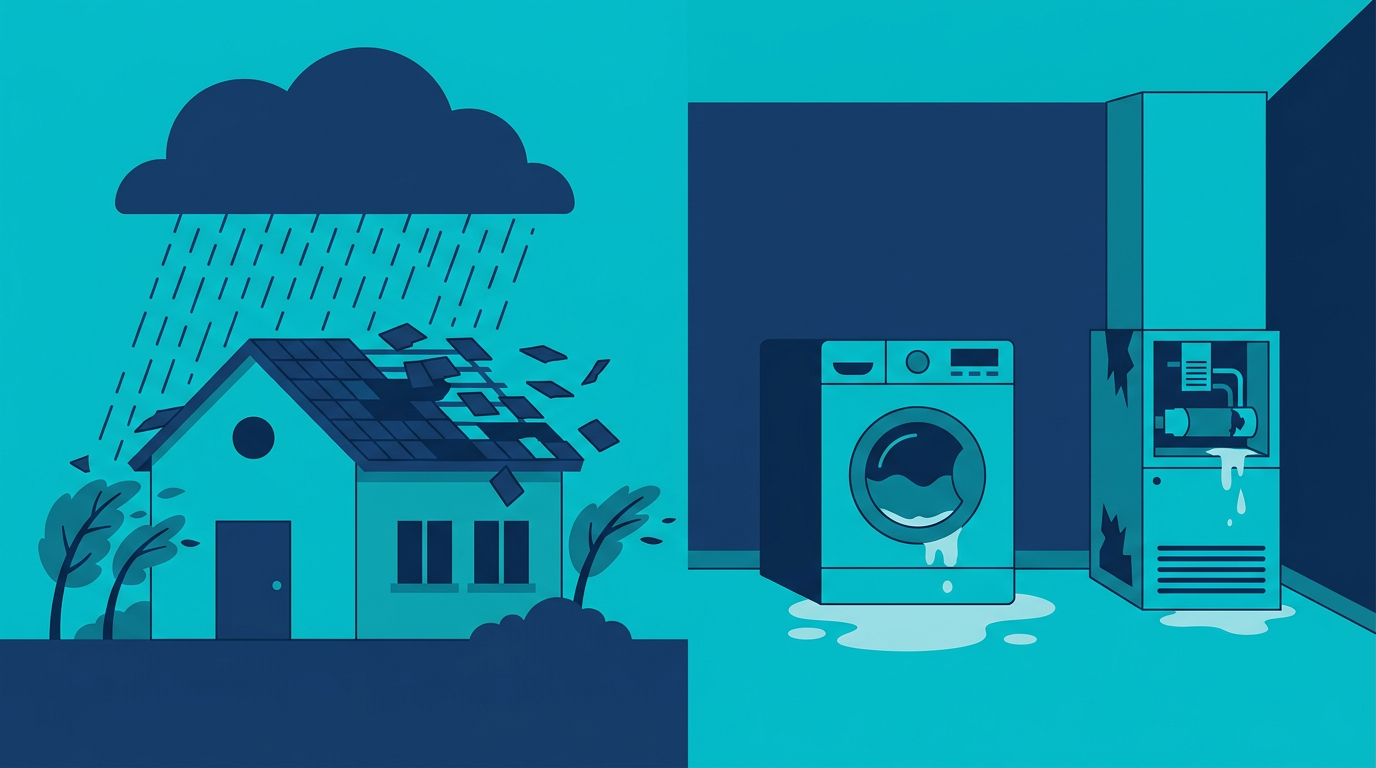
When something goes wrong with your home — a leaky roof, a dead HVAC system, a flooded basement — the first call most homeowners make is to their insurance company. Half the time, that is the wrong call.
Home warranty and homeowners insurance are two completely different products that cover two completely different categories of loss. Understanding which one applies to your situation can save you days of runaround with adjusters and warranty companies who are trained to say no.
What Homeowners Insurance Covers
Homeowners insurance covers sudden, accidental damage from specific covered perils. The key word is “sudden.” Standard policies typically cover:
- Fire and smoke damage
- Windstorm and hail
- Lightning strikes
- Theft and vandalism
- Water damage from a burst pipe (sudden, not gradual)
- Liability if someone is injured on your property
What homeowners insurance does not cover is equally important:
- Normal wear and tear
- Appliance breakdowns (refrigerator stops cooling, HVAC fails)
- Gradual water damage (a slow leak that damages a subfloor over months)
- Flooding (requires a separate NFIP or private flood policy)
- Earthquakes (requires a separate rider in most states)
- Pest damage
The deductible on a typical homeowners policy runs $1,000–$2,500. Premiums vary by location, home value, and coverage level — but the national average is approximately $1,700 per year according to the Insurance Information Institute.
What a Home Warranty Covers
A home warranty is a service contract — not insurance — that covers mechanical failures of home systems and appliances due to normal wear and tear. This is the category homeowners insurance explicitly excludes.
A basic home warranty typically covers:
- HVAC systems (heating and cooling units)
- Plumbing systems (interior pipes, drain lines)
- Electrical systems (wiring, panels, outlets)
- Water heater
Extended or “combo” plans often add:
- Refrigerator
- Washer and dryer
- Dishwasher
- Oven and stove
- Garage door opener
What home warranties typically do not cover:
- Pre-existing conditions (systems that were already failing when coverage began)
- Code violations that must be corrected before repair
- Improper installation or previous improper repairs
- Cosmetic damage
- Outdoor components (fences, sprinkler systems) unless specifically added
A standard home warranty plan costs roughly $400–$700 per year, with a service call fee of $75–$125 each time a technician visits. When coverage applies, the warranty company pays for labor and parts (up to defined limits per system).
Key Differences Side by Side
| Homeowners Insurance | Home Warranty | |
|---|---|---|
| What triggers coverage | Sudden accidental damage (storm, fire, burst pipe) | Mechanical breakdown from wear and tear |
| What it covers | Structure, personal property, liability | Systems and appliances |
| What it excludes | Wear and tear, mechanical failure | Sudden accidental damage |
| Annual cost | $1,200–$2,500+ | $400–$700 |
| Per-incident cost | $1,000–$2,500 deductible | $75–$125 service call fee |
| Required by | Mortgage lender (usually) | Optional |
When You Need Both
For most homeowners, especially those in homes older than 10 years, carrying both is a financially sound decision.
Why both? Because the two products cover almost entirely non-overlapping failure modes. A windstorm rips off your roof — homeowners insurance handles it. Your HVAC dies in August — home warranty handles it. Neither product covers the other’s territory.
New construction buyers often get a builder’s warranty that covers systems and structural defects for the first 1–2 years, which reduces the urgency of a home warranty immediately. For everyone else — particularly buyers of older homes where major systems are aging — the gap in coverage between the two products is exactly where expensive repairs live.
When a Home Warranty Is Not Worth It
Home warranties are not always the right call. Read the contract carefully before signing:
- Payout caps — many plans cap HVAC coverage at
$1,500–$2,000even if replacement costs$6,000. Check the per-system limit, not just the headline coverage. - Pre-existing conditions — if the system was already degraded, the warranty company may deny the claim after an inspector visits. Buy a home warranty as close to move-in as possible, ideally paired with a home inspection that documents the current system condition.
- Contractor limitations — most warranty companies send their own service providers. If you have a preferred contractor or need a specialized technician, you may be out of luck.
For homes with newer systems (under 5 years old) and good maintenance records, the math often favors setting aside the annual premium in a home repair fund instead. The break-even point depends on your home’s system ages and your local HVAC, plumbing, and electrical labor costs.
What to Do When Coverage Overlaps
Some situations fall in a gray area. A tree limb comes through your roof and damages your HVAC unit sitting in the attic — that is likely a homeowners insurance claim (sudden damage caused by a covered peril). A refrigerant line corrodes over three years and fails — that is a home warranty or out-of-pocket situation.
When in doubt:
- Call your homeowners insurance company first if there was any external event (weather, fire, water intrusion from outside).
- Call your home warranty company if the system simply failed on its own with no obvious external cause.
- Document everything with photos before any repairs begin — this protects you with both companies.
Finding the Right Pro for Home Repairs
Whether you are filing an insurance claim or filing a home warranty service request, you often have more control over who does the repair work than you realize. Many insurance policies allow you to choose your own contractor. Some home warranty plans allow customer-supplied contractors if pre-approved.
House Escort connects homeowners with local, vetted professionals across plumbing, HVAC, electrical, roofing, and more. No markups, no middlemen — just a direct connection with a flat-fee platform.
Find a Trusted Pro on House Escort →
For more on managing home repair costs, see how to budget for home maintenance.
Frequently Asked Questions
Does homeowners insurance cover HVAC replacement?
Homeowners insurance covers HVAC damage caused by a covered peril — a lightning strike, a fallen tree, fire damage. It does not cover normal mechanical failure, refrigerant leaks from aging components, or an HVAC unit that simply wears out. For mechanical failure, a home warranty or out-of-pocket replacement is the right path.
What is the average cost of a home warranty per year?
Most basic home warranty plans cost $400–$600 per year for systems coverage and $500–$700 for systems-plus-appliances combo plans. Premium plans with enhanced appliance coverage can reach $900–$1,200. You also pay a service call fee ($75–$125) each time a technician is dispatched. The annual premium is typically paid upfront or in monthly installments depending on the provider.
Can you have both homeowners insurance and a home warranty?
Yes — and for most homeowners, especially those with older homes, carrying both makes financial sense. The two products cover entirely different categories of damage (sudden accidents vs. mechanical wear), so they complement rather than duplicate each other. There is no coverage conflict between them.
How do I know if my home warranty claim will be covered?
Read the coverage limits, exclusions, and pre-existing condition language in your contract carefully before you need it. The most common denial reasons are: failure pre-existed coverage start date, damage caused by improper installation or lack of maintenance, or payout caps that do not cover the full replacement cost. Keeping appliance maintenance records (filter changes, annual HVAC tune-ups) strengthens your position if a claim is disputed.
Is a home warranty required when buying a house?
No — a home warranty is optional. Mortgage lenders require homeowners insurance, but a home warranty is a voluntary service contract. Home warranties are commonly offered by sellers as a purchase incentive in real estate transactions, and buyers can also purchase them independently. Many real estate transactions include a one-year home warranty as a negotiated term.