Home Office Conversion Cost: What to Budget
House Escort Team
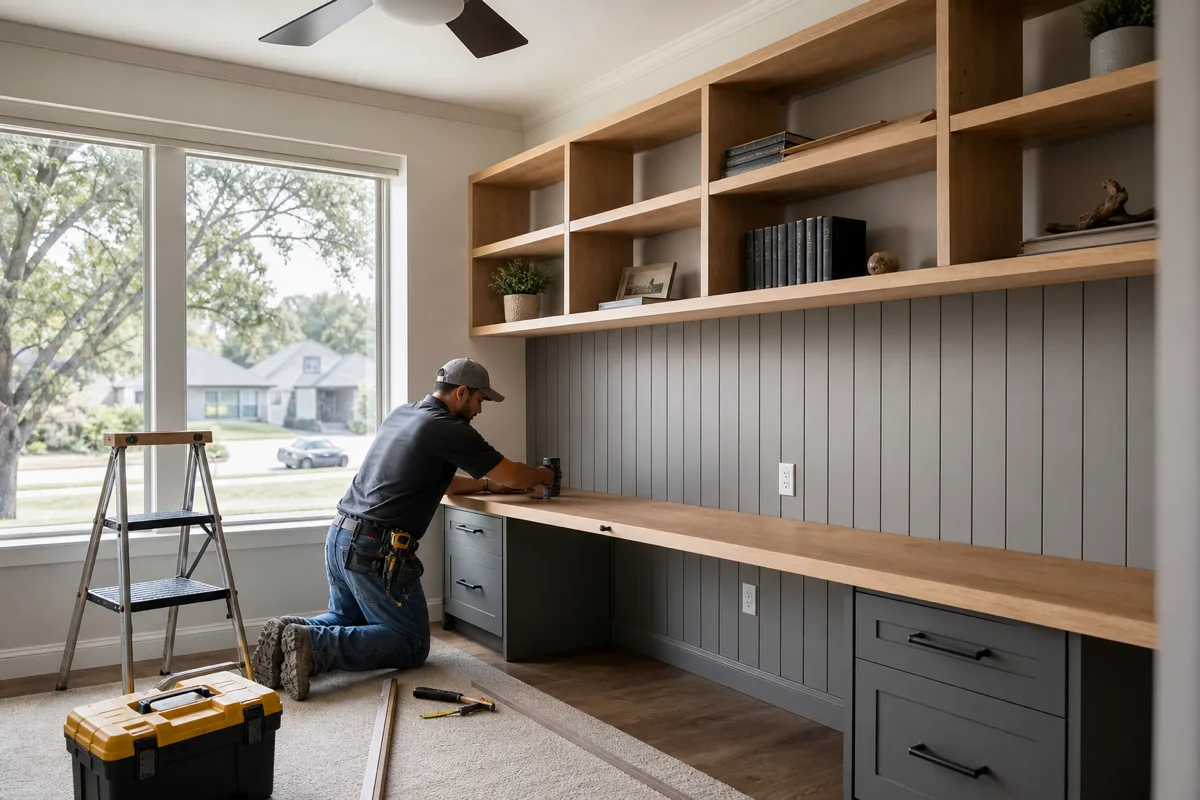
Remote and hybrid work has fundamentally changed what homeowners want from their space — and home office conversions have become one of the most requested home improvement projects across the country. Whether you’re converting a spare bedroom, carving space from a closet, or building an addition, here’s what to budget.
Home Office Conversion Cost by Project Type
Basic Setup (furniture and tech only)
Cost: $500–$3,000 Converting a spare bedroom into an office without construction — quality desk, ergonomic chair, monitor, proper lighting, cable management. No permits or contractors required. Works well if you already have appropriate space.
Closet Office Conversion
Cost: $1,500–$5,000 Converting a walk-in closet or large reach-in closet into a functional office nook. Typically involves adding an electrical outlet or two, built-in desk surface, shelving, and lighting. May require an electrician for electrical work. Can be highly functional for a dedicated workspace without sacrificing a full room.
Spare Bedroom Office Conversion
Cost: $2,000–$10,000 Converting an unused bedroom into a professional-quality home office. This typically involves:
- Electrical upgrades (additional outlets, dedicated circuits for equipment)
- Built-in shelving and desk construction: $2,000–$5,000
- Lighting upgrade: $300–$800
- Flooring if carpet needs to be replaced: $800–$2,500
- Paint, trim, and finishing: $400–$1,500
- Optional soundproofing: $1,000–$3,000+
Garage Home Office Conversion (partial)
Cost: $8,000–$20,000+ Converting a portion of a garage into an insulated, finished office space. Requires insulation (walls, ceiling, possibly floor), HVAC extension (or mini-split installation), electrical, drywall, flooring, and appropriate permits. This is a significant project but creates a truly separate workspace.
New Addition or ADU Office
Cost: $50,000–$150,000+ Building a new addition or accessory dwelling unit (ADU) as a dedicated home office. This is full construction — foundation, framing, utilities, permits. More relevant for permanent work-from-home situations where a truly separate building is desired.
What Drives Home Office Conversion Costs
Electrical work: Most home offices need more electrical capacity than a standard bedroom. Multiple monitors, office equipment, and USB hubs create demand. Adding dedicated circuits or outlets typically costs $200–$500 per circuit plus electrician labor.
HVAC: A converted space needs adequate heating and cooling. If the space isn’t on the existing HVAC system (garage, basement, or remote addition), a ductless mini-split adds $2,000–$5,000 installed.
Built-ins vs. freestanding furniture: Custom built-in desks, shelving, and cabinets create a professional look but add significant cost ($3,000–$10,000+) vs. quality freestanding furniture ($500–$2,000).
Soundproofing: Open-plan homes or shared walls can make calls and video meetings challenging. Adding mass-loaded vinyl, acoustic panels, and door seals ranges from basic ($500) to comprehensive ($3,000+).
Permits: Room additions, garage conversions, and any structural work typically require permits in most jurisdictions. Closet conversions and furniture-only setups generally don’t. Check with your local building department.
ROI Considerations
A well-executed home office conversion can add value to your home — particularly in markets where remote work is common. Real estate research suggests a quality dedicated home office can add 1–4% to home value, though this varies significantly by market and buyer preferences.
More practically: a functional home office that allows you to work effectively from home produces direct financial benefit through eliminated commute costs and increased productivity.
Find qualified home remodeling contractors at House Escort.
Also see our guides on DFW home improvement permit guide and Texas attic insulation types for related home improvement context.
FAQ
What’s the minimum budget for a functional home office conversion?
A basic home office setup in an existing spare room can be done for $500–$1,500 if no construction work is needed — quality desk, ergonomic chair, proper monitor, and lighting. If you need electrical upgrades or built-ins, budget $3,000–$5,000 minimum for a professional-quality setup.
Do I need a permit to convert a spare bedroom to a home office?
Converting a bedroom to an office without structural changes, plumbing, or significant electrical work typically doesn’t require a permit. Adding new electrical circuits, changing the function of a garage, or making structural modifications does. Check with your local building department before starting any project that involves permits.
Is a garage home office conversion worth it?
For people who work from home full-time, a properly insulated and climate-controlled garage office can be one of the best home investments — it creates separation between home and work life while adding functional space. In Texas, proper insulation and HVAC are non-negotiable for summer comfort. The project cost ($10,000–$20,000) is meaningful but substantially less than a new room addition.
How do I soundproof a home office on a budget?
Start with acoustic panels on walls (2–4 panels, $150–$400 total), a draft seal under the door ($20–$50), and a white noise machine ($50–$100). These steps address most call quality issues. If you share walls with loud spaces (TV room, kids’ rooms), adding mass-loaded vinyl (MLV) behind drywall or decoupled drywall (Green Glue compound) provides meaningful improvement but requires partial wall reconstruction.
What’s the biggest home office conversion mistake homeowners make?
Skimping on electrical planning. Most homeowners underestimate how many outlets a real office needs — computer(s), monitor(s), USB hubs, phone chargers, desk lamp, shredder, printer, and backup power strips. Running out of outlets forces extension cords everywhere, which creates both an aesthetic and safety issue. Plan for 6–10 outlets in your converted office, with at least one dedicated circuit for computing equipment.