Gas Fireplace Installation Cost in Texas
House Escort Team
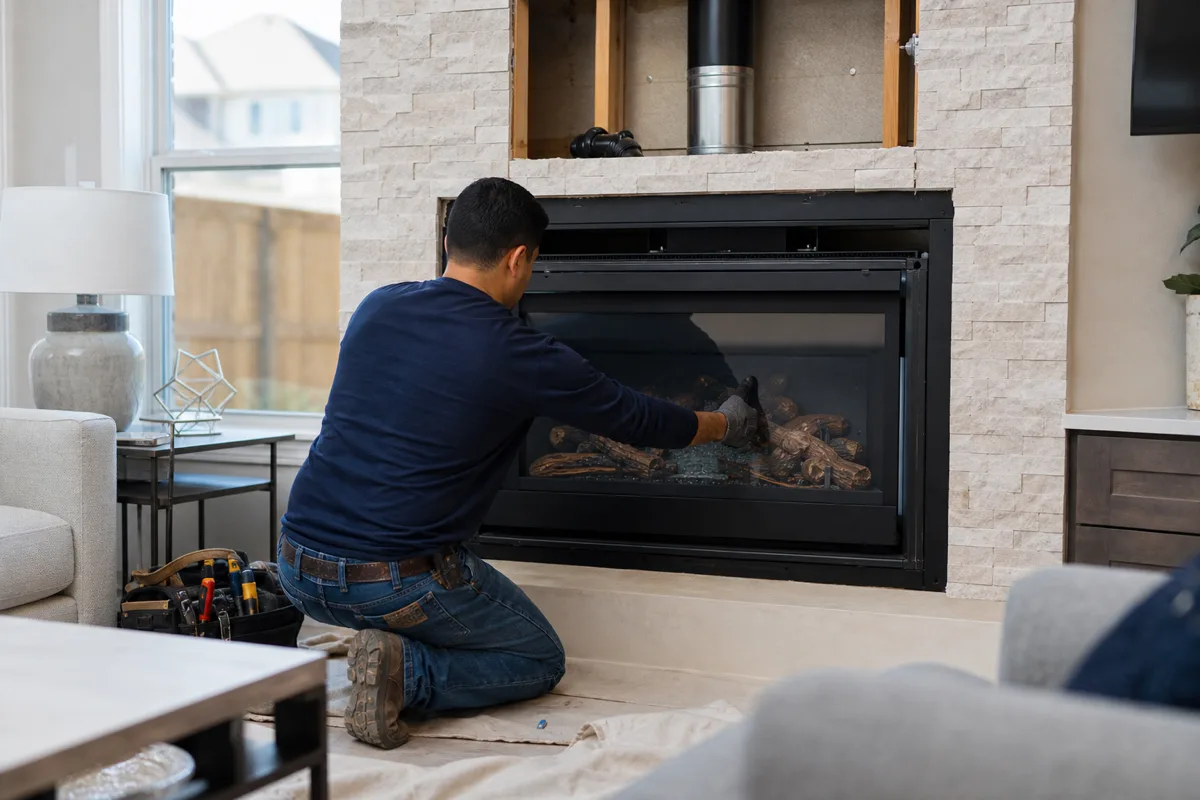
Texas winters may be mild by northern standards, but the ambiance and supplemental heat of a gas fireplace makes a real difference in livability. More Texas homeowners are adding gas fireplaces as a lifestyle upgrade — and the good news is that gas line infrastructure is already common in most Texas homes, making installation more straightforward than in other regions.
Here’s what Texas homeowners should expect to pay for gas fireplace installation.
Gas Fireplace Installation Cost in Texas
Gas Fireplace Insert (installed in existing wood fireplace)
Cost range: $1,500–$4,000 installed This is the most common installation type for Texas homes that already have a wood-burning masonry fireplace. The insert slides into the existing firebox, connecting to an existing gas line and requiring a new liner inside the chimney. Relatively less disruption than a new built-in.
New Built-in Gas Fireplace (framed into wall)
Cost range: $3,500–$8,000 installed A new gas fireplace installed in a new wall opening — typically requiring framing, drywall, finishing, a gas line run, and venting solution. Most popular option for homes without an existing fireplace.
Linear Gas Fireplace (modern design)
Cost range: $4,000–$12,000+ installed Linear (“panoramic”) fireplaces — the wide, horizontal modern designs popular in contemporary Texas builds — carry a premium. High-end models with real stone or tile surrounds at the upper end.
Outdoor Gas Fireplace
Cost range: $2,000–$7,000+ Texas’s outdoor living culture makes outdoor gas fireplaces a popular addition to patios and covered outdoor kitchens. Costs vary significantly by design complexity and gas line access.
What Drives Texas Gas Fireplace Cost
Gas line work: If you need a new gas line run from your home’s main supply to the fireplace location, add $300–$1,000+ depending on distance and accessibility. Texas homes with natural gas service (common in most metro areas) have this easier; propane homes need a propane line or may need a regulator upgrade.
Venting type: Direct vent fireplaces use outside air for combustion and exhaust through a coaxial flue — easier to route through exterior walls in most Texas homes. Ventless (unvented) fireplaces use room air and produce no exhaust flue, but have indoor air quality considerations. B-vent or natural vent designs use a chimney and indoor air.
Surround and finishing: The fireplace unit itself is only part of the cost. Mantel, surround tile or stone, drywall repair, and painting add $500–$3,000+ depending on design complexity.
Permits: Texas municipalities typically require permits for gas work and fireplace installation. This is handled by your licensed contractor. Factor in $100–$300 for permits.
Texas-Specific Considerations
Natural gas availability: Most Texas urban and suburban areas have natural gas access — this makes gas fireplace installation straightforward. If your home uses propane, confirm your tank size and regulator capacity support an additional appliance with your propane supplier.
Mild winters: Gas fireplace installations in Texas are often purchased for ambiance rather than primary heating. This doesn’t change the project scope, but it influences the size selection — a modest insert appropriate for a Texas living room is different from a high-output unit designed for a Minnesota climate.
Outdoor living integration: Texas’s extended outdoor season makes outdoor fireplaces a particularly strong investment — they’re usable for 7–9 months of the year.
Finding a Gas Fireplace Installer in Texas
Gas work requires a licensed plumber or HVAC contractor with gas licensing. The fireplace surround and finishing may involve a separate mason or tile contractor. Some fireplace specialty dealers offer full-service installation as a package.
Get 2–3 quotes and verify licenses through the Texas State Board of Plumbing Examiners or TDLR (Texas Department of Licensing and Regulation).
Find qualified Texas fireplace installation contractors at House Escort.
Also see our guide on Texas water heater replacement signs and Texas home generator buying guide for other major home system investments.
FAQ
How long does gas fireplace installation take in Texas?
A gas fireplace insert installation typically takes 4–8 hours for an experienced crew. A new built-in installation with framing, gas line, venting, and finishing can take 1–3 days depending on complexity. Custom surrounds with stone or tile may extend the timeline further.
Do I need a permit for a gas fireplace in Texas?
Yes, in most Texas municipalities. Gas work and fireplace installations generally require permits from your city’s building department. A licensed contractor will handle permit procurement as part of the project scope. Permits ensure code compliance and protect your home insurance coverage.
Is a gas fireplace insert worth it in Texas?
For Texas homes with existing wood-burning fireplaces that rarely get used, a gas insert transforms the fireplace into a usable, convenient feature. The investment typically adds aesthetic and functional value without the mess and effort of wood burning. Many Texas buyers view gas fireplace presence positively when evaluating homes.
Can I convert a wood-burning fireplace to gas myself in Texas?
Gas line work requires a licensed plumber or gas fitter in Texas. DIY gas work is dangerous and may void your homeowner’s insurance. Hire a licensed professional for any gas line connections or modifications.
What’s the most affordable gas fireplace option for a Texas home?
A direct-vent gas fireplace insert installed in an existing masonry fireplace opening is typically the most cost-effective path. Units can run $800–$2,000 for a quality insert, with installation adding another $800–$1,500 for a total of $1,500–$3,500 — significantly less than a new built-in installation.