Foundation Problems in Houston: Warning Signs
House Escort Team
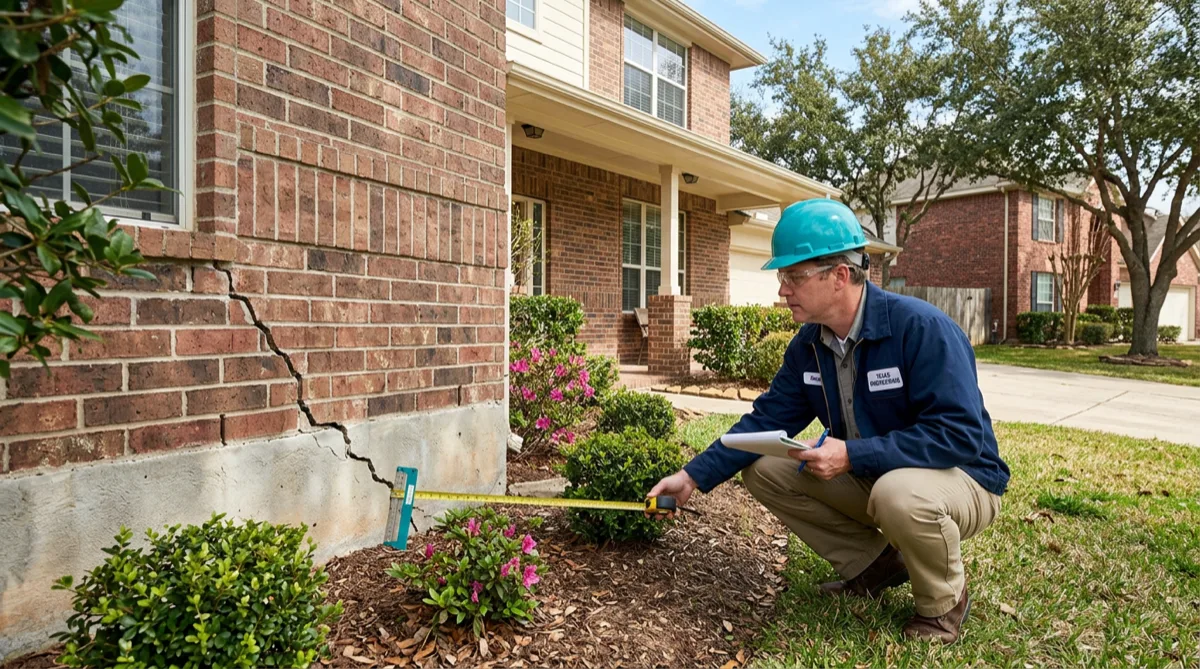
Foundation Problems in Houston: Signs, Causes, and When to Act
Foundation issues are one of the most common — and most anxiety-inducing — home repair challenges for Houston homeowners. The city’s geography is the root cause: Houston sits on a layer of Beaumont Clay, one of the most expansive clay soils in the country. This clay expands significantly when wet and shrinks dramatically when dry, which creates a foundation that’s in constant slow motion relative to the seasons and rainfall patterns.
The good news: most Houston foundation problems are repairable. The better news: catching them early is dramatically cheaper than waiting. This guide explains what to look for, how Houston’s soil makes this unique, and what your repair options are.
Why Houston Has More Foundation Problems Than Most Cities
Houston’s Beaumont Clay expands up to 10 times more than typical soil when saturated and contracts significantly during dry periods. This movement — called “differential movement” when it’s uneven across a foundation’s footprint — creates stresses that most residential foundations weren’t designed to fully accommodate.
Several factors make this worse in Houston specifically:
Drought-flood cycle. Houston alternates between intense rainfall events (sometimes flooding) and extended dry periods, particularly in summer. This expansion-contraction cycle repeats year after year, gradually fatiguing the clay and shifting the soil support under the foundation.
Tree roots and drainage. Large trees near the foundation draw moisture from soil unevenly, creating differential drying that destabilizes one area while the other remains saturated. Poor yard drainage that pools water against the foundation creates uneven saturation.
Slab-on-grade construction. The vast majority of Houston homes are built on post-tensioned concrete slabs directly on the clay. There’s no basement or crawl space to buffer the movement. When the soil moves, the slab moves.
Warning Signs of Foundation Problems
Foundation movement leaves signatures throughout the house. Know what you’re looking for:
Exterior signs:
- Horizontal or stair-step cracks in brick veneer (particularly at corners)
- Gaps developing between brick mortar joints
- Cracks in stucco or the concrete foundation itself (especially vertical or diagonal cracks wider than 1/8 inch)
- Gaps between the foundation and the soil line (the foundation appears to be “floating” above the soil level)
- Bowing or bulging walls
Interior signs:
- Doors and windows that suddenly don’t close properly, stick, or have visible gaps in their frames
- Cracks at corners of door frames and window frames (often diagonal, originating at the corner)
- Cracks in drywall, particularly diagonal cracks running from corners of windows and doors
- Sloping floors (a marble test — place a marble on the floor and see if it rolls consistently to one side)
- Cracks in tile floors or grout lines
- Separation between walls and ceiling, or walls and floor
Important distinction: Hairline cracks under 1/16 inch that appear consistent throughout the home (no wider cracks, no sticking doors, no floor slope) are often normal curing and settlement. It’s the combination of symptoms — sticking doors + diagonal cracks + sloping floors — that indicates active foundation movement.
How Serious Is It? Getting an Expert Assessment
Foundation concerns require an assessment by a licensed structural engineer — not just a foundation contractor. This distinction matters:
Foundation contractors assess damage and propose repairs. They have an incentive to recommend their services.
Licensed structural engineers (PE) evaluate the foundation, determine the root cause, and specify what repair (if any) is needed. They have no stake in which contractor you hire. A structural engineering assessment typically costs $500–$1,500 and provides a written report with specific repair recommendations.
For Houston foundation issues, a structural engineering assessment before getting contractor bids is money well spent. You’ll know what’s actually needed, be able to evaluate contractor proposals objectively, and avoid being oversold on repairs you don’t need.
Foundation Repair Methods in Houston
When repairs are needed, two methods dominate in Houston:
Concrete pier systems (most common):
- Pressed concrete piers: Pre-cast concrete cylinders driven hydraulically into the soil. Least expensive option ($200–$300 per pier), but can move over time in expansive clay.
- Steel push piers (helical piers): Steel shafts driven to bedrock or stable soil layer below the expansive clay. More expensive ($400–$800 per pier) but more stable long-term. Generally preferred by structural engineers for Houston’s soil conditions.
Number of piers needed depends on the foundation’s footprint and the extent of settling. A typical Houston slab might need 8–20 piers for a perimeter stabilization project, representing a total repair cost of $4,000–$16,000+.
Polyurethane foam injection: Used for void filling and minor lifting in cases where the foundation is stable but there’s a void under the slab. Less invasive than pier installation but addresses a different problem.
Drainage and watering programs: Many structural engineers first recommend improving drainage and establishing a consistent watering schedule around the foundation (using soaker hoses to maintain consistent soil moisture during drought). This addresses the root cause — moisture variation — and may stabilize the foundation without mechanical repair.
Getting Reliable Foundation Contractor Quotes in Houston
Foundation repair is a major purchase where multiple quotes, contractor verification, and scrutiny of warranty terms are essential.
Check licenses: Foundation repair contractors working in Texas should have a general contractor license or a specialty license depending on the work scope. Verify through the Texas Secretary of State’s contractor database.
Ask for the structural engineer’s report: Give every contractor the same structural engineer report and ask them to quote the specific repairs the engineer recommended. This creates an apples-to-apples comparison.
Understand the warranty: Foundation repair warranties vary from 1-year on pressed pier systems to “lifetime” on steel pier systems (with important caveats about what “lifetime” covers). Read warranty terms carefully — some cover parts only, not labor.
Finding a reliable foundation contractor in Houston doesn’t have to be a gamble. House Escort connects homeowners with vetted local professionals — free to use, no commissions.
Find a foundation contractor on House Escort → houseescort.com
Frequently Asked Questions
Why do so many Houston homes have foundation issues?
Houston sits on Beaumont Clay, one of the most expansive clay soils in the country. This clay expands when wet and contracts during dry periods — sometimes significantly. The repeated expansion-contraction cycle under residential slabs causes differential movement over time. Houston’s flood-drought rainfall pattern accelerates the process. According to the Texas Department of Insurance, foundation issues affect a larger percentage of Texas homes than any other state.
What is the average foundation repair cost in Houston?
Foundation repair costs in Houston typically range from $3,500 to $20,000+ depending on the number of piers needed, the pier type, and the extent of the problem. Simple drainage correction with a few piers might cost $3,500–$6,000; a major perimeter stabilization using steel piers on a 2,000 sq ft home can run $12,000–$20,000. Get a structural engineering assessment ($500–$1,500) before soliciting repair bids.
Is a sticking door always a sign of foundation problems?
Not necessarily. Doors stick for multiple reasons — seasonal humidity changes cause wood to expand (common in Houston’s humid climate), poor installation, door frame warping, and foundation movement. If a door started sticking suddenly, check whether other signs are present (cracks at window/door corners, sloping floors). A single sticking door without other symptoms is often a non-structural issue.
Should I get a structural engineer or a foundation contractor to assess my foundation?
Both have a role, but in that order. A structural engineer (licensed PE) provides an objective assessment with no incentive to oversell. They’ll tell you if repair is actually needed and specify what type. A foundation contractor then quotes on the engineer’s specifications. Skipping the engineer and going directly to contractor quotes risks being oversold or underdiagnosed.
Does homeowners insurance cover foundation problems in Houston?
Standard homeowners insurance does not cover foundation problems caused by soil movement, settling, or expansive clay — these are considered “earth movement” exclusions. Damage from a sudden covered event (like a plumbing leak under the slab that saturates soil) may be covered for the resulting damage. Read your policy’s earth movement exclusion carefully. Texas Department of Insurance can help interpret coverage questions.