Flooring Installation Cost in Texas: 2026
House Escort Team
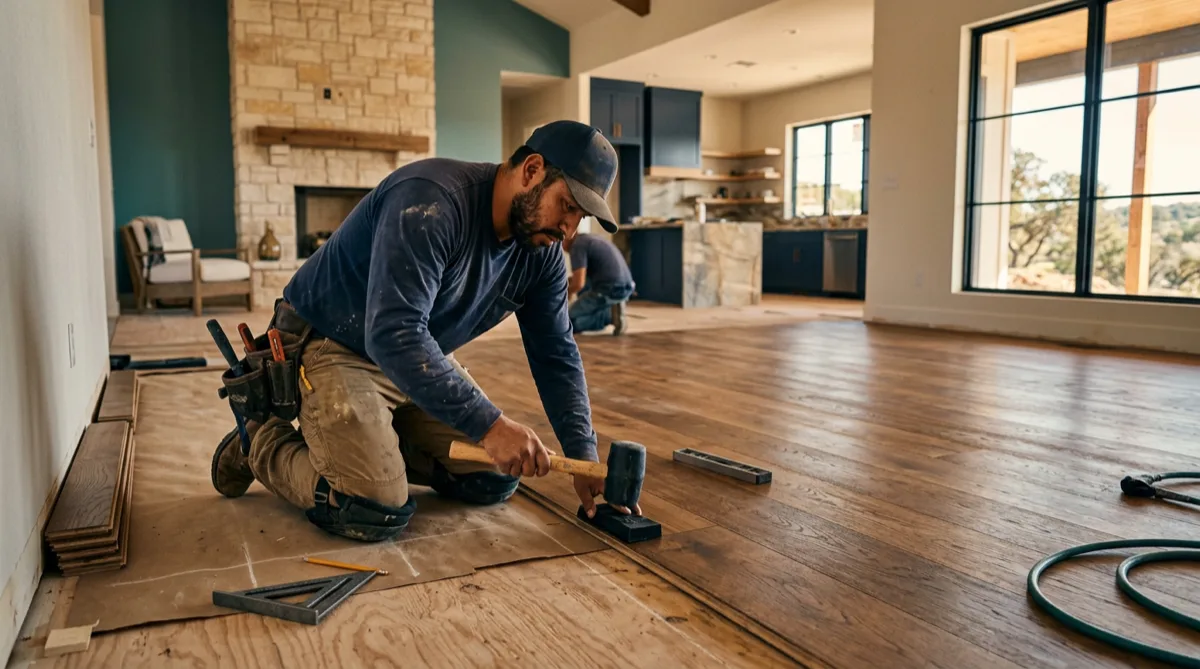
Flooring is one of the highest-impact upgrades you can make to a Texas home — it changes how every room feels and significantly affects resale value. But flooring installation costs vary dramatically based on material, square footage, existing floor condition, and who you hire.
This guide breaks down what Texas homeowners actually pay for flooring installation in 2026, by material type and region.
Texas Flooring Cost Overview
Average flooring installation costs in Texas (combined material + labor):
| Material | Average Cost/sqft | Typical Range/sqft |
|---|---|---|
| Luxury Vinyl Plank (LVP) | $5.50 | $3.50–$8.00 |
| Laminate | $4.50 | $3.00–$7.00 |
| Ceramic/Porcelain Tile | $7.00 | $5.00–$12.00 |
| Hardwood (solid) | $12.00 | $8.00–$18.00 |
| Engineered Hardwood | $9.00 | $6.00–$14.00 |
| Carpet | $4.50 | $3.00–$7.00 |
For a 1,500 sqft main-floor renovation:
- LVP throughout: $5,250–$12,000
- Tile in bathrooms/kitchen + LVP elsewhere: $8,000–$15,000
- Hardwood throughout: $12,000–$27,000
These are 2026 Texas market rates. Dallas–Fort Worth, Houston, and Austin typically run 10–15% higher than smaller Texas markets.
LVP: The Most Popular Choice for Texas Homes
Luxury Vinyl Plank dominates Texas flooring projects for good reasons — it’s moisture-resistant (critical in Houston and coastal markets), durable in high-traffic areas, pet-friendly, and significantly cheaper than hardwood while looking similar.
LVP cost breakdown (Texas):
Material cost: $1.50–$4.50/sqft depending on thickness (6mm–12mm) and quality tier Labor installation: $2.00–$3.50/sqft (click-lock LVP is faster to install than glue-down) Underlayment: $0.25–$0.50/sqft (if not pre-attached to planks) Old floor removal: $0.50–$2.00/sqft (if applicable) Subfloor prep: Variable — warped or uneven subfloors add $500–$2,000+
Total typical range: $3.50–$8.00/sqft installed
In Houston specifically, LVP with a waterproof core is strongly recommended. Humidity fluctuations and occasional flooding events make moisture resistance a critical specification, not a luxury.
How to Find a Flooring Contractor Near You
Tile Flooring Costs in Texas
Tile is the default choice for bathrooms, kitchens, and laundry rooms in Texas — and increasingly for main living areas in open-concept homes where a seamless large-format tile aesthetic is popular.
Tile cost factors:
Tile size: Larger format tiles (24”x24” and up) are more expensive to install because they require more precise subfloor leveling and are heavier to handle. Expect a 15–25% premium over standard 12”x12”.
Pattern complexity: Straight-lay patterns are cheapest. Diagonal, herringbone, and custom patterns add $1–$3/sqft in labor.
Grout joints: Rectified tile with minimal grout joints (1/16”) requires more precision and time.
Material cost: Builder-grade ceramic: $0.75–$2.50/sqft. Mid-range porcelain: $2–$6/sqft. Large-format stone-look porcelain: $4–$12/sqft.
Labor: $5–$9/sqft for standard residential tile. Large format, pattern work, or shower surround: $8–$14/sqft.
Texas humidity note: Porcelain is preferable to ceramic for Texas bathrooms — lower water absorption rating handles steam and moisture better long-term.
Hardwood Flooring in Texas: What to Know
Hardwood is the premium option, but Texas’s climate creates specific considerations that affect installation costs and long-term performance.
Texas hardwood installation challenges:
Texas humidity swings — hot, dry summers followed by humid fall and spring — cause solid hardwood to expand and contract more than in moderate climates. This means:
- Acclimation is critical: Hardwood planks should acclimate in the home for 5–10 days before installation. Skipping this step leads to gaps or buckling later.
- Engineered hardwood often makes more sense: Engineered hardwood has a solid wood veneer over a stable plywood core. It handles Texas climate swings better and can be installed in humidity-sensitive areas (near exterior walls) where solid hardwood would be risky.
- Slab foundations: Most Texas homes are on slab — hardwood on slab requires proper moisture barrier installation.
Hardwood species and cost (material only, Texas 2026):
- Oak (red or white): $3–$7/sqft
- Hickory: $4–$8/sqft
- Maple: $4–$9/sqft
- Exotic species (Brazilian cherry, teak): $7–$15/sqft
Installation adds $4–$8/sqft for solid hardwood, $3–$6/sqft for engineered.
Factors That Affect Your Total Texas Flooring Cost
1. Room Configuration
Simple rectangular rooms install faster. Multiple angles, closets, and irregular shapes add labor time. Stairs are priced separately — expect $50–$100 per stair tread for carpet, $150–$300 for hardwood or LVP.
2. Subfloor Condition
If your existing subfloor has squeaks, soft spots, or significant height variation, expect added prep costs. Leveling compound for a large area can add $500–$2,500 before any flooring goes down.
3. Furniture Moving
Most flooring installers charge extra ($50–$200) for furniture moving. Clearing the space yourself before the crew arrives saves money and time.
4. Old Floor Removal and Disposal
Removing and hauling away old carpet costs $0.50–$1.50/sqft. Tile removal is more labor-intensive — $1.50–$3.00/sqft and generates significant debris.
5. Texas Market Variance
DFW, Houston, Austin, and San Antonio have higher labor markets than secondary markets. Smaller markets in Central or West Texas may run 10–20% lower on labor.
How to Get Accurate Quotes
Before getting quotes:
- Measure your rooms carefully (length × width = sqft, add 10% for waste)
- Take photos of your existing floors and subfloor (pull up a vent to show subfloor condition)
- Know what material you want — “I want mid-range LVP” is more useful than “I want new floors”
When comparing quotes:
- Make sure quotes include material, labor, subfloor prep (or explicitly exclude it), removal of old flooring, and cleanup
- Low bids often exclude subfloor prep — ask specifically
- Verify the installer is licensed for Texas and carries liability insurance
Find a Flooring Contractor on House Escort →
Frequently Asked Questions
Is LVP or hardwood better for Texas homes?
LVP is often the better choice for Texas homes due to moisture resistance and climate stability. Hardwood is beautiful but requires careful acclimation and is susceptible to Texas humidity swings. Engineered hardwood is a middle ground — real wood veneer with a more dimensionally stable core. For kitchens and bathrooms, LVP is almost always the right call over solid hardwood.
How long does floor installation take for a typical Texas home?
A 1,500 sqft LVP installation typically takes 2–3 days including old floor removal and subfloor prep. Tile installation takes longer (3–5 days) because grout needs cure time. Hardwood can take 4–7 days when you include acclimation time. Most installers will not rush the cure or acclimation periods — that’s a quality signal, not a delay.
What’s the most durable flooring for a home with dogs in Texas?
Luxury Vinyl Plank with a 12-mil or higher wear layer is the most practical choice for dog households in Texas. It resists scratches from nails, handles water and accidents without warping, and is comfortable underfoot. Avoid real wood if you have large or active dogs — nail scratches are difficult to repair without refinishing the entire floor.
Do I need permits for flooring installation in Texas?
In most Texas cities, flooring replacement (like-for-like, no structural changes) does not require a permit. If you’re adding underfloor heating or making subfloor structural repairs, a permit may be needed. Your contractor can advise — a knowledgeable contractor who asks about permits is a good sign.
How do I know if a Texas flooring quote is fair?
Get at least 3 quotes for any job over 500 sqft. For mid-range LVP in a 1,500 sqft home, a fair installed price (material + labor + old carpet removal) is roughly $6,000–$10,000 in major Texas metros. Quotes significantly below this range often reflect cheaper material, subfloor prep exclusions, or unlicensed labor. Quotes above $15,000 for standard LVP work suggest premium material upcharging or margin padding.