Fall Home Maintenance Checklist: 14 Tasks
House Escort Team
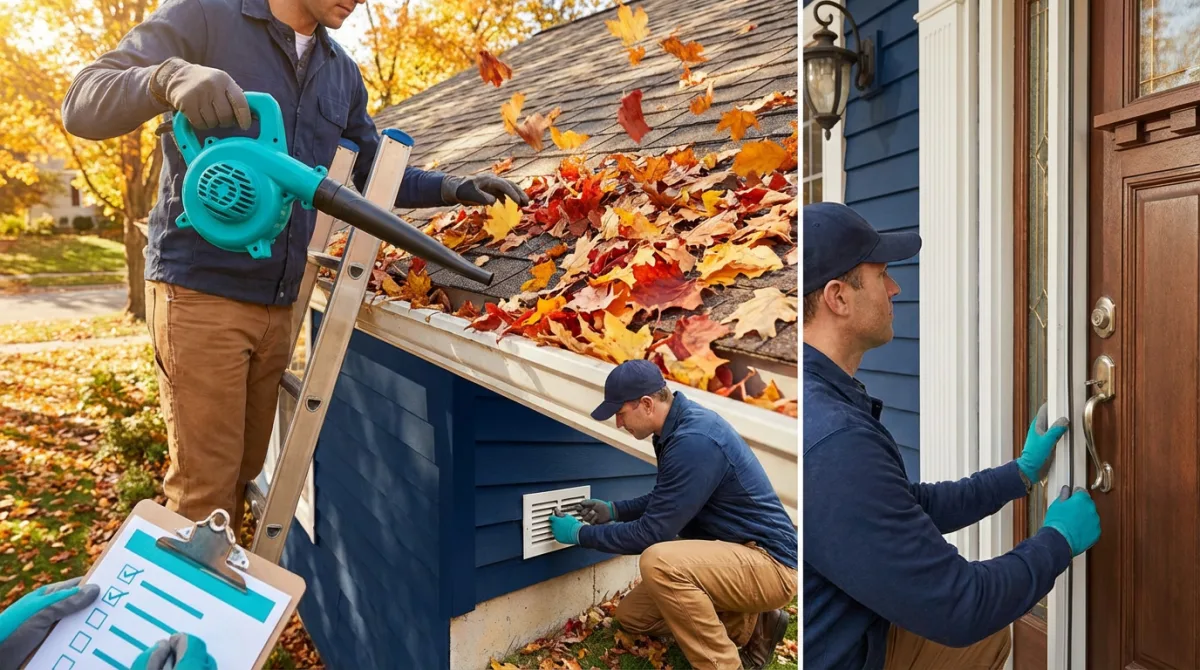
Fall Home Maintenance Checklist: 14 Tasks Before Winter
A solid fall home maintenance checklist is the difference between a cozy winter and an expensive one. The tasks you handle in September and October directly determine whether you’re dealing with burst pipes, a dead furnace, or ice dams in January. Most of these jobs take an afternoon or less — and they can save you thousands in emergency repairs.
This checklist covers 14 essential tasks every homeowner should tackle before the first freeze. Some are easy DIY projects; others are worth hiring a professional for. We’ll tell you which is which.
Exterior Tasks
1. Clean and Inspect Gutters
Clogged gutters are the number-one cause of preventable water damage in fall and winter. When leaves and debris block water flow, rain backs up under your roof edge, causing fascia rot, ice dams, and foundation erosion.
What to do:
- Remove all debris from gutters and downspouts
- Flush the system with a garden hose to check for proper flow
- Look for sagging sections, loose brackets, or separated joints
- Ensure downspouts direct water at least 4-6 feet away from your foundation
If you have a two-story home or aren’t comfortable on a ladder, this is a job worth hiring out. A professional gutter cleaning typically runs a modest flat rate depending on your home size and gutter length.
2. Inspect Your Roof
Don’t wait for a leak to find a roof problem. From the ground or with binoculars, look for:
- Missing, cracked, or curling shingles
- Damaged or missing flashing around chimneys, vents, and skylights
- Granule buildup in gutters (a sign of aging shingles)
- Moss or algae growth
A professional roof inspection gives you a more thorough assessment, especially after a severe weather season. Catching a small issue now prevents a major leak during a winter storm.
3. Seal Gaps and Cracks in Exterior Walls
Walk the perimeter of your home and inspect where different materials meet — siding to foundation, around windows, around door frames, where utility pipes and wires enter.
Use exterior-grade caulk or expanding foam to seal:
- Gaps around window and door frames
- Cracks in stucco or mortar joints
- Openings around utility penetrations
- Gaps where siding meets the foundation
These entry points don’t just let in cold air — they’re highways for insects and rodents seeking winter shelter.
4. Disconnect and Drain Outdoor Faucets
This is one of the simplest and most frequently forgotten fall tasks — and one of the most expensive when skipped.
Steps:
- Disconnect all garden hoses
- Turn off the interior shut-off valve for outdoor faucets (if you have one)
- Open the outdoor faucet to drain any remaining water
- Install insulated faucet covers on exterior hose bibs
A burst pipe from a frozen outdoor faucet can cause extensive water damage inside your walls. In Texas, homeowners learned this the hard way during Winter Storm Uri in 2021 — even in warmer climates, hard freezes happen.
5. Service Your Lawn and Landscape
Your lawn and garden need specific preparation to survive winter and come back strong in spring.
Fall lawn care:
- Apply a fall fertilizer appropriate for your grass type
- Overseed bare or thin spots (especially for cool-season grasses)
- Aerate compacted soil
- Rake and remove fallen leaves — don’t let them smother the lawn
Landscape prep:
- Trim back perennials after the first frost
- Mulch flower beds with 2-3 inches of fresh mulch for insulation
- Wrap vulnerable shrubs or young trees if you’re in a freeze-prone area
- Drain and store garden hoses
If you completed the spring home maintenance checklist, fall prep closes the loop on a full year of care.
6. Check and Repair Walkways and Driveways
Cracks in concrete or asphalt collect water. When that water freezes and expands, small cracks become big cracks — and big cracks become trip hazards and costly repairs.
- Fill small cracks with appropriate filler (concrete caulk or asphalt crack sealer)
- Consider sealing your asphalt driveway if it hasn’t been done in 2-3 years
- Check for uneven pavers or stepping stones that could become hazards when wet or icy
HVAC and Heating Tasks
7. Schedule a Furnace Inspection and Tune-Up
Your furnace has been sitting idle for months. Before you need it, have a professional:
- Inspect the heat exchanger for cracks (a cracked heat exchanger can leak carbon monoxide)
- Clean or replace the air filter
- Test the thermostat calibration
- Check ignition systems and safety controls
- Inspect the flue pipe for blockages or damage
- Lubricate moving parts and check belt tension
A furnace tune-up catches small problems before they become mid-winter emergencies. HVAC companies are slammed once the first cold snap hits — schedule your inspection in September or early October.
8. Test Your Heating System
Don’t wait for the first cold night to discover your heat doesn’t work. Turn your thermostat to heating mode and run the system for 30 minutes.
What to check:
- Does the system start promptly?
- Does warm air come from all vents?
- Are there unusual smells (a brief burning smell on first startup is normal; persistent smell is not)?
- Any strange noises — banging, rattling, or squealing?
If anything seems off, call a technician while you still have time. For more detailed HVAC maintenance guidance, see the summer home maintenance checklist — many HVAC tasks overlap between seasons.
9. Check and Replace Weather Stripping
Worn weather stripping around doors and windows is one of the biggest sources of energy waste in a home. Cold drafts drive up heating bills and make rooms uncomfortable.
How to check:
- Close a door on a dollar bill. If you can pull the bill out easily, the seal is inadequate.
- Run your hand around closed window edges on a windy day — you’ll feel drafts where seals have failed.
- Look for visible gaps, cracks, or compressed weather stripping.
Replacing weather stripping is a low-cost DIY project. Adhesive-backed foam tape works for most windows, while door sweeps and V-strip work best for exterior doors.
Interior Tasks
10. Test Smoke and Carbon Monoxide Detectors
The start of heating season is the most critical time to ensure your detectors work. Furnaces, fireplaces, and space heaters all create carbon monoxide risk.
- Press the test button on every smoke and CO detector
- Replace batteries (even in hardwired units with battery backup)
- Replace any detector older than 10 years (smoke) or 7 years (CO)
- Ensure you have a CO detector on every level and near sleeping areas
11. Inspect and Clean the Chimney
If you have a wood-burning fireplace or wood stove, annual chimney cleaning is non-negotiable. Creosote buildup inside the flue is the leading cause of chimney fires.
Hire a certified chimney sweep to:
- Clean the flue of creosote and debris
- Inspect the chimney cap and spark arrestor
- Check the damper operation
- Look for cracks in the flue liner
- Inspect the firebox and mortar joints
Even if you don’t use your fireplace often, animals can nest in chimneys during summer, creating blockages that prevent proper drafting and vent dangerous gases into your home.
12. Reverse Ceiling Fan Direction
Most ceiling fans have a small switch on the motor housing that reverses blade direction. In winter, run fans clockwise on low speed. This pushes warm air that collects near the ceiling back down into the room, improving heating efficiency without increasing your thermostat setting.
13. Insulate Exposed Pipes
Any pipes running through unheated spaces — basements, crawl spaces, garages, attics, or exterior walls — are vulnerable to freezing.
- Wrap exposed pipes with foam pipe insulation (available at any hardware store)
- Pay extra attention to pipes near exterior walls and in uninsulated areas
- Consider heat tape or heat cables for pipes in extremely cold zones
In Alaska and northern states, pipe insulation is critical. Even in Texas, the occasional hard freeze can burst unprotected pipes — homeowners across the state experienced this during recent severe winter events.
14. Check Attic Insulation
Adequate attic insulation keeps warm air inside and cold air out. The Department of Energy recommends R-38 to R-60 for most attics, depending on your climate zone.
Quick check: If you can see the tops of floor joists in your attic, you likely need more insulation. Adding blown-in insulation is a cost-effective upgrade that pays for itself in reduced heating bills — often within one to two seasons.
When to DIY vs. When to Hire a Pro
Most items on this fall home maintenance checklist are manageable DIY projects. However, some are better left to professionals:
| Task | DIY-Friendly? | When to Hire a Pro |
|---|---|---|
| Gutter cleaning | Yes (single-story) | Two-story homes, steep roofs |
| Roof inspection | Basic ground check | Full inspection, any repairs |
| Furnace tune-up | No | Always hire HVAC pro |
| Chimney cleaning | No | Always hire certified sweep |
| Weather stripping | Yes | Large-scale window/door work |
| Pipe insulation | Yes | Hard-to-reach areas |
Need help finding a qualified pro for any of these tasks? House Escort connects you with trusted, verified professionals in your area — no guesswork, no bidding wars.
Find a trusted pro near you → houseescort.com
Frequently Asked Questions
When should I start my fall home maintenance?
Start in mid-September for most of the country, or early September if you’re in northern states or Alaska where freezes come earlier. In Texas and other southern states, October is usually early enough for most winterization tasks, but schedule your furnace inspection early — HVAC companies book up fast once temperatures drop.
How much does fall home maintenance cost if I hire everything out?
Costs vary widely by region and home size. Homeowners who hire professionals for the major tasks (gutter cleaning, furnace tune-up, chimney sweep, and roof inspection) can expect a combined cost ranging from a few hundred to over a thousand dollars. Many of these services can be bundled for savings, and the investment is small compared to the cost of emergency repairs from neglected maintenance.
Can I skip chimney cleaning if I only use my fireplace a few times a year?
No. Even occasional use creates creosote buildup, and idle chimneys often accumulate animal nests and debris that block proper ventilation. The National Fire Protection Association recommends annual chimney inspections regardless of usage frequency. A blocked flue can cause carbon monoxide to back up into your home — a risk that’s not worth taking.
What’s the most important task on this checklist?
If you can only do one thing, schedule a furnace inspection and tune-up. A failed heating system in the dead of winter is uncomfortable at best and dangerous at worst. A cracked heat exchanger can leak carbon monoxide, and a dead furnace during a freeze can lead to burst pipes throughout your home. Professional HVAC service catches these issues before they become emergencies.
Should I drain my sprinkler system for winter?
Yes, if you’re in an area that experiences freezing temperatures. Water left in irrigation lines can freeze and crack pipes, fittings, and valves. Most sprinkler systems can be blown out with compressed air — either DIY with a rental compressor or hire a lawn care company to do it. In Texas, this is particularly important after recent winters demonstrated that hard freezes can happen even in traditionally mild areas.