Emergency Home Repairs: What to Do First
House Escort Team
Emergency Home Repairs: What to Do First
Emergency home repairs don’t announce themselves politely. A pipe bursts at 2 AM, your roof starts leaking during a storm, you smell gas in the kitchen, or the power goes out and you hear sparking inside a wall. What you do in the first 5-30 minutes determines whether the damage stays contained or spirals into a catastrophe.
This guide covers the most common household emergencies, step-by-step instructions for immediate response, and clear guidance on when to call 911 versus when to call a professional. Bookmark this page — you won’t have time to Google when water is pouring through your ceiling.
Before Any Emergency: Know Your Shutoffs
Every member of your household should know the location of these three shutoffs. Label them clearly and check them annually to make sure they operate smoothly.
Water Main Shutoff
Usually located near the street (outdoor valve box) or where the main water line enters your home (basement, crawl space, utility closet, or garage). Turning this off stops all water flow to your home.
Find it now, not during a flood.
Electrical Main Breaker
Located in your main electrical panel (usually in the garage, basement, or utility room). The main breaker is the large switch at the top or bottom of the panel. Flipping it cuts power to your entire house.
Gas Shutoff Valve
Located on the gas meter outside your home. It requires a wrench to turn (keep one nearby or zip-tied to the meter). Turn the valve a quarter-turn so the handle is perpendicular to the pipe to shut off gas.
Important: Once you shut off your gas, do not turn it back on yourself. Only your gas utility company or a licensed professional should restore gas service. Improper restoration can cause leaks or explosions.
Emergency #1: Burst or Leaking Pipes
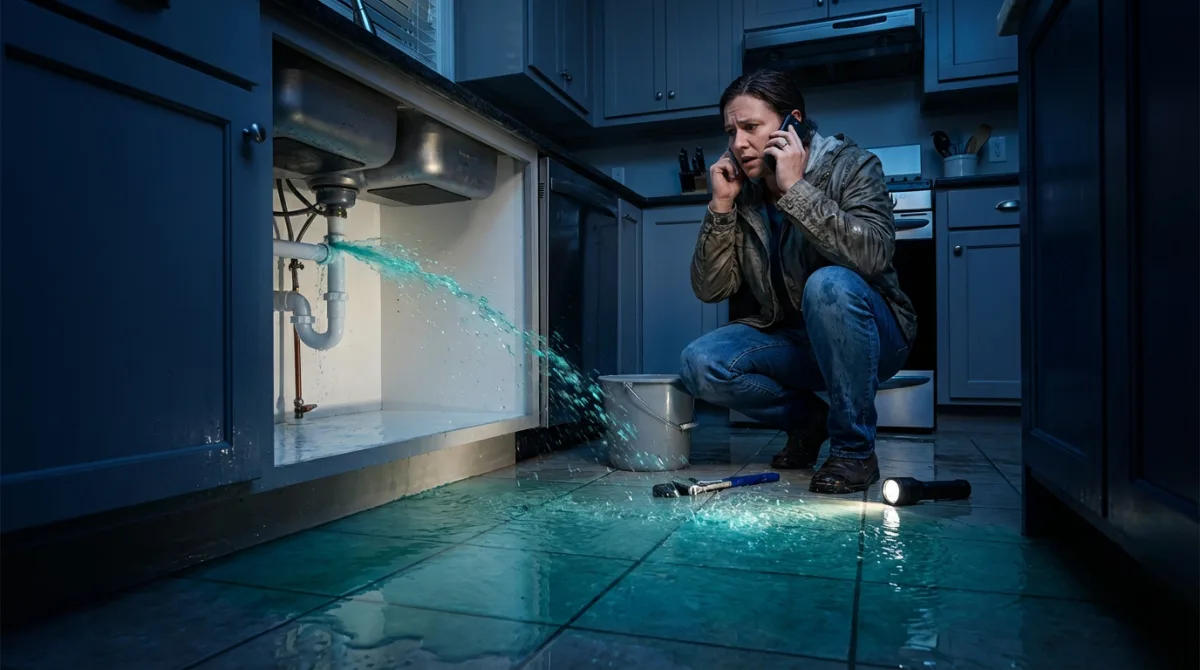
Burst pipes are among the most common and destructive home emergencies, especially during freezing weather. A single burst pipe can release hundreds of gallons of water per hour.
Immediate Steps
- Shut off the water main. This is your first move — every second counts. If you know which specific supply valve feeds the burst pipe (under a sink, behind a toilet), shut that off first for speed, then the main as backup.
- Turn off electricity in affected areas. If water is near electrical outlets, appliances, or your electrical panel, shut off power to those circuits or the main breaker. Water and electricity are a lethal combination.
- Open faucets to drain remaining water. After shutting off the main, open faucets at the lowest point in your home to drain water from the pipes and reduce pressure.
- Contain the water. Use towels, buckets, and mops. If water is coming through the ceiling, poke a small hole in the center of the bulge to drain it in a controlled spot (into a bucket) rather than letting the ceiling collapse.
- Document everything. Take photos and video of the damage before cleanup for your insurance claim.
- Call a licensed plumber. This is not a DIY repair. A burst pipe needs professional repair, and hidden water damage needs assessment.
For guidance on vetting a plumber for emergency work, see our guide on how to hire a reliable plumber.
When to Call 911
Call 911 if water is in contact with your electrical panel or if water has created a structural collapse risk (sagging ceiling, buckling floors).
Emergency #2: Roof Leaks During a Storm
Active roof leaks during a storm can cause rapid water damage to ceilings, walls, insulation, and personal belongings. You can’t fix a roof during a storm, but you can manage the damage.
Immediate Steps
- Contain the water. Place buckets, trash cans, or any large container under drips. Lay plastic sheeting or tarps over furniture and valuables in the affected room.
- Manage ceiling water accumulation. If the ceiling is bulging with trapped water, place a bucket underneath and carefully puncture the bulge with a screwdriver. A controlled drain prevents a sudden ceiling collapse.
- Move electronics and valuables. Get computers, TVs, important documents, and irreplaceable items out of the affected area immediately.
- Do not go on the roof during a storm. This cannot be stressed enough. No roof repair is worth the risk of a fall in wet, windy conditions.
- After the storm passes, apply a temporary tarp if you can safely access the roof, or hire an emergency roofer for temporary sealing.
- Document damage with photos and video before cleanup for insurance purposes.
- Call a roofer for emergency tarping and a full assessment once conditions are safe.
What About Insurance?
Most homeowner’s insurance policies cover sudden storm damage. Call your insurance company within 24 hours to start a claim. Don’t wait for the full repair estimate — notify them of the incident and document everything.
Emergency #3: Electrical Failures and Hazards
Electrical emergencies range from inconvenient (tripped breaker) to life-threatening (sparking wires, burning smell from walls). Know the difference.
Tripped Breaker (Not an Emergency)
If a single circuit trips, it’s usually an overload — too many devices on one circuit. Unplug devices on that circuit, reset the breaker, and redistribute the load. If the same breaker trips repeatedly, you may have a wiring problem that requires an electrician.
Sparking Outlets or Burning Smell (Emergency)
- Do not touch the outlet or switch. If you see sparking, arcing, or discoloration around an outlet or switch, stay away.
- Turn off the circuit breaker for that area. If you’re unsure which breaker controls it, turn off the main.
- If you smell burning but can’t identify the source, turn off the main breaker and call an electrician immediately. Burning electrical insulation inside walls can start a fire.
- If you see smoke or flames, call 911 first, then evacuate. Do not try to fight an electrical fire with water — use a Class C fire extinguisher if you have one and the fire is small and contained.
Power Outage
If your power goes out but your neighbors still have power, the problem is likely at your panel, meter, or service line. Check your main breaker first. If it’s tripped, reset it once. If it trips again immediately, do not keep resetting it — call an electrician.
If the outage is neighborhood-wide, contact your utility company. Use flashlights, not candles, to reduce fire risk.
Emergency #4: Gas Leaks
Gas leaks are immediately life-threatening. Natural gas is colorless, but utility companies add mercaptan (a sulfur compound) to give it a distinctive rotten-egg smell.
If You Smell Gas
- Do not turn on or off any electrical switches, lights, or appliances. A single spark can ignite gas.
- Do not use your phone inside the house. Cell phones can theoretically produce a spark.
- Open doors and windows as you exit to ventilate the space.
- Evacuate everyone — people and pets — immediately.
- Once outside and at a safe distance (at least 100 feet from the house), call 911 and your gas utility’s emergency line.
- Do not re-enter the home until emergency responders have confirmed it’s safe.
When It’s Not Gas
Sometimes what smells like gas is actually sewer gas (hydrogen sulfide), which has a similar sulfur odor. If the smell is coming from a drain, it’s more likely a dried-out P-trap — run water in the drain for 30 seconds. If the smell is near your stove, furnace, water heater, or gas meter, treat it as a gas leak until proven otherwise.
Never gamble with gas. If in doubt, get out.
Emergency #5: Flooding from External Sources
Whether from heavy rain, flash floods, or storm surge, external flooding is a different animal from a burst pipe.
Immediate Steps
- Prioritize personal safety. If floodwater is rising and you cannot safely stay, evacuate to higher ground.
- Shut off electricity at the main breaker if water is approaching or has reached electrical outlets, the HVAC system, or the electrical panel. If water has already reached the panel, do not touch it — evacuate and call 911.
- Shut off gas if water is approaching gas appliances.
- Do not walk through floodwater inside your home if you can avoid it. Floodwater can be electrically charged if it’s in contact with wiring.
- Do not pump out a flooded basement while outside water levels are still high. The water pressure against your foundation walls helps prevent collapse. Wait until external water recedes before removing interior water.
- After waters recede, document everything for insurance, then begin professional water extraction and drying. Flood damage almost always requires professional remediation to prevent mold.
Building Your Emergency Contact List
Preparation beats reaction. Build your emergency contact list now and post it where everyone in the household can find it.
| Contact | Number |
|---|---|
| 911 | For life-threatening emergencies |
| Gas utility emergency line | Posted on your gas bill |
| Electric utility | Posted on your electric bill |
| Licensed plumber (24/7) | Research and save now |
| Licensed electrician (24/7) | Research and save now |
| Emergency roofer | Research and save now |
| Insurance company claims line | On your policy card |
| Poison control | 1-800-222-1222 |
House Escort connects you with trusted, verified home service professionals in your area. Having a go-to resource for finding qualified pros means you won’t be Googling at 2 AM in a panic.
Find a trusted pro near you → houseescort.com
DIY vs. Call a Pro: Emergency Edition
Not every emergency requires a professional — but many do. Our DIY vs. hire a pro guide helps you make the call across a wide range of home repairs. For emergencies specifically:
Handle yourself: Shutting off utilities, containing water, temporary tarping (if safe), resetting a tripped breaker once
Always call a pro: Burst pipe repair, electrical sparking or burning smells, gas leaks, structural damage, flood remediation, any repair you’re unsure about
Always call 911: Active electrical fire, gas leak with no shutoff access, structural collapse, flooding with electrical contact, any situation where personal safety is at risk
Frequently Asked Questions
Should I call 911 or a plumber for a burst pipe?
In most cases, call a plumber. A burst pipe is a property emergency, not a life safety emergency. However, call 911 if water has reached your electrical panel (electrocution risk) or if the water flow is so severe that it’s causing structural damage (ceiling collapse, floor buckling). Otherwise, shut off your water main immediately and call a licensed plumber for emergency service.
Does homeowner’s insurance cover emergency repairs?
Most standard homeowner’s policies cover sudden, accidental damage — burst pipes, storm damage to roofs, fire, and wind damage. They typically do not cover flood damage (requires a separate flood policy), gradual damage from deferred maintenance, or sewer backups (requires an endorsement). File your claim within 24-48 hours and document everything with photos and video before cleanup begins.
How can I prepare for emergencies if I’m a new homeowner?
Start with three actions: locate and label your water main shutoff, gas shutoff, and main electrical breaker. Walk through your home with a flashlight and a notepad, identifying each shutoff location. Second, build your emergency contact list. Third, keep basic emergency supplies accessible — flashlights, a battery-powered radio, a basic tool kit, a fire extinguisher, and plastic sheeting or tarps for water containment.
What should I do if I smell something burning but can’t find the source?
Do not ignore this. An electrical burning smell behind walls is a fire hazard. Turn off your main electrical breaker immediately. If the smell stops after killing the power, you likely have a wiring issue — call an electrician before restoring power. If the smell persists after cutting electricity, evacuate and call 911 — the source may be structural or mechanical rather than electrical.
How do I find a reliable emergency repair professional at odd hours?
Emergency service calls are stressful because you’re making decisions under pressure with limited information. The best strategy is to research and save contacts before an emergency happens. Look for 24/7 service providers with strong Google reviews in your area. Platforms like House Escort let you browse verified professionals by trade and location, so you can build your emergency contact list proactively rather than reactively.