Electrical Panel Upgrade Cost in Texas: 2026 Guide
House Escort Team
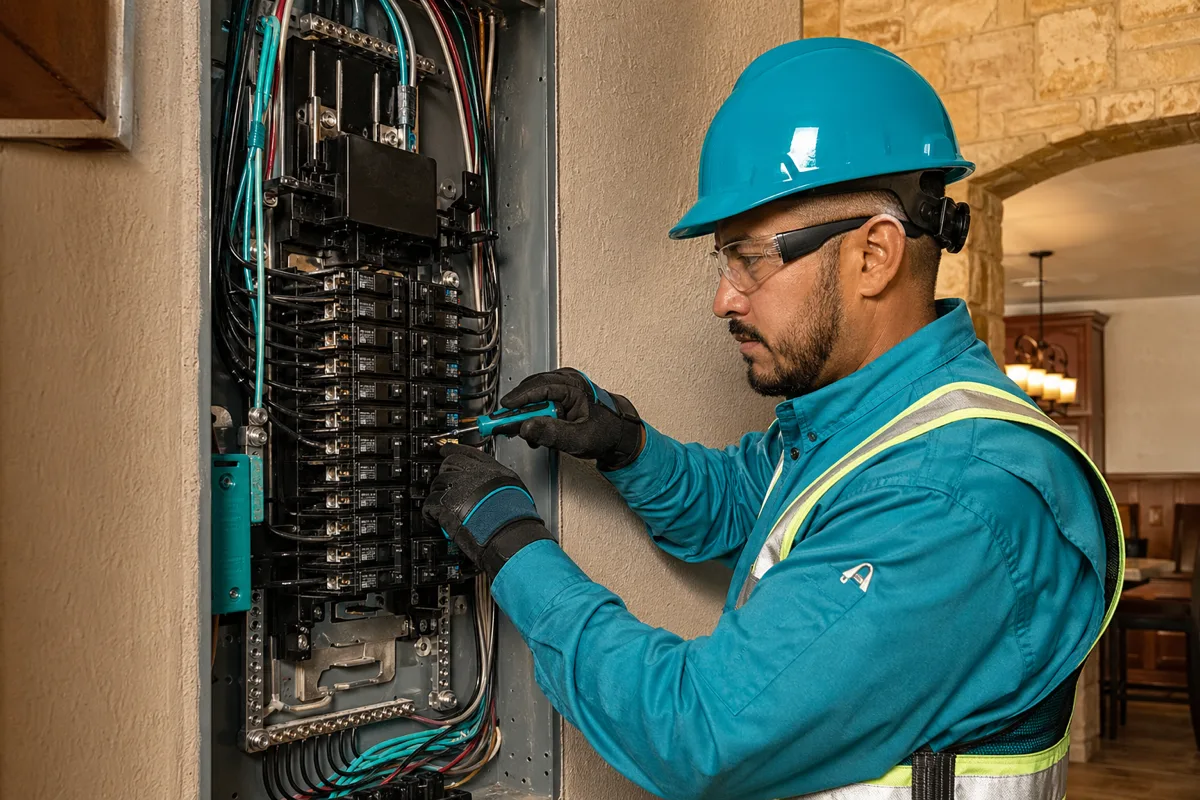
If your Texas home was built before 1990, there’s a reasonable chance your electrical panel is being asked to power a world it wasn’t designed for. A 100-amp panel that handled a home in 1975 may now need to support EV chargers, central AC, smart home devices, and all-electric appliances simultaneously.
Electrical panel upgrades are one of the most impactful home electrical investments — and one of the most commonly mispriced. Here’s what Texas homeowners actually pay in 2026.
Average Electrical Panel Upgrade Cost in Texas
| Upgrade Type | Typical Cost (Installed) |
|---|---|
| 100A → 200A panel upgrade | $1,500–$3,500 |
| 100A → 400A panel upgrade | $3,500–$6,500 |
| Subpanel addition (100A) | $800–$2,000 |
| Panel replacement (same amperage) | $1,000–$2,500 |
| Full service entrance upgrade | $2,500–$5,000+ |
| Whole-home rewire (old knob-and-tube) | $8,000–$20,000 |
Most Texas homeowners doing a standard 100A to 200A upgrade pay $1,800–$2,800 total, including permits and inspection.
What Drives the Cost
Amperage Increase
The bigger the capacity jump, the more work involved. A 100A to 200A swap is a half-day job for an experienced electrician. A 400A service entrance typically requires utility coordination, new meter socket, and substantial conduit work — expect 2-3 days.
Service Entrance Work
If the upgrade requires changing the meter socket, replacing the weatherhead (the conduit coming into your home from the utility line), or rerouting service entrance cable, costs increase. Utility companies (Oncor, CenterPoint, AEP Texas) have specific requirements that must be met before they restore service.
Code Updates Required at Time of Work
Texas electrical code requires that any panel work brings the affected area up to current code. This means:
- Arc fault circuit interrupters (AFCIs) may be required on bedroom circuits
- Ground fault protection (GFCIs) in kitchens, baths, garages, and outdoors
- Main bonding jumper and grounding electrode conductor updates
- These additions can add $200–$800 to a basic panel swap
Panel Brand and Quality
Basic panels (Square D QO, Eaton BR) provide excellent reliability at standard pricing. The old Federal Pacific Stab-Lok and Zinsco panels should be replaced — not just upgraded. If your inspector identifies these brands, budget for full replacement at the higher end of price estimates.
Texas City-by-City Pricing
| City | Panel Upgrade Range |
|---|---|
| Houston | $1,800–$3,200 |
| Dallas/Fort Worth | $1,700–$3,000 |
| Austin | $2,000–$3,500 |
| San Antonio | $1,600–$2,800 |
| El Paso | $1,400–$2,400 |
| Smaller cities/rural | $1,200–$2,200 |
Houston and Austin skew higher due to high electrician demand. The Permian Basin and other oil-sector communities can see premium rates when experienced electricians are pulled to commercial/industrial work.
When Does a Texas Home Need a Panel Upgrade?
Clear signals:
- Breakers trip repeatedly — especially for major appliances
- Lights flicker when the AC kicks on
- You want to add an EV charger (Level 2 chargers require a 40–50A dedicated circuit)
- You’re adding a large appliance: electric range, hot tub, whole-house generator
- Home inspection for a sale reveals the panel as a deficiency
- Federal Pacific Stab-Lok or Zinsco panel identified (fire hazard — replace, don’t service)
Not automatic reasons:
- Your home is old but the panel is correctly sized and functioning — age alone isn’t a reason to upgrade
- You’re adding a few outlets or minor lighting — a subpanel may be more cost-effective than a full upgrade
Texas Permitting Requirements
Electrical panel work in Texas requires a permit in virtually all jurisdictions. The licensed electrician typically pulls the permit — if they tell you a permit isn’t needed for a panel swap, that’s a serious red flag. Work done without a permit:
- May not pass inspection when you sell
- May void your homeowner’s insurance claim if electrical issues arise
- Exposes you to liability if subsequent problems occur
After installation, your city or county electrical inspector will verify the work meets code before issuing a final certificate of occupancy for the work.
Questions to Ask Before Hiring an Electrician
- Are you licensed with the Texas Department of Licensing and Regulation (TDLR)?
- Will you pull the required permit?
- Will you coordinate with the utility for service reconnection?
- Does your quote include all code-required updates?
- What panel brand will you install?
Finding a licensed, insured electrician who communicates clearly is the most important step. House Escort connects you with vetted local electricians who keep 100% of what they earn — no markup built into their pricing.
Find a Licensed Electrician Near You →
See our guide on HVAC repair cost in Texas for another major system cost comparison.
Frequently Asked Questions
Is a 200-amp panel enough for a modern Texas home?
For most Texas homes under 3,000 sq ft with standard appliances and one EV charger, 200A is sufficient. Larger homes, multiple EV chargers, electric heating (rare in TX but exists), or significant workshop/shop loads may warrant a 320A or 400A service. An electrician can conduct a load calculation to give you a definitive answer.
How long does an electrical panel upgrade take?
A standard 100A to 200A upgrade typically takes 4-8 hours of electrician time, plus the utility reconnection window (which may require a utility appointment, sometimes adding a day). Budget for your home to be without power for most of the work day.
Does homeowner’s insurance cover an electrical panel upgrade?
Standard homeowner’s insurance does not cover panel upgrades needed due to age, insufficient capacity, or code compliance — these are maintenance/improvement items. However, if a panel fails due to a covered event (e.g., lightning strike), damage may be covered. Some policies will not renew — or will surcharge — homes with known hazardous panels (Federal Pacific, Zinsco, Pushmatic). Check your policy.
What happens if I skip the permit for an electrical panel upgrade?
Unpermitted electrical work can void your homeowner’s insurance for electrical issues, fail home inspection when you sell (requiring remediation before closing), and may require the work to be redone if discovered. In Texas, the risk simply isn’t worth it — permits for panel work are standard and usually pulled by the electrician.
Can I add an EV charger without upgrading my panel?
Sometimes. If your current 200A panel has available capacity (empty breaker slots and sufficient headroom in your load calculation), adding a Level 2 EV charger (40–50A circuit) may not require a full panel upgrade. If you have a 100A panel or a full 200A panel with no headroom, an upgrade will likely be necessary before adding EV charging.