Electrical Contractor Business Growth Tips
House Escort Team
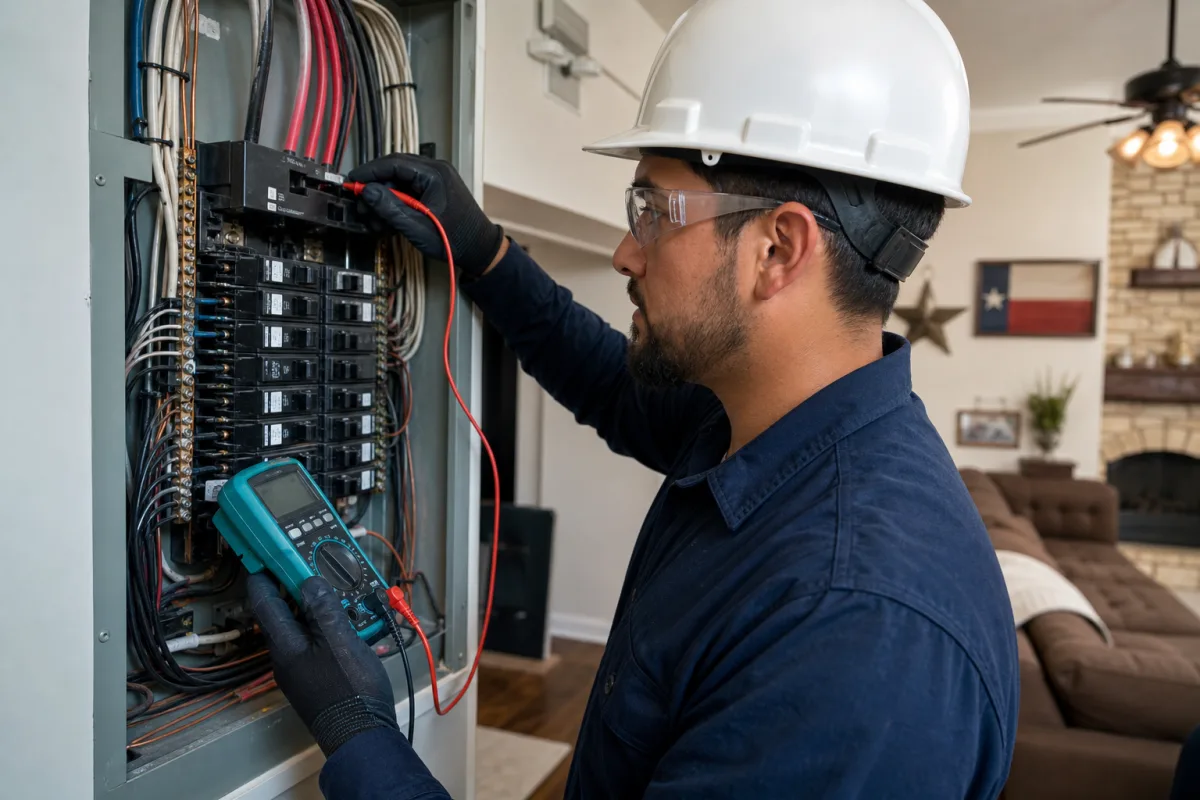
Growing an electrical contracting business past the one-truck stage requires more than technical skill. The trades that scale are the ones that build systems — for estimating, hiring, marketing, and customer follow-up. This guide covers the specific levers that move an electrical contractor from solo to a growing crew.
Licensing First: Protect Your Business Foundation
Every legitimate electrical contracting business in Texas needs proper licensing before growth can happen. The Texas Department of Licensing and Regulation (TDLR) issues the core credentials:
- Master Electrician License: Required to own and operate an electrical contracting company in Texas. Requires passing the master electrician exam after 4 years as a journeyman, or equivalent path.
- Journeyman Electrician License: Required for anyone performing electrical work. Must work under a master.
- Electrical Contractor License: The business-entity license issued to the company (as opposed to the individual). Must be held by a licensed master.
Without proper licensing, growth creates risk — unlicensed work on a major commercial job exposes you to significant liability and TDLR enforcement.
For scale, you need your master license and ideally at least one or two journeyman licenses on your crew. This is your legal foundation. For a full breakdown of Texas electrical licensing requirements, the HVAC license requirements Texas guide covers how TDLR works across trade categories.
Pricing to Profitably Scale
The most common mistake growing electrical contractors make: underpricing. Low prices feel competitive when you’re solo, but they prevent you from profitably adding trucks and employees.
Flat-rate pricing vs. time-and-material: Residential electrical work converts better with flat-rate pricing. Customers trust knowing the price upfront before work begins. Service companies that build flat-rate price books generate 15-25% more revenue per ticket than T&M operators.
How to build a flat-rate book:
- List your 50 most common jobs (outlet replacement, panel inspection, circuit add, panel upgrade, etc.)
- Calculate true cost: labor hours × (your hourly cost + overhead + profit margin)
- Add material cost with markup (aim for 30-40% material margin)
- Round to clean numbers
Markup on materials matters. Electricians leave money on the table by charging cost on materials. Materials should carry 30-40% markup minimum. If an outlet costs $8, sell it at $11-12 on the invoice.
Target gross margin: Aim for 55-65% gross margin on residential service work and 45-55% on new construction. Margins below 40% don’t leave enough to cover overhead and generate owner profit.
Review your contractor profit margins by trade for benchmarks across the industry.
Marketing: Getting Calls Without Burning Budget
Google Business Profile (GBP)
The single highest-ROI marketing tool for an electrical contractor. A complete, optimized GBP shows your business in the local map pack when people search “electrician near me” or “electrical panel upgrade [city].” Fill every field, post weekly, respond to every review, and add photos of your work regularly.
Google Local Service Ads (LSA)
LSAs (“Google Screened” badge) generate phone calls directly without a website. Electricians are eligible for LSA in most Texas markets. You pay per verified lead — typically $25-75/lead. Start with a $500/month budget and track cost-per-booked-job closely.
Referral Engine
Referrals are the highest-close-rate, lowest-cost leads in residential electrical. Build a referral engine:
- Ask every satisfied customer for a referral (timing: immediately after positive review or job completion)
- Offer a referral incentive ($25-50 bill credit or gift card)
- Partner with general contractors, kitchen/bath remodelers, and real estate agents who need electrical subs
Track where every booked job came from. Most growing electrical contractors discover 40-60% of new business comes from referrals when they measure it.
House Escort Platform
Listing on House Escort connects you directly with homeowners seeking electrical contractors — with zero commission and no lead fees. You keep 100% of your earnings, unlike platforms like Angi or Thumbtack that charge 10-30% of job value. House Escort’s model is built for pros who want direct client relationships, not lead dependency.
Hiring: The First Team Member Is the Hardest
Going from solo to one employee is the hardest transition in an electrical business. You suddenly have:
- Payroll obligations regardless of job flow
- Workers’ comp insurance requirements (required in Texas for any employee)
- Supervision overhead
- Tools and vehicle requirements
Keys to a successful first hire:
- Hire a licensed journeyman who can run jobs independently, not a laborer who needs constant supervision
- Pay market rate (journeyman electricians in Texas earn $25-40/hour depending on city and experience)
- Use a subcontractor agreement template to ensure workers comp coverage is in place before day one
- Consider hiring part-time or on a per-job basis first to test fit
When you’re ready: The signal to hire is when you’re consistently turning away work or working 60+ hour weeks. Turning away profitable work is money left on the table.
Service Agreements: Recurring Revenue for Electrical
Electrical contractors can build recurring revenue through annual electrical safety inspection agreements. Offer homeowners:
- Annual whole-home electrical inspection ($149-$249/year)
- GFCI and AFCI outlet testing
- Panel inspection and thermal imaging
- Smoke detector testing
- Priority scheduling for repair calls
A customer on an annual agreement is retained and provides predictable revenue. With 50-100 agreement customers at $200/year, that’s $10,000-$20,000 of recurring base revenue — meaningful for cash flow planning.
Commercial Work: Higher Ticket, Higher Bar
Moving from residential to commercial electrical increases ticket sizes dramatically. Commercial jobs run $5,000-$500,000+. But the bar is higher:
- Bid bonds required on most commercial contracts above $25,000
- Prevailing wage applies to government-funded commercial projects
- Insurance minimums jump to $1,000,000+ GL and often $5,000,000+ umbrella for larger projects
- Payment terms in commercial are net 30-60 (not payment-at-service like residential)
Start commercial with smaller projects — medical office buildouts, retail tenant improvements, light industrial — before pursuing large commercial or public work. See how to bid commercial jobs contractor for the full preparation guide.
Software That Runs the Back Office
Scaling past $500,000/year in revenue requires software to manage scheduling, dispatch, invoicing, and job costing:
- Scheduling/CRM: Jobber, ServiceTitan, or Housecall Pro (ServiceTitan is overkill for < $2M/year)
- Accounting: QuickBooks Online with job costing enabled
- Estimating: ServiceTitan or custom flat-rate book in Excel/Google Sheets
- Communication: SMS-based appointment reminders reduce no-shows by 40-60%
The best apps for contractors covers the top tools across categories.
Frequently Asked Questions
Do I need a Texas master electrician license to run an electrical contracting business?
Yes. Texas requires the business owner (or a licensed master electrician working for the company) to hold a master electrician license and an electrical contractor license from TDLR. You cannot legally operate as an electrical contractor in Texas without these credentials. Individual electricians working on jobs must hold at minimum a journeyman license.
How much should I charge per hour as an electrical contractor in Texas?
Most Texas residential electrical contractors bill $85-$150/hour for labor, depending on market, job complexity, and overhead structure. This rate needs to cover not just your time but overhead, tools, insurance, vehicle, and profit. If you’re billing below $85/hour, you likely don’t have enough margin to run a sustainable business once overhead is counted.
How do I get more electrical jobs without paying for leads?
Focus on Google Business Profile optimization (free), referral program (low cost), and trade partnerships with GCs, remodelers, and real estate agents (free). These three channels consistently outperform paid lead platforms because the quality of referral and GBP-sourced leads is much higher than leads from aggregator sites where you’re competing on price with 5 other contractors.
When should I add a second truck and employee?
Add capacity when you’re consistently unable to schedule jobs within 5-7 days AND your gross margin on current work is above 55%. If jobs aren’t converting to revenue at healthy margins, adding capacity accelerates losses. If margins are strong and you’re turning work away, adding the second truck is the right call.
How do I build a maintenance agreement program for electrical?
Start simple: offer an annual whole-home electrical safety inspection for a flat fee ($149-$249). Create a checklist covering GFCI/AFCI outlets, panel inspection, visible wiring, smoke detectors, and exterior weatherheads. Offer agreement holders priority scheduling and a discount on repair calls. Use your CRM to send renewal reminders 30 days before expiration.
Start Keeping 100% of Your Earnings
Ready to grow your electrical business without paying commission on every job? Join House Escort free and connect directly with homeowners looking for licensed electricians. Zero commissions, zero lead fees — you keep 100% of what you earn.