Drywall Repair Cost: What Homeowners Pay in 2026
House Escort Team
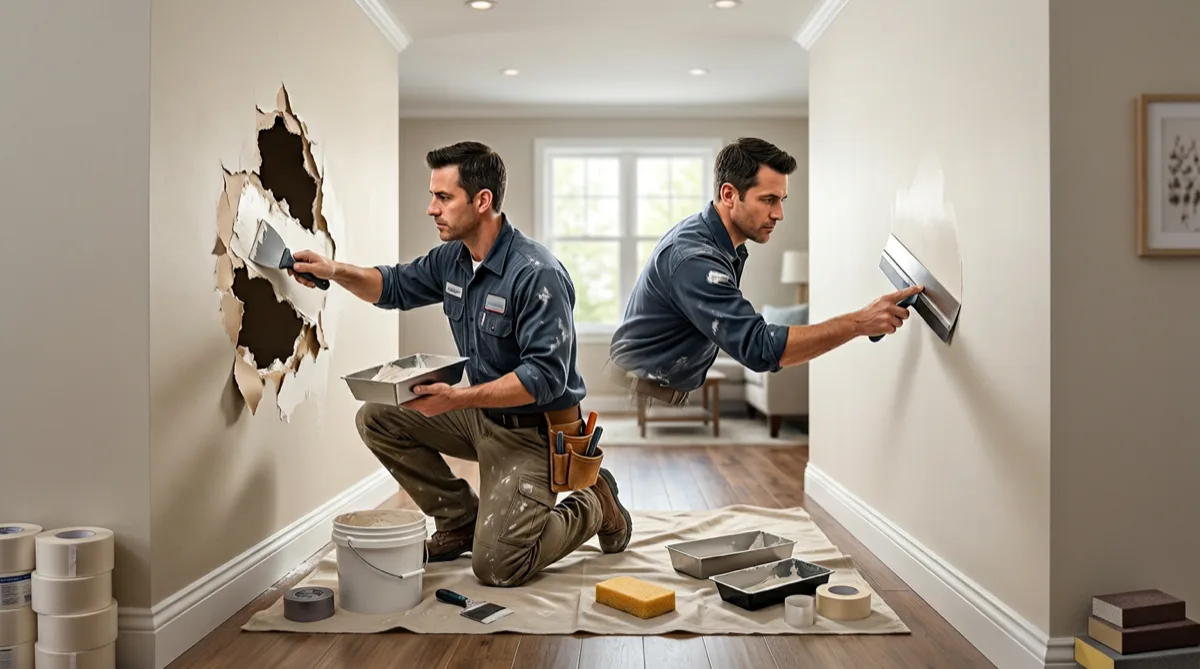
Drywall damage is one of the most common home repair issues — whether from a doorknob punch-through, a plumbing leak, a furniture move gone wrong, or a nail hole that turned into a bigger project. The good news: most drywall repairs are straightforward for an experienced contractor and affordable for homeowners. The trickier part is texture matching, which can turn a simple patch into a visible “repair scar” if not done correctly.
Here is what drywall repair actually costs and what drives the price.
Drywall Repair Cost Overview
| Repair Type | Typical Range |
|---|---|
| Small holes (under 1 inch — nail holes) | $75–$150 for first hole + $5–$10 per additional |
| Medium holes (1–6 inches) | $100–$250 per hole |
| Large holes (6–12 inches) | $200–$450 per hole |
| Water damage (soft spots, staining, mold) | $300–$800 per section |
| Ceiling patch (any size — harder access) | Add 25–50% over wall pricing |
| Full drywall panel replacement | $300–$600 per panel |
| Texture matching (knockdown, orange peel, popcorn) | Add $75–$200 depending on texture complexity |
| Full room re-texture | $500–$2,000 depending on room size |
Minimum service call: Most drywall contractors in Texas charge a minimum of $150–$200, even for small holes. If you have multiple small repairs, batch them into a single visit to maximize value.
What Drives Drywall Repair Cost
Size: The bigger the hole, the more material, blocking, taping, and compound work required. A 2-inch hole takes 30 minutes; a 12-inch hole that requires cutting out a section and installing backing takes 2–3 hours.
Location: Ceiling repairs cost more than wall repairs — contractors work overhead, which is slower and harder. Repairs in high-traffic visible areas (living room, entryway) require more careful finish work than repairs in closets or utility rooms.
Texture matching: This is the silent cost driver in drywall repair. Common Texas textures include:
- Knockdown: The most common in Texas — a slightly rough, irregular surface. Moderately difficult to match.
- Orange peel: A fine spray texture. Easier to match than knockdown but still requires the right spray gun settings.
- Smooth: Requires multiple compound coats and finish sanding to achieve a seamless look. Most demanding for contractors.
- Popcorn: Typically found on ceilings in older homes. Matching popcorn texture requires a special spray mix and is increasingly being removed rather than matched in remodels.
Even experienced contractors cannot perfectly match texture on a small patch — the only way to achieve a truly invisible repair is to feather the texture out over a larger area or paint the entire wall after repair.
Water damage: Water-damaged drywall has two cost components: replacing the damaged material and identifying/fixing the source of the water. A plumber must diagnose and repair the leak source before the drywall contractor repairs the wall. Ignoring the source leads to mold recurrence. Budget for both trades when dealing with water-damaged drywall.
Mold-Related Drywall: A Special Case
If water-damaged drywall has visible mold growth, do not simply patch over it. Moldy drywall must be:
- Tested (surface mold vs. systemic contamination)
- Removed and properly disposed of as a biohazard
- The area treated and dried thoroughly
- New drywall installed only after confirmed drying
Mold remediation combined with drywall replacement can cost $1,500–$8,000+ depending on scope. This is a separate trade from general drywall contractors — certified mold remediation professionals handle the removal and treatment; drywall contractors do the reinstallation after remediation is certified complete.
DIY vs. Hiring a Pro
Small nail holes (under 1 inch) are a reasonable DIY project — spackle from any hardware store, a putty knife, and a can of texture spray can produce acceptable results. The key is getting the texture spray close enough and matching the paint color.
Hire a professional when:
- The hole is larger than 4 inches
- The damage is on the ceiling
- Texture matching is critical (visible room, listing the home for sale)
- Water damage is involved
- The cause of damage has not been identified
Professional drywall contractors produce invisible repairs — you literally cannot see where the patch was made if done correctly. For anything visible in your home that you care about, hiring a professional saves you from months of staring at a mediocre DIY patch.
Finding a Reliable Drywall Contractor
Texas does not require a specific license for drywall repair work. The most important vetting criteria:
- Ask to see photos of previous texture-matching work — this is the skill differentiator
- Confirm they carry general liability insurance
- Get a quote that specifies how many coats of compound will be applied (minimum 3 for a quality finish)
- Ask how long between primer coat and final painting (minimum 24 hours drying time is standard)
Find vetted drywall contractors through houseescort.com — free for homeowners, with pros who keep 100% of their earnings.
Frequently Asked Questions
How much does it cost to repair a hole in drywall?
For a medium hole (1–6 inches), expect to pay $100–$250 per repair, including patching, taping, compound coats, and texture matching. Smaller nail holes often fall under a minimum service call of $150–$200. Larger repairs (6–12 inches) cost $200–$450 per hole. Ceiling repairs add 25–50% to wall pricing due to overhead access difficulty.
Is drywall repair covered by homeowners insurance?
Homeowners insurance may cover drywall damage caused by a covered peril — storm damage, burst pipes, fire, vandalism. Damage from general wear, settling, or renovation mistakes is typically not covered. If the damage resulted from a covered event (like a roof leak from a storm), file a claim — your insurance company determines whether the repair falls under your policy.
Can you match drywall texture perfectly on a repair?
Experienced drywall contractors can match common textures (knockdown, orange peel) very closely on repairs. A perfect match requires skilled technique and feathering the texture into the surrounding area. Smooth drywall is the hardest to match invisibly. In some cases — particularly when listing a home for sale — re-texturing the entire wall produces a better result than a small patch.
How long does drywall repair take?
Most standard hole repairs take 1–3 hours for a single patch plus drying time. The full timeline is 24–72 hours because the joint compound requires drying between coats. Some contractors do multiple coats in one visit with rapid-setting compound; others schedule a follow-up appointment for the final coat and texture. Ask specifically how the process is structured before booking.
What is the minimum service call for drywall repair?
Most professional drywall contractors in Texas charge a minimum service call of $150–$200, regardless of how small the job is. This covers their travel time, materials, and setup. If you have multiple small repairs (nail holes, small dings), batch them into a single visit to maximize the value of that minimum charge.